
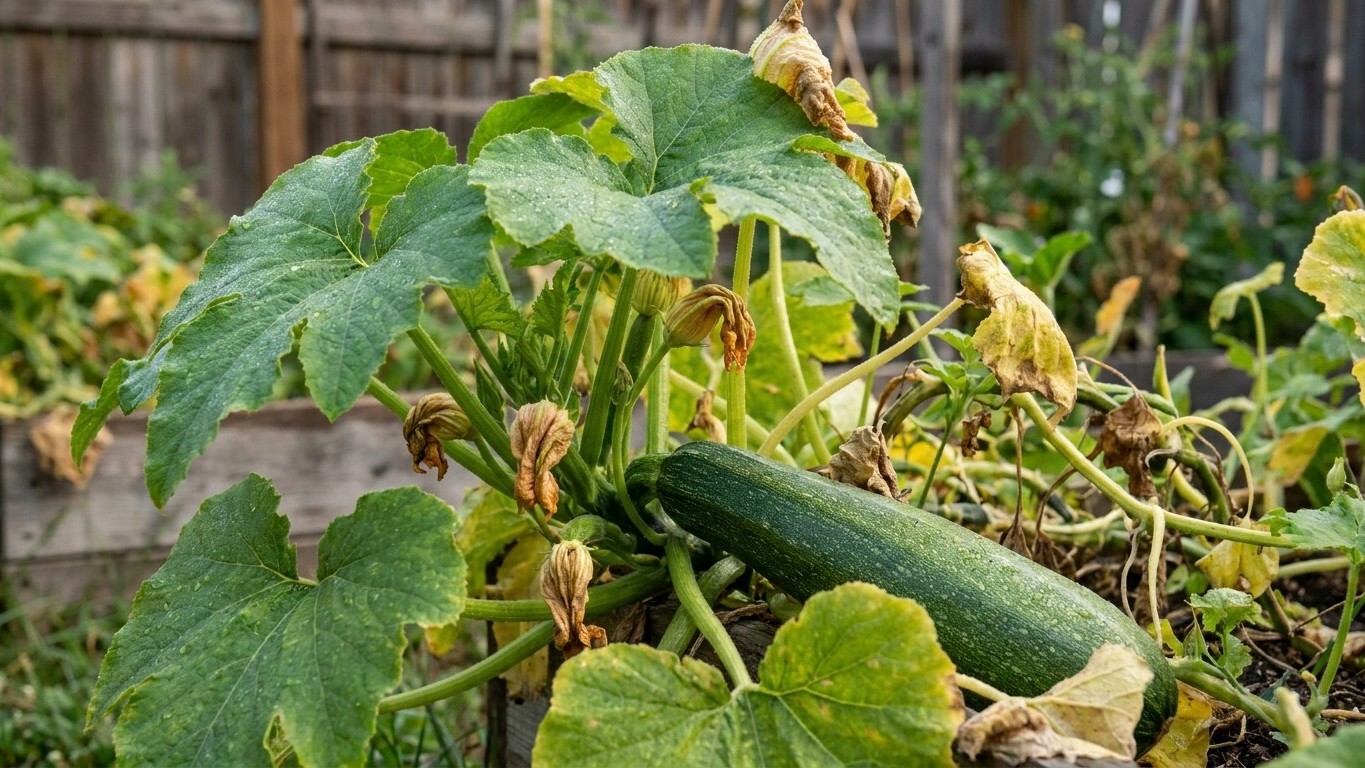
One overgrown zucchini is all it takes to shut down an entire plant’s harvest, and that’s exactly the mistake behind this frustrating garden story. Leave a single squash to swell into a “baseball bat” while you’re away, and the plant reads it as mission accomplished. No more flowers worth pushing out. No more fruit worth setting. Three weeks of silence isn’t bad luck. It’s biology doing exactly what it’s designed to do.
Key takeaways
- A mature zucchini on the vine sends a ‘mission accomplished’ signal that halts all new flower and fruit production
- The plant redirects all energy toward ripening that one fruit, and new female flowers abort before even opening
- Harvesting every 1-2 days is non-negotiable—one missed check during peak season can trigger a complete shutdown
Why One Fruit Can Shut Down the Whole Plant
Zucchini plants operate on a single, unglamorous goal: make seeds and pass them on. Leaving mature zucchini on the vine signals the plant to slow or stop producing, because the plant’s goal is to ripen seed, and once it has a large fruit accomplishing that goal, it deprioritizes new fruit production. That giant squash hiding under the leaves isn’t a bonus harvest waiting to happen. It’s a stop sign.
The mechanism is about resource allocation, not sentiment. Energy management is central to a zucchini plant, roots, leaves, and stems all move resources toward one goal at a time, and when a mature fruit sits on the vine, it pulls the majority of that energy toward itself, so new bloom development slows because the plant simply cannot do both at once. Picture a household budget suddenly redirected entirely toward one expense. Everything else waits.
Here’s the part that stings most: picking the oversized zucchini the moment you spot it doesn’t undo the damage already done. Even if you go out and pick that huge baseball bat zucchini, the message has already been sent, and the plant will begin to slow production, since there’s little reason to waste energy on new fruit once the progeny is already out on the vine. The three-week gap makes sense now. That’s roughly the recovery window, not an instant reset.
The Flower Casualty You Never See
Long before any dip in the harvest becomes obvious, the plant is already quietly canceling its own future fruit. Zucchini produce separate male and female flowers, and only the female ones, recognizable by a tiny swollen bulb at the base, ever become squash. Female flowers have a tiny swollen base that looks like a miniature squash, and when the plant is stressed by carrying too much mature fruit, female flowers drop before they ever open. The garden might still look busy with blossoms, all while the ones that actually matter are aborting behind the scenes.
That collapse isn’t gradual, either. When fruit stays on the vine too long, the plant thinks its job is done, that signal slows everything down, and new flowers stop forming as the plant shifts its energy toward ripening that one oversized squash. The good news: it’s reversible once the offending fruit is gone. One oversized, forgotten zucchini can measurably slow new fruit set across the entire plant, not just at that one fruit’s location, which is exactly why finding and removing it usually restarts production within about a week, once the plant’s hormonal signals reset and it goes back to treating flowering as the priority.
Getting the Harvest Back on Track
The fix sounds almost too simple, and that’s precisely why gardeners underestimate it. A tomato or pepper plant carrying one overripe fruit doesn’t suffer nearly the same productivity penalty, since those crops aren’t pushing out new fruit at anywhere close to zucchini’s pace to begin with, zucchini’s whole reputation for prolific production depends entirely on keeping that signal clear by harvesting consistently. This crop rewards obsession, not patience.
Speed matters more than most people realize. Zucchini fruit hides under the enormous foliage and can go from the right size to a small log in 48 hours. That means a single missed check, one long weekend, one vacation, is often all it takes to trigger the shutdown. The recommendation from growers is blunt: pick religiously every 1–2 days during peak season. Not weekly. Not “when I remember.” Every day or two, lifting leaves to check what’s hiding underneath.
When the damage is already done and a monster squash has taken over the vine, the instinct to let it keep growing “since it’s already this big” is exactly backward. If you discover a dinosaur-sized zucchini hiding under a leaf, pick it anyway, yes, it won’t taste as good, but harvesting it sends the signal your plant needs to start producing flowers again. An oversized squash still has uses even if it’s past its prime for sautéing. Grated into bread, blended into soup, or hollowed out for stuffing, it doesn’t have to go to waste. What can’t be salvaged is more time on the vine.
There’s an odd logic to it once the mechanism clicks. In a way, it’s the golden rule of the vegetable garden: the less you harvest, the less you harvest, and the more you harvest, the more you harvest, as strange as that sounds. A zucchini plant isn’t rewarding neglect with a jackpot squash. It’s punishing it with silence. The same rule extends to cucumbers, another summer crop notorious for stalling out the moment one fruit gets left too long chasing “worth it” size.
One nuance worth remembering before blaming every dry spell on a missed fruit: not every production slump traces back to a rogue squash. Summer squash flowers best between 65 and 75°F, and cool nights specifically suppress male flower formation while female flowers keep appearing on schedule, leaving the plant with plenty of female flowers and not enough pollen to go around. If the harvest stalls even after clearing every oversized fruit off the vine, the culprit might not be a missed harvest window at all. It might be a run of unusually cool nights messing with pollination instead.
Sources : bloomingexpert.com | greenwaybiotech.com