
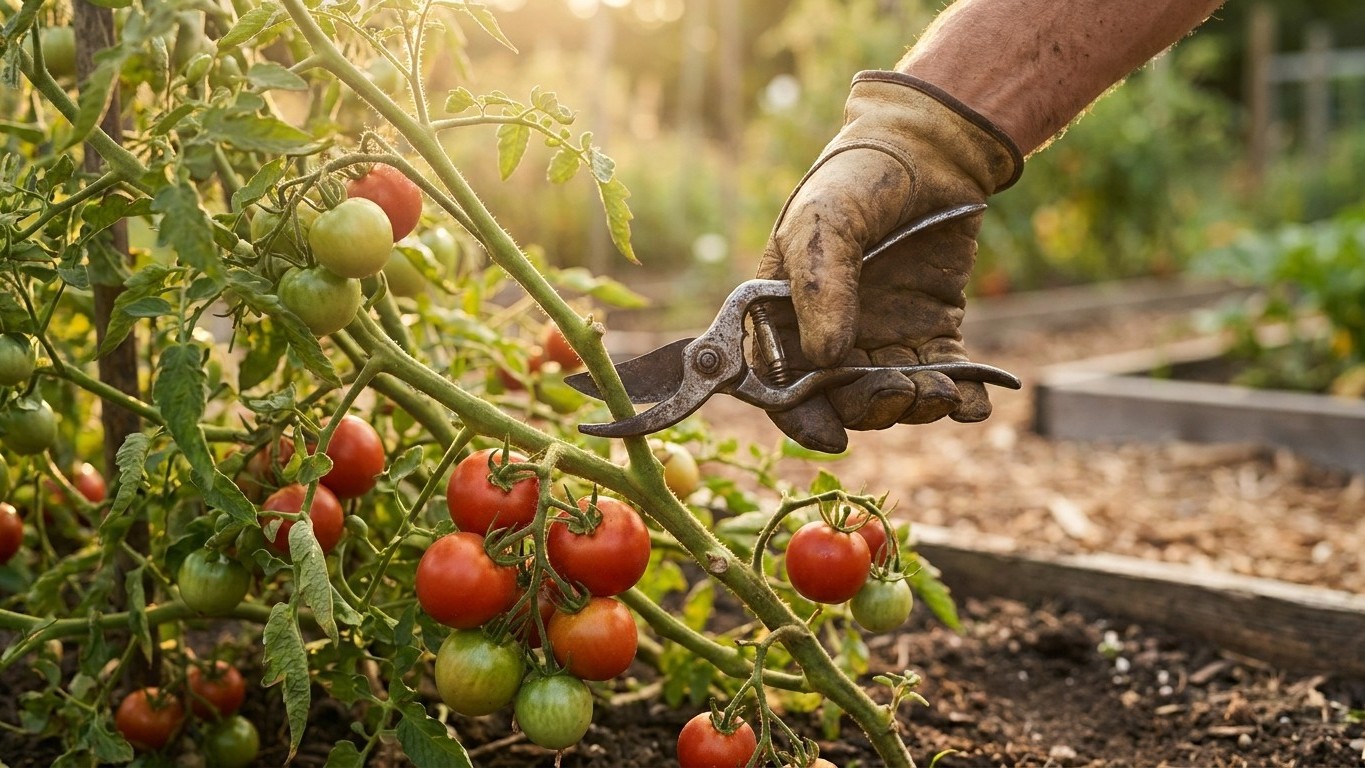
He walks the row every year around August 15th, snips in hand, and lops the growing tip off every one of his sprawling tomato vines. Neighbors assume he’s just tidying up before the county fair judges show up. He isn’t. He’s forcing his plants to stop growing and start finishing what they started, a technique gardeners call “topping,” and it has almost nothing to do with appearances.
Key takeaways
- A mysterious August pruning technique stops tomato vines from wasting energy on doomed late-season blossoms
- The timing is all about frost dates and the 6-8 week race from flower to ripe fruit
- Science disagrees on whether it actually ‘saves energy’—but gardeners swear by bigger, riper tomatoes
What cutting the top actually tells the plant
Indeterminate tomato varieties, the vining kind that keep climbing all summer, never really stop growing on their own. Indeterminates continue growing, flowering, and producing fruit until the first frost kills them off. Left alone, a healthy vine will keep pushing out new leaves, new flowers, and new baby tomatoes right up until a hard freeze ends the show, most of which will never make it to the dinner table.
That’s the waste your neighbor is targeting. Once that growing tip is cut off, the plant stops investing its precious resources in new stems, leaves, and flowers, and instead channels that energy into growing and ripening the tomatoes that are already hanging out on the vine. Think of it less like a haircut and more like closing the kitchen for new orders so the chef can finish the plates already on the pass.
Determinate varieties, the compact bush types that produce most of their crop in one big flush, don’t get this treatment. Topping tomatoes should only be done with indeterminate tomatoes, and there is no need to top determinate tomato plants, which are also called “bush tomatoes” and grow to a certain height, stop growing, and produce fruit all at once. Cut the top off one of those and you’re not saving energy, you’re just amputating future harvest.
The clock that’s really running the show
Timing is the whole game here, and it’s tied to something most gardeners never think about: frost dates. All those lovely blossoms that show up late in the season don’t have enough time to grow and ripen, since going from flower to ripe fruit usually takes around 6–8 weeks depending on the cultivar, and cool fall nights and shorter days only slow that process down further. A blossom that opens in early September in most of the country is basically a lottery ticket that never gets scratched off.
Most guides land on a similar window. Many gardeners top indeterminate tomatoes about four to six weeks before the expected first fall frost, which gives the plant enough time to direct its energy toward ripening existing fruit rather than producing new blossoms that may never mature. That math is exactly why mid-August lines up for so many gardens across the northern and middle United States, where the first frost typically shows up sometime in late September or October.
There’s a second, quieter benefit tucked into that same cut. The only option left for the plant is to put that energy into making the existing fruit the best it can be, and topping forces the energy from the plant into the remaining fruit, which can hasten ripening. Gardeners who top consistently report fewer but noticeably bigger tomatoes, the plant equivalent of trading quantity for quality once the season’s clock starts running out.
Not everyone agrees it works the way people think
Here’s where it gets interesting, and where I’d push back a little on the folklore. Some horticulturists argue the “saves energy” explanation oversells itself. Topping a tomato plant isn’t relieving it of putting extra energy into growing taller, it’s redirecting that energy into new leaders instead of ripening tomatoes, and if the plant can produce a green tomato, it already has the energy to ripen it. energy was rarely the bottleneck to begin with.
The real limiting factor, according to this view, is chemistry, not calories. Tomatoes ripen when ethylene is produced within the fruit, the same gas that causes bananas to ripen too quickly, and ethylene causes lycopene synthesis, which in turn ripens tomatoes into that red we all know and love. And ethylene production is picky about temperature. Too hot and tomato plants will stop ripening altogether; too cold and the same thing happens. So a green tomato sitting on a topped plant during a cold snap may stay stubbornly green no matter how much energy the plant has freed up.
My take: both things can be true at once. Topping probably doesn’t work through some dramatic energy transfer, but it still clears out competing sinks, reduces disease pressure from overcrowded foliage, and stops the plant from wasting effort on flowers that were doomed anyway. It’s less a ripening miracle and more a smart way to stop throwing good resources after bad.
Doing it without wrecking the harvest
If you want to try this in your own patch, precision matters more than enthusiasm. The art of topping tomato plants is in the location of the cuts, so start by finding the last fruit set on the branch, looking for the cluster of fruit farthest from the roots that’s far enough along to have time to ripen before frost. Cut just above that cluster, not blindly at the top of the cage.
Two mistakes ruin most attempts. First, going too aggressive, since stripping the plant bare exposes fruit to sunscald and shocks the plant, essentially giving your tomatoes a sunburn right when they need shade to finish safely. Second, doing it too early. Tomato plants require continuous growth to produce flowers and fruit throughout the summer, and topping too early prematurely stops the plant from producing any new fruiting stems. A gardener who tops in June, thinking they’re getting ahead of the game, ends up with a stunted plant and half the crop it should have had.
Clean tools matter too, more than most weekend gardeners realize. Dirty pruners can drag fungal spores and bacteria from one wound straight into a plant’s vascular system, turning a helpful trim into an entry point for disease. A quick wipe with rubbing alcohol between plants costs thirty seconds and can save an entire row.
So next time you catch a neighbor decapitating his tomato jungle in the dog days of August, resist the urge to think he’s lost patience with the mess. He’s running the numbers on his local frost date, and betting that a slightly shorter plant with fewer green stragglers beats a towering vine full of tomatoes that will still be green when the first cold night finally shows up.
Sources : hunker.com | gardeningknowhow.com