
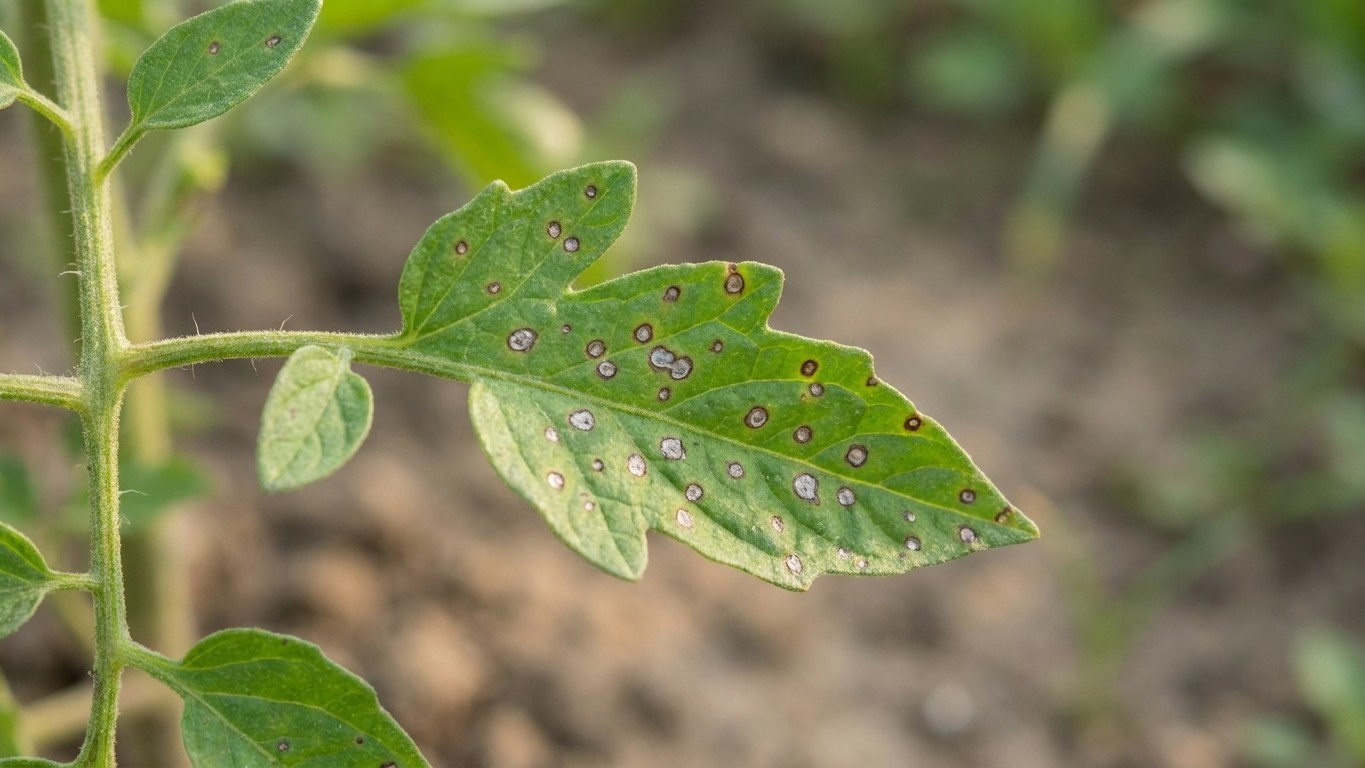
Three evenings of overhead hosing to beat a heat wave, and by the third morning the lower leaves of the tomato plants were covered in small, dark blotches. The instinct was to blame the sun, maybe scorch from droplets acting like tiny magnifying glasses. But sunburn on tomato foliage looks papery and bleached, not spotted. What actually showed up was a textbook case of fungal leaf spot, most likely septoria leaf spot or early blight, and the evening watering routine was the exact trigger that let it take hold.
Key takeaways
- Why that evening cooling mist actually created an 8-12 hour fungal infection window
- The exact visual difference between sunburn and the two most common tomato fungal diseases
- One free fix that stops the bottom-to-top disease progression before it reaches healthy fruit
Why evening watering turns into a fungal invitation
Cooling plants down with a hose feels like a kindness after a scorching afternoon. The problem isn’t the water itself, it’s the timing. Watering from overhead in the evening means that water that gets on plant leaves is likely to stay there for quite a while, and in general, the longer water remains on plant leaves, the more likely a fungal or bacterial pathogen is to infect the plant. Overnight, with no sun and no breeze to dry things off, the foliage stays wet for eight, ten, sometimes twelve hours straight.
That extended dampness matters more than most gardeners realize. A moist 48-hour period is required for infections to occur, though it is not necessary that this be a continuous period but may be cumulative over several days. Three nights of evening hosing adds up fast. Meanwhile, spores are spread by splashing water, insects, wind, and human contact, and during rainy weather or from overhead irrigation, spores can quickly spread the disease through the planting. Every splash from the hose becomes a tiny delivery vehicle, bouncing fungal spores from the soil surface straight onto the lowest, oldest leaves.
Those lower leaves are the usual first target for a reason that has nothing to do with the sun. Early blight overwinters in infected plant tissue and soil and is most commonly introduced to the plant’s lower leaves through contaminated water splashing onto them. The disease essentially lives dormant in last year’s garden debris, waiting for a wet week to reactivate.
Spotting the difference: sunburn, septoria, and early blight
Sunburn (technically sunscald) on tomato leaves tends to look bleached, thin, and almost translucent in patches exposed directly to intense light, without the dark rings or centers that fungal spots produce. What actually appears after a few humid nights looks completely different depending on which fungus has taken hold.
Septoria leaf spot loves wet weather and usually shows first on the lower leaves as small, dark brown or black spots with a gray center. The spots normally run about a quarter inch in diameter, dark brown or black, sometimes with a gray center, and that gray center is the key giveaway for identifying this disease. Left unchecked, eventually the spots can merge together and take over, causing the leaf to wither and drop off.
Early blight tells a slightly different story. Spots enlarge to more than half an inch in diameter and develop a grayish-white center with a darker border, and as the spots enlarge, they develop concentric, target-like rings. That bullseye pattern is the single easiest way to tell early blight apart from septoria at a glance. One more distinction worth knowing: unlike some other diseases, the fruit is not affected by septoria, which can be a significant differentiator when trying to diagnose tomato problems, whereas a key identifying feature of early blight is that the fruit is also frequently infected, with dark brown, leathery spots near the stem end.
Fixing the routine before it spreads upward
Both diseases march the same direction once established: bottom to top. Early blight starts at the bottom of the plant, with the lowest leaves, and works up from there. That progression is actually useful news, because catching it on the lower leaves means there’s still time to protect the rest of the plant.
The single biggest fix costs nothing and takes no extra time: switch the watering schedule. If a sprinkler or hose is used to spray water around plants, do this in the early morning so that the leaves dry quickly rather than staying wet for longer, as they typically will when watered late in the day. Morning sun and airflow do the drying work that darkness never can. Better still, using a soaker hose or drip irrigation is preferable with respect to disease management, since it avoids wetting leaves altogether.
A layer of mulch underneath the plants blocks the splash cycle that keeps reinfecting new growth. Using a mulch such as black plastic, fabric, or straw helps protect the plant from inoculum splashing from the soil. Pruning matters too, and not just for looks. Removing lower leaves for better airflow, taking off leaves until there’s about 8 to 10 inches of space above the soil without any foliage, helps as plants mature. That gap creates a buffer zone spores have to cross before reaching healthy tissue.
Already infected leaves won’t heal, so removal is the next step, not a treatment. Pick off and discard diseased leaves rather than composting them, since the fungi can survive the compost heap and reinfect the garden the following year. For plants with heavier infection, chlorothalonil or a copper fungicide are good choices for fruiting plants because each has a 0-day waiting period, meaning fruit can be harvested once the spray is dry.
None of this means giving up on cooling the plants during a heat wave, it just means rethinking the clock. A quick soak at the base with a soaker hose at 7 a.m. does the same cooling job as an evening spray, minus the eight hours of standing moisture that fungal spores need to move in. The tomatoes were never sunburned. They were simply left wet all night, three nights running, which is about as long an invitation as a fungus could ask for.
Sources : swallowtailgardenseeds.com | fairfaxgardening.org