
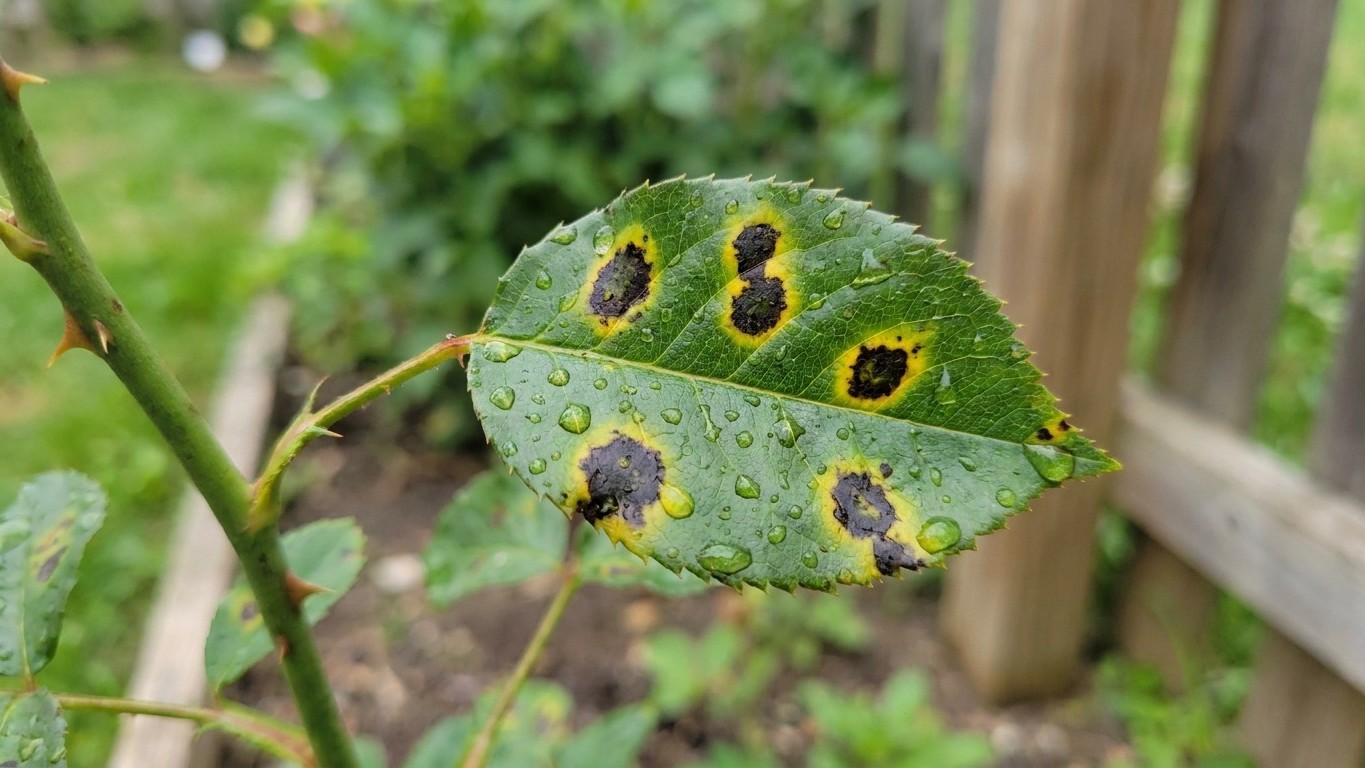
Black spot doesn’t just come back on its own leaves. It comes back on every fresh shoot within splashing distance, and it brings company: weaker canes, fewer blooms, and a rose bush that looks tired before summer even gets going. The mistake of tipping infected foliage into the compost heap instead of the green bin feels like a shortcut. It’s actually a delivery service for next year’s outbreak.
Key takeaways
- A gardener’s seemingly harmless decision creates a hidden fungal time bomb
- The fungus survives home composting and returns with reinforcements each season
- One simple mistake can weaken roses for years, but there’s a proven three-step fix
Why the Compost Heap Is the Worst Place for Those Leaves
The fungus behind black spot, Diplocarpon rosae, doesn’t need much to survive a winter. It’s a fungus that overwinters, or survives the cold season, on living or dead plant tissue that was infected in the previous growing season. A backyard compost pile, unless it’s running unusually hot, simply doesn’t reach the sustained temperatures needed to kill it off.
Several rose specialists put this bluntly: do not compost infected leaves, as the fungal spores can survive and spread back to your plants. Home composting isn’t industrial composting. Diplocarpon rosae spores survive home composting temperatures and will reenter your garden if you spread that compost. That bag of “black gold” you spread around the border in spring might be seeding the very disease you spent all last summer fighting.
The leaf itself is only half the problem, too. Diplocarpon rosae will overwinter in infected canes, buds, and leaves. So even a rose bush that was carefully stripped of fallen foliage can still be harboring the fungus in its own stems, waiting for the right conditions to fire up again.
How the Spots Turn Into a Full-Blown Spring Outbreak
Picture the lifecycle as a relay race that never quite ends. Spores produced on the old plant material are splashed on young plant tissue by winter and spring rains or by summer watering, and after conidia land on a leaf, it takes at least 7 hours of leaf wetness for the spore to infect. Seven hours sounds like a lot until you remember how long dew sits on foliage on a cool, overcast morning.
Once a spore succeeds, it doesn’t stop at one leaf. Once the fungus is established in plant tissues, fungal fruiting bodies form in the spots in 11 to 30 days, and a new crop of spores is produced and spreads to healthy portions of the plant. The whole cycle then resets and repeats: the cycle of infection is ready to begin again within 10 to 18 days. That’s roughly two weeks between waves, all summer long, if nothing interrupts it.
The visible damage compounds fast because of a defense mechanism gone haywire. Leaves infected with black spot produce the plant hormone ethylene, and in leaves, high ethylene content leads to leaf drop, so rose plants infected with black spot are defoliated early and look bare. A bush can lose most of its foliage after a handful of infections take hold, and dropped leaves around the base of the plant then serve as a reservoir of fungal spores, reinfecting the plant during subsequent rains, which is exactly the trap set by tossing them onto the compost heap instead of hauling them away entirely.
None of this kills the plant outright. But it wears it down season after season. Repeated defoliation leads to low vigor, inferior blooms, and high susceptibility to winter injury. A rose that’s spent three summers fighting black spot blooms less, grows less, and handles a hard frost far worse than a healthy one would.
What Actually Works: Bin It, Prune It, Mulch Over It
The fix isn’t complicated, but it does mean giving up the compost shortcut. Extension horticulturists at Kansas State are direct about it: fall leaf debris should be raked up and discarded, and diseased plant material should not be composted. That’s the green bin, the trash, or a burn pile if local rules allow it, never the heap that eventually feeds the flower beds.
Canes matter just as much as leaves. Even stems that look perfectly healthy by spring can be carrying the fungus internally, so late-winter pruning of anything that showed lesions the previous year removes a chunk of the overwintering source before growth even starts. Timing helps too: cold-winter climates get a bit of a natural assist, since hard freezes kill infected cane tissue, while milder, wetter regions don’t get that reset and need to rely more heavily on manual cleanup.
Mulch is the other half of the defense, and it works by physically blocking the splash cycle rather than killing the fungus. A thick layer of mulch, one to two inches deep, applied around the base in spring gives roses a nutritional boost and helps retain moisture, but it’s also particularly helpful to roses which suffer from black spot, since it prevents rain splashing the spores in the soil on to the new growth. Refreshing that mulch layer each spring, after clearing out old leaf litter first, does more to interrupt the cycle than most sprays ever will on their own.
Resistant varieties are worth a mention for anyone tired of the annual battle. Hybrid teas, prized for enormous blooms, tend to be the most vulnerable to black spot simply because breeders prioritized flower size over disease resistance for decades. Shrub roses and many modern landscape varieties bred specifically for disease tolerance shrug off the fungus far more easily, which makes them a genuinely practical swap for anyone gardening in a consistently damp climate rather than a constant fight against feathery black lesions every June.
Sources : ergongzy.com | plantclinic.tamu.edu