
Head greenkeepers stop reaching for the high-nitrogen spring formula the moment August winds down, and for good reason. The fertilizer that pushed your lawn into a lush, fast-growing green machine all summer becomes a liability once nights get cooler, because too much nitrogen in autumn encourages soft, sappy growth that’s easily damaged by frost. What replaces it on golf courses and sports pitches is a completely different formula, one built to toughen grass rather than push it to grow.
Key takeaways
- Why that spring fertilizer bag becomes your lawn’s enemy once temperatures drop
- The mineral swap professionals use that winter-proofs grass at the cellular level
- How to read fertilizer numbers like a pro and time your autumn feeding perfectly
Why the Spring Bag Turns Against You After Summer
Nitrogen is the nutrient that makes grass blades explode with green color, but that vigor comes at a cost once the calendar flips toward fall. Nitrogen encourages new growth and interferes with the dormancy process, forcing the lawn to produce new tender growth at the wrong time of year, and that young tender growth is very susceptible to cold injury and is likely to be damaged by the first frost. The damage doesn’t always show up right away, either. This greatly weakens the lawn and many times the damage goes unnoticed until the following spring when sections of the lawn do not green up.
There’s a second, sneakier problem hiding in that spring bag: disease. Large patch disease is another reason to avoid fertilizing after September, particularly with a high nitrogen fertilizer, since too much nitrogen at the wrong time promotes a common lawn disease called large patch, caused by the fungus Rhizoctonia. Turf specialists don’t mince words about the timing here. Large patch functions as a pathogen in lawns during the cooler weather of fall and spring, and applying a high nitrogen fertilizer when it’s active can be like applying gasoline to a fire. A lawn that looked perfectly healthy in October can wake up in April riddled with dead, sunken patches, and the spring bag is often the culprit.
The Potassium Swap: What Actually Goes Down Instead
Walk the Maintenance shed of any well-run course in September and you’ll find bags with a completely inverted number order. Instead of a nitrogen-heavy blend, greenkeepers reach for something specifically formulated with low nitrogen and higher levels of potassium and phosphorus, which shift the plant’s energy from producing lush top growth to developing stronger root systems. That switch isn’t cosmetic. It’s a direct response to how the grass plant itself behaves once temperatures drop.
Potassium does the heavy lifting for winter survival. Potassium reinforces cell walls, improving resistance to frost and disease, and the effect goes deeper than most gardeners realize. This mineral strengthens cell walls and improves the grass plant’s ability to withstand freezing temperatures, and research shows that adequate potassium levels reduce ice crystal formation within plant tissues. Less ice inside individual grass cells means less rupturing, less browning, and a lawn that stays firmer underfoot right through a hard freeze.
Phosphorus plays a supporting role rather than the lead. Phosphorus supports root development and energy storage processes, aiding in the formation of adenosine triphosphate which fuels cellular activities throughout the dormant period, and also promotes robust root hair development, increasing the surface area for nutrient absorption. Some seasoned turf managers keep phosphorus especially modest, favoring a mix built around four to five per cent Nitrogen, eight to ten per cent Potassium, and between six and eight per cent Iron, with the added iron giving color without forcing growth. That last ingredient matters more than most weekend gardeners assume: iron greens up a lawn visually without triggering the leafy flush that nitrogen causes, which is exactly why it shows up so often in cold-weather blends.
Reading the Bag Like a Pro
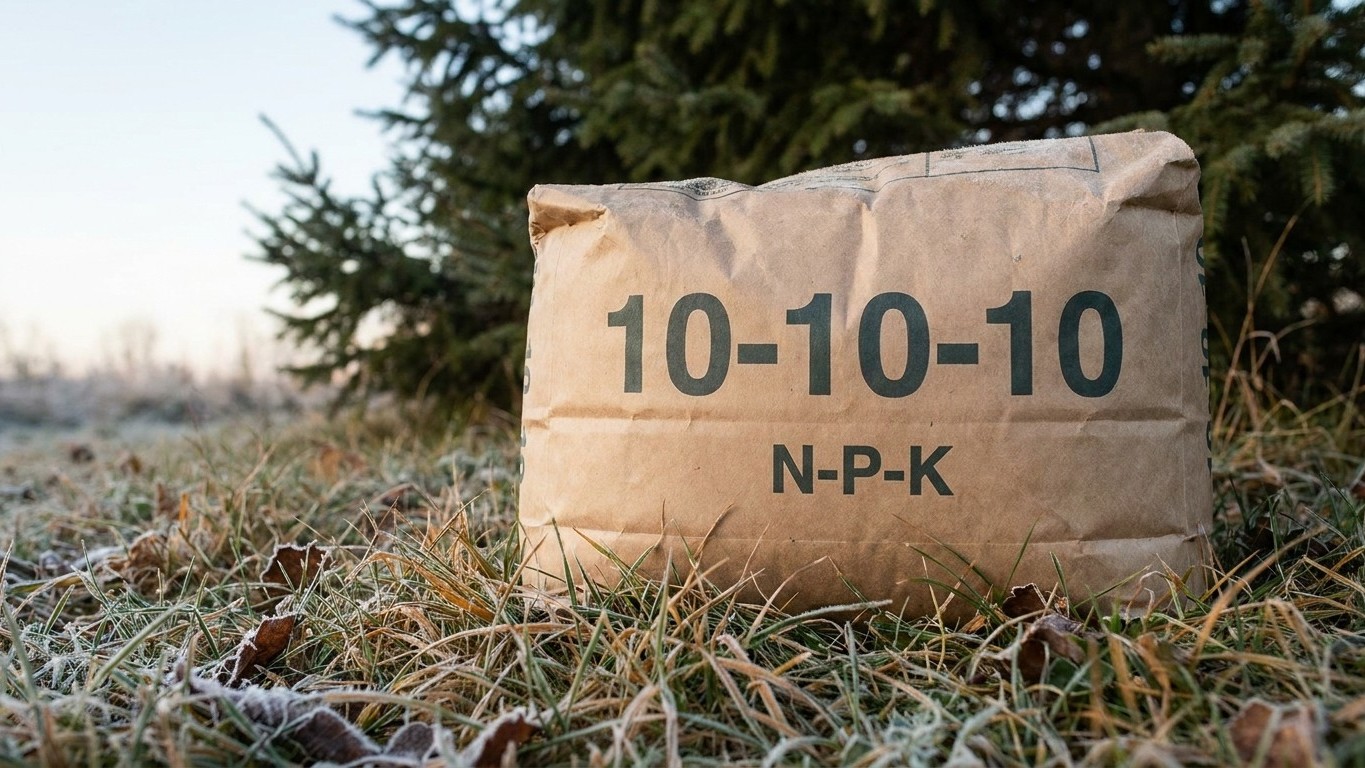
Every fertilizer bag carries three numbers, the N-P-K ratio, and that sequence tells you everything about which season it belongs to. The three numbers on every bag are nitrogen, phosphorus and potassium, and for autumn you want the first number low and the last relatively high. A spring bag might read something like 20-5-8. An autumn formula flips that entirely, with potassium taking the dominant position instead of nitrogen.
Timing the application matters just as much as picking the right numbers. Waiting too long defeats the purpose entirely. Nitrogen applied too late can force new growth that cannot harden off before frost, leaving the grass vulnerable to winter damage, which is exactly why greenkeepers front-load the potassium-heavy feed while soil is still workable rather than waiting for the first cold snap. A granular, slow-release autumn feed suits most lawns, applied from early September to late October while the soil is still warm. Slow-release granules matter here for a practical reason: slow-release granules drip-feed the roots over several weeks, matching the way the grass winds down so the potassium is there throughout the autumn window rather than in one quick burst that the plant can’t use.
Don’t fall for the temptation to feed once the ground has already frozen over, either. A Cornell turf scientist put it bluntly: no fertilizer should be applied once the turfgrass stops actively growing, because dormant fertilizer applications are not taken up by the plant, and instead, the nutrients are lost into the environment where they can cause water quality concerns. That’s not just wasted money sitting in the shed, it’s fertilizer runoff heading straight into storm drains and local waterways.
So the next time that half-empty spring feed bag tempts you in late September, remember what it actually does to grass at that point in the year. The greenkeeper’s swap isn’t a gimmick, it’s basic plant physiology: trade the growth trigger for the hardening agent, and the lawn spends winter storing strength in its roots instead of losing it in tender, frost-bitten blades.
Sources : lawnandmowers.com | gardenlawncareguy.com