
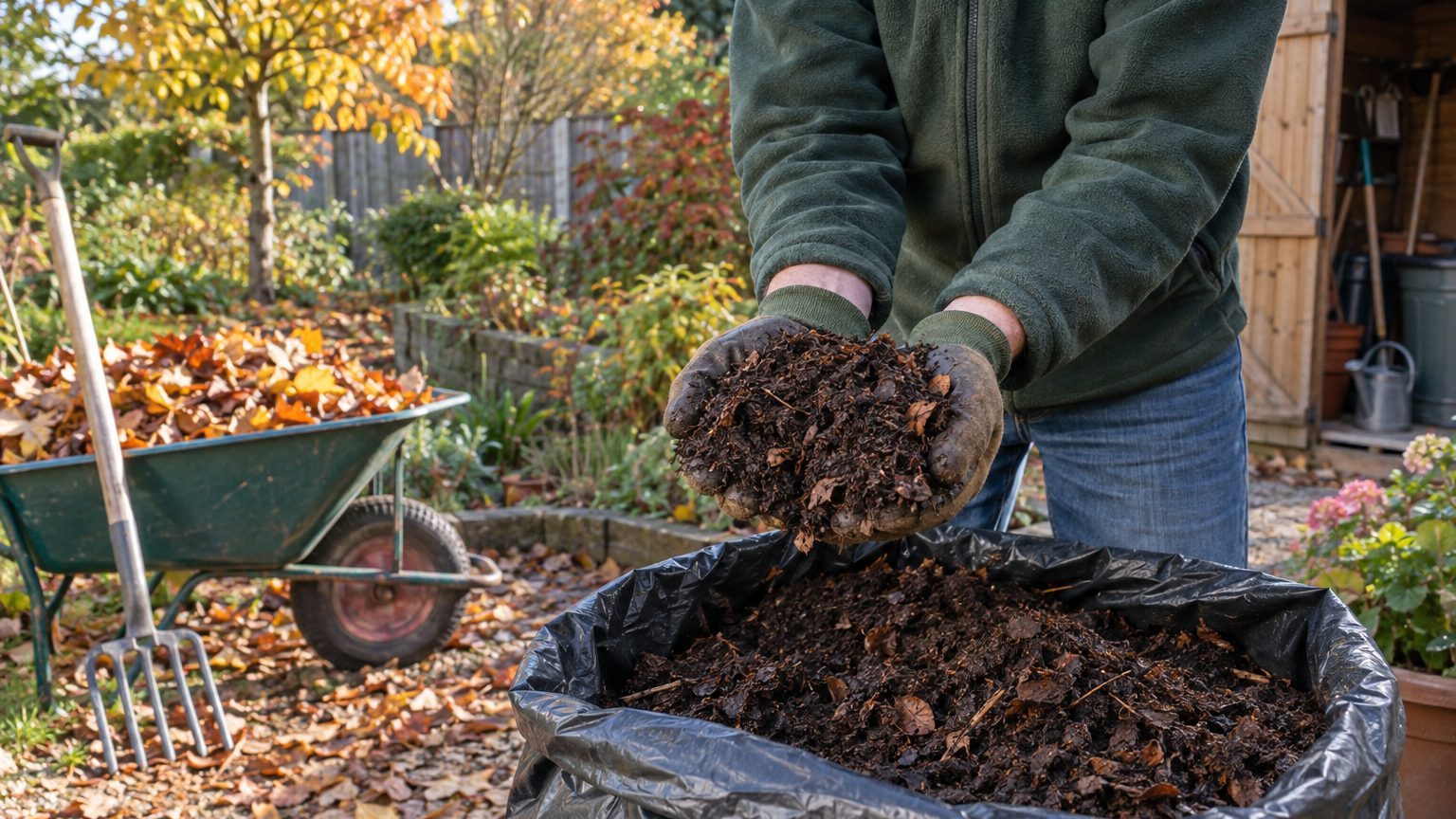
Leaf mold takes three ingredients: leaves, moisture and patience. Pack damp leaves into a heavy-duty trash bag, poke a few holes in it, tie it loosely and shove it behind the shed. In one to two years you’ll open it to find a dark, crumbly soil conditioner that costs nothing.
Anyone promising it in three months is selling something.
The slowness is built into the biology. Leaf mold is made by fungi, not by the heat-loving bacteria that drive a compost pile, and fungi work cool and unhurried. They don’t need turning or a nitrogen-rich “green” ingredient, but the finished product is low in nutrients. What it does brilliantly is hold water and loosen soil.
- Deciduous leaves like maple and birch decompose in 12-18 months, while oak and beech take closer to two years.
- The wrung-out sponge test ensures proper moisture—damp throughout but not waterlogged or dripping.
- Shredded leaves reduce decomposition time to 6-9 months by increasing surface area for fungal breakdown.
Which leaves to use (and which to skip)
Almost any deciduous leaf will break down, but not at the same speed. Oak, beech and hornbeam are tough and can take two years, though many gardeners swear their mold is the best. Maple, birch, alder, ash and fruit-tree leaves soften faster, sometimes within a year. A mixed bag averages out the differences, so the leaves from an ordinary suburban yard are usually fine as they come.
Leave out evergreen needles, which are acidic and slow, and thick leathery leaves such as magnolia, holly and laurel unless you shred them first. Skip anything showing disease, like rose black spot or tar spot, because cool decomposition won’t reliably kill the spores.
Shredding changes the math.
Running a mower over a pile of leaves a few times turns them into confetti, and that can cut the wait to six to nine months. Whole leaves, especially broad ones like sycamore or oak, tend to mat together and shed water, so they take longer to wet and longer to rot.
How wet is wet enough
Aim for a wrung-out sponge. Squeeze a handful and it should feel damp all the way through, with no more than a drop or two escaping.
Dry October leaves, which is what most of us rake, usually need a soaking. Fill the bag a third of the way, wet the leaves with a hose or watering can, then add more and repeat. Pack them down with your hands, but don’t compress them into a brick. Puncture the bag a dozen or so times with a garden fork so air can move in and out. Tie the top loosely, then park the bag somewhere shaded, since one baking in sun dries out and one sitting in a puddle turns slimy.
Check once, around month three.
Open the bag and squeeze a handful. If it’s dry, add water and reseal. If it’s soggy and smells sour, spread the leaves out for an afternoon to air before bagging them again, then leave it alone.
How long it really takes
Shredded leaves in a warm climate can be ready in six to twelve months. Whole mixed leaves usually need twelve to eighteen. Oak and beech on their own, in a cool northern yard, can push toward two years. Warmth helps the fungi along, so a bag that sits against a sunny wall in winter (but in shade in summer) will outpace one in a damp, cold corner. The bag will also shrink noticeably, as the leaves settle to a fraction of their original volume, so you may want to consolidate bags as the months pass.
Ready mold smells like a forest floor. It’s dark brown, crumbly, and you can no longer pick out individual leaves. If the leaves are soft and torn but still recognizable, you have half-finished mold, which is still excellent as a mulch.
Putting it to work
Spread two to three inches of mold around shrubs and perennials as mulch, or fork it into heavy clay to open up the structure. In sandy soil it works the opposite way, helping the ground hang on to moisture.
For seed starting, rub the finished mold through a half-inch sieve and mix it with an equal part of garden compost or sand, because mold alone is too lean to feed seedlings for long. The coarse bits that don’t pass through can go back in a bag for another round, or be used as mulch. A cheap, thin bag may split after a year, so choose a thick contractor-grade one, or double up if you’re planning on the two-year version.
Nutrient levels in leaf mold stay low whatever the leaf, so treat it as a conditioner and keep feeding hungry plants with compost or fertilizer.