
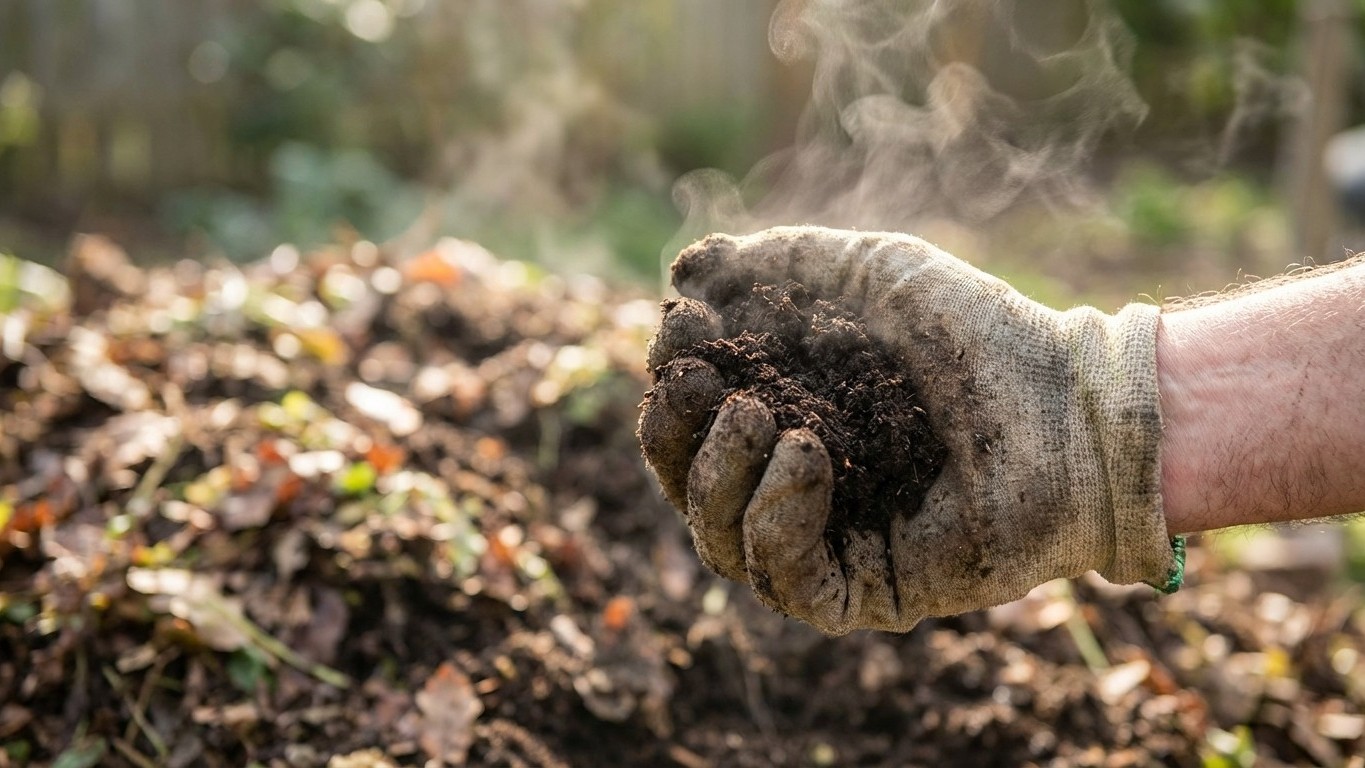
Spreading compost that still feels warm to the touch is one of the most common April gardening mistakes, and by the time you notice the damage, there’s nothing left to do but replant. The warmth signals that decomposition is still actively underway, which sounds harmless enough. It isn’t. Active compost generates ammonia, organic acids, and heat spikes that can burn tender seedling roots within hours of contact. Your seedlings don’t wilt dramatically. They simply stop growing, turn yellow at the base, and quietly die.
Key takeaways
- Why ‘warm’ compost feels finished but is chemically aggressive to young roots
- The EPA-recommended 72-hour bag test that reveals what your nose can’t detect
- How April’s timing trap reactivates dormant compost piles just when you need them most
What “still warm” actually means for your soil
Compost generates heat as a byproduct of microbial activity. During peak decomposition, internal temperatures can reach 140°F to 160°F, hot enough to kill pathogens and weed seeds, which is exactly the point. The problem is that this biological activity doesn’t switch off cleanly. A pile that reads 85°F to 100°F at its center is still mid-process, still releasing compounds that are chemically aggressive to young root systems. Gardeners sometimes mistake “warm” for “mature” because the pile looks finished on the outside: dark, crumbly, earthy-smelling. The inside tells a different story.
The technical term is “green compost,” and it’s more disruptive than most people expect. Research from the University of California Cooperative Extension found that immature compost can temporarily deplete nitrogen from surrounding soil as microbial populations continue feeding. So instead of feeding your seedlings, you’re actually pulling nutrients away from them right when they need that first flush of growth. A slow, subtle nitrogen robbery, happening two inches below the surface, invisible until the damage is done.
The simple test that saves your seedlings
The squeeze-and-sniff method is the fastest field check. Take a handful of compost from the center of the pile, close your fist around it, and hold it for ten seconds. Finished compost feels cool, breaks apart easily, and smells like forest floor after rain, that clean, earthy petrichor. If it feels warm against your palm, smells faintly of ammonia, or has any sour edge to it, it needs more time. Two to four more weeks, minimum.
A more reliable confirmation: the bag test. Seal a small sample in a zip-lock bag for 72 hours at room temperature. Open it carefully and smell. Finished compost produces almost no odor. Active compost produces a noticeable, sometimes sharp smell from continued off-gassing. This isn’t folk wisdom, it’s the method recommended by the U.S. Environmental Protection Agency as a basic maturity indicator for home composters.
Temperature probes are more precise. A compost thermometer (the long-stemmed kind used for meat, repurposed here) should read below 95°F throughout the pile, not just at the edges, before you consider it garden-ready. If your pile has hot and cool zones, turn it once, wait another week, and test again.
Why April makes this mistake so costly
April sits in a narrow window where soil temperature, light hours, and seedling vulnerability converge in an unforgiving way. Seedlings started indoors are transitioning from the controlled warmth of a grow light setup to real soil, real weather, real microbial competition. Their root systems at this stage are barely established, we’re talking about root hairs measured in millimeters, not centimeters. Even a brief exposure to chemically active compost can damage these structures permanently, stunting the plant’s ability to uptake water and nutrients for the rest of the season.
There’s also the timing trap. Gardeners who made compost last fall and let it sit through winter assume the cold months completed the curing process. They didn’t. Decomposition slows dramatically below 50°F and can effectively pause during a hard freeze. When temperatures climb in March and April, those paused microbial communities wake back up, and the pile re-enters an active phase just as you’re reaching for your trowel. A pile that felt cool and inert in February can be actively hot again by mid-April.
Direct-sown seeds are slightly more forgiving than transplants, but not immune. Carrot and lettuce seeds germinating directly in amended beds have shown poor germination rates when immature compost was incorporated at planting depth, the seed coat can be chemically damaged before the root even forms.
What to do if your compost isn’t ready
The most practical pivot is to use finished compost as a top dressing rather than a soil amendment. Spread it on the surface, an inch or so, and let rain and earthworms work it down gradually. The buffering effect of existing soil neutralizes most of the chemical activity before it reaches active root zones. Your seedlings get the long-term benefit without the short-term shock.
Buying bagged compost is a reasonable backup, but read the label. Products marked “soil conditioner” or “aged compost” are safer bets than generic bags labeled simply “compost”, the latter can vary wildly in maturity depending on the producer. Some commercial composts are genuinely well-cured; others are rushed to market in 60 days when proper maturation takes 90 to 120 days under ideal conditions.
If you have access to leaf mold, decomposed leaves, usually one to two years old, it’s one of the gentlest soil amendments available for spring transplanting. Lower in nutrients than compost, but chemically inert and structurally excellent for improving drainage without any of the burn risk.
One detail most guides skip: even finished compost, if applied heavily, can compact around seedling stems in wet April conditions and create a moisture barrier that encourages damping off. Keep compost applications to no more than two inches thick, and leave a small clear ring around each seedling’s base. The compost should improve the environment around the root system, not smother it.