
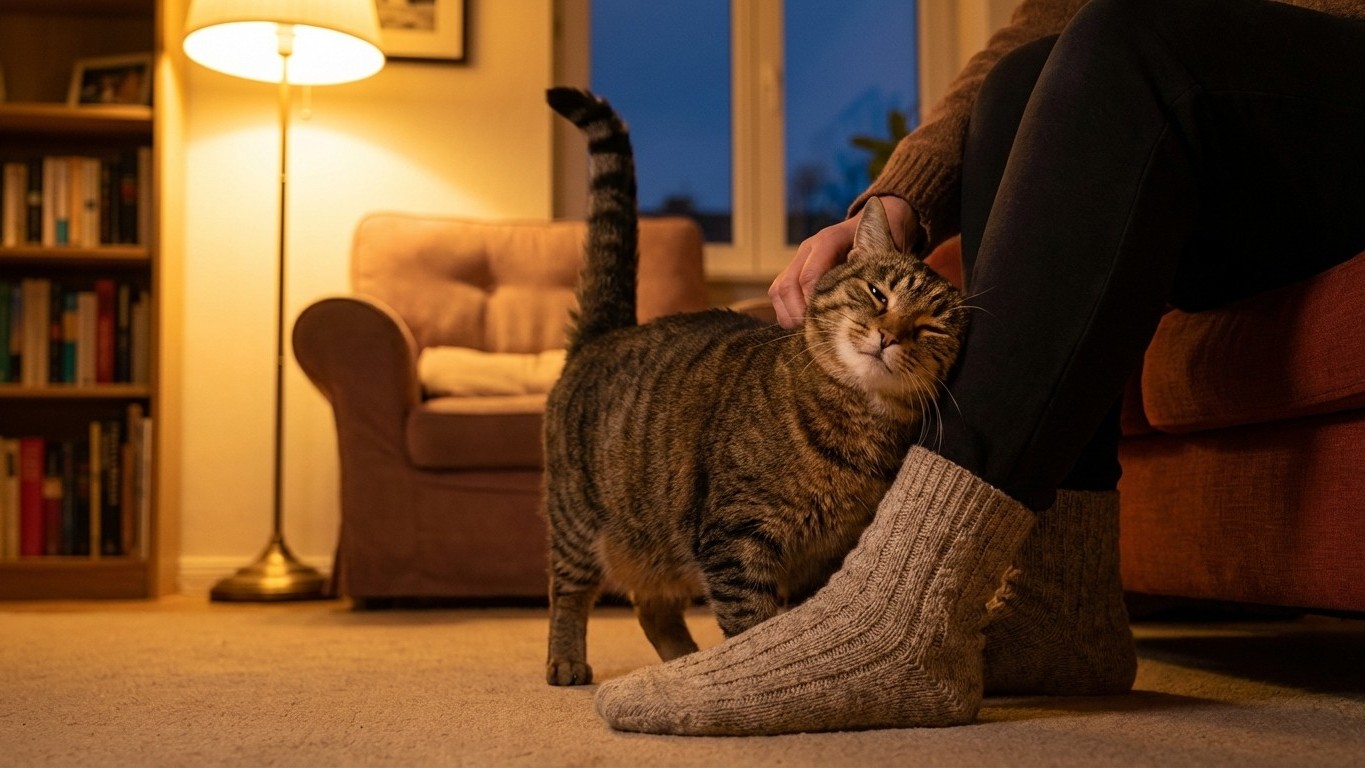
Every evening, as you settle into your favorite reading nook or begin winding down for the day, your feline companion performs what might seem like an odd ritual. Perhaps they circle around your legs with deliberate precision, rub their face against your furniture, or perform that mysterious kneading motion on your lap. For months or even years, you’ve witnessed this behavior without fully grasping its profound significance.
What many cat owners dismiss as quirky feline behavior is actually one of the most intimate expressions of love and trust in the animal kingdom. These seemingly Simple gestures represent your cat’s way of claiming you as family, marking their territory, and expressing a level of contentment that traces back to their earliest memories.
The Science Behind Your Cat’s Evening Ritual
When your cat rubs against you or kneads with their paws, they’re engaging in Behaviors That serve multiple emotional and physiological purposes. The rubbing motion activates scent glands located around their face, particularly near their cheeks and forehead. These glands release pheromones that are invisible to human noses but carry powerful messages in the feline world.
This scent-marking behavior, known as bunting, is your cat’s way of creating a communal scent profile. By transferring their scent to you and your belongings, they’re essentially creating a family signature that signals safety, belonging, and territorial ownership. It’s not possessive in a negative sense, but rather inclusive—your cat is making you part of their inner circle.
The kneading behavior, often accompanied by purring and a dreamy expression, originates from kittenhood. Nursing kittens knead their mother’s belly to stimulate milk production, creating one of their first positive associations with comfort, security, and maternal love. When adult cats knead on their human companions, they’re regressing to this blissful state, treating you as a source of the same unconditional safety they once found with their mother.
Timing Reveals Trust and Routine
The consistent timing of these behaviors—particularly in the evening—speaks volumes about your cat’s emotional state and their perception of home dynamics. Cats are naturally crepuscular, meaning they’re most active during dawn and dusk hours. Evening represents a transition period when they prepare for their most alert and social time.
By choosing these moments to engage in bonding behaviors, your cat is including you in their natural rhythm and demonstrating that they view your shared space as a secure base of operations. This timing also coincides with when many humans are most available and relaxed, suggesting that cats are remarkably attuned to our daily patterns and emotional states.
The predictability of these evening rituals indicates that your cat has established a sense of security and routine around you. Anxious or stressed cats rarely engage in such vulnerable displays of affection. The fact that your feline friend feels comfortable enough to perform these intimate behaviors consistently reveals a deep level of trust and emotional attachment.
Reading the Subtle Language of Love
Beyond the obvious physical gestures, your cat’s evening ritual likely includes several subtle communication methods that reinforce their affectionate message. The slow blink, often called a “cat kiss,” typically accompanies these bonding sessions. When your cat looks at you and slowly closes and opens their eyes, they’re demonstrating ultimate trust—in the wild, closing one’s eyes in the presence of another creature requires complete confidence in their safety.
The positioning of their tail during these interactions provides additional insight into their emotional state. A tail held high with a slight curve at the tip signals happiness and confidence, while a tail that quivers slightly often indicates excitement and anticipation of positive interaction.
Vocalization patterns also shift during these intimate moments. Many cats reserve their softest chirps, trills, and purrs for these special bonding times, creating a unique vocal signature that they share only with their most trusted humans. This personalized communication style develops over time and becomes increasingly sophisticated as the human-cat bond strengthens.
Responding to Your Cat’s Declaration of Love
Understanding the true meaning behind these behaviors transforms how you can respond to your cat’s overtures of affection. Rather than simply tolerating the kneading or absent-mindedly accepting the head bumps, you can actively participate in this bonding ritual by offering gentle pets, soft spoken words, or even slow blinks in return.
Creating a consistent environment for these interactions—perhaps by ensuring your reading chair is available each evening or setting aside dedicated bonding time—reinforces the positive associations your cat has built around these behaviors. This predictability strengthens the emotional connection and often leads to even more pronounced displays of affection over time.
The next time your cat approaches you with their evening ritual, remember that you’re witnessing one of nature’s most genuine expressions of love and trust. These seemingly simple gestures represent your cat’s way of saying, “You are my family, my safe space, and my chosen companion.” In a world where authentic affection can sometimes feel rare, your cat’s nightly declaration of love offers a pure and uncomplicated reminder of the profound bonds that can exist between species.