The revolution in my Kitchen started with a splinter. I reached for my favorite mug, the one with the faded skyline, and snagged my finger on the rough edge of an overstuffed shelf. It wasn’t the pain that stuck with me, but the absurdity. My cabinet, despite the parade of chic organizers I’d bought, was outsmarting me. Platters teetered like a sad game of Jenga. Spices huddled in shadowy corners. I’d spent years believing that the next clever gadget would finally render my kitchen serene.
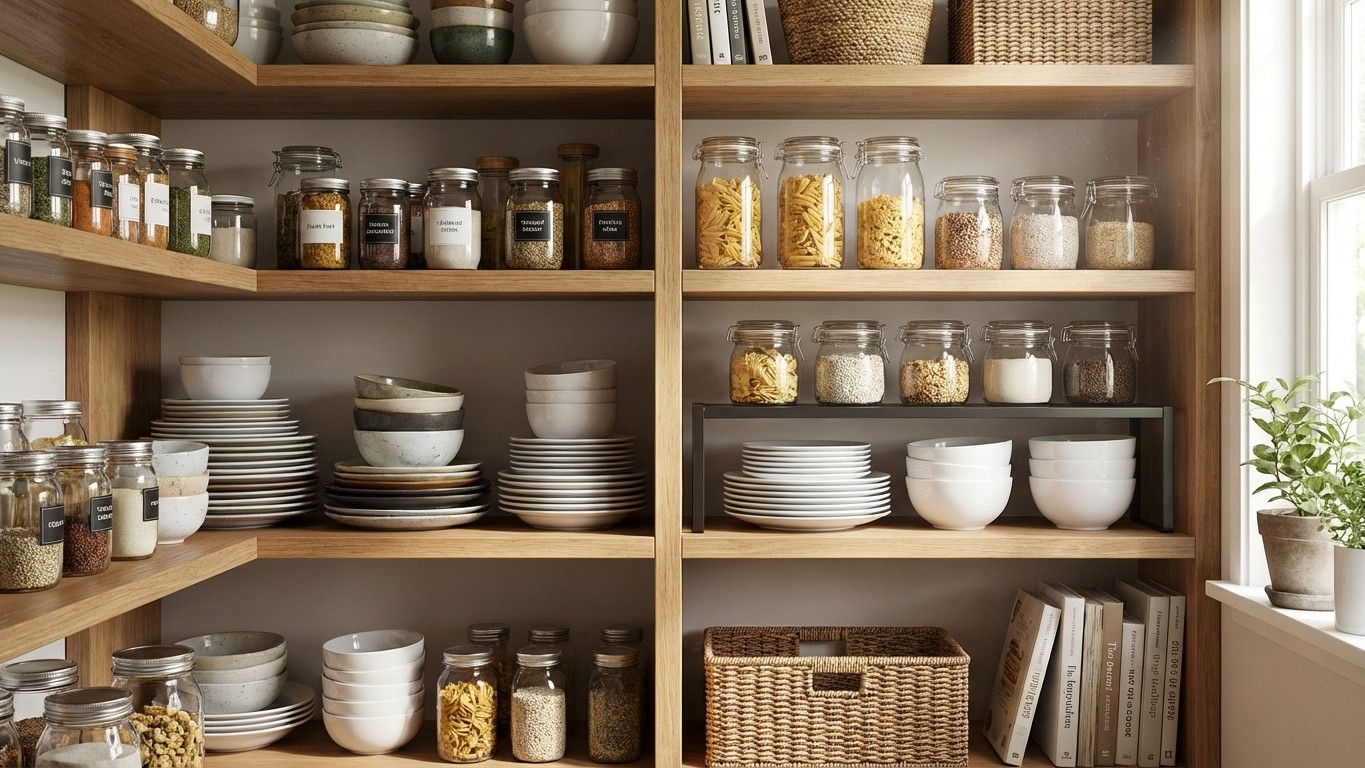
Turns out the answer had been gathering dust above my desk all along: a humble bookshelf riser. One of those U-shaped wire shelves, sold to bookworms who want to stack novels two levels deep. The moment I slipped it into my pantry, everything clicked. Literally and metaphorically, my plates lined up, my jars no longer blocked each other, and the shelf itself made a satisfying sound as it settled in. I Stopped-paying-for-garden-watering-thanks-to-this-simple-change”>Stopped carting home latest-and-greatest kitchen organizers. Who knew a “library” product could out-cook the culinary aisle?
Key takeaways
- Tired of cluttered shelves despite countless organizers?
- Discover the surprising power of a basic bookshelf riser in your kitchen.
- Learn why overcomplicated tools often fail where simplicity wins.
The Bookshelf Riser: Simplicity Wins the Day
Walk through a big-box store: kitchen section on the right, office/stationery just over there. Shelving solutions span both, but with different costumes. In the kitchen, organizers often show off acrylic bins and specialized slots, for foil, for spices, for canned soup stacked in tight formation. These promise order for every category, but tend to overcomplicate what is already a small, crowded space.
Meanwhile, a basic wire riser, originally designed to keep paperbacks upright, does not judge your mismatched mugs or thrifted ramekins. No trendy branding or “kitchen” label, just flat stability. Place it on a deep shelf, and suddenly you have two usable surfaces. Dinner plates slide below, cereal bowls nest above. Cans stop toppling. Best of all, you see what you own, which is half the battle.
Some people splurge on custom cabinet inserts or elaborate tiered racks. Friends have confessed to kitchen drawer organizers that require a PhD to arrange. I marvel at the simplicity: a $10 riser, the width of a dictionary, and no installation needed. Durability is surprisingly good, the same risers that shrug off hefty history books handle plates and Pyrex with ease.
Why Most Kitchen Organizers Fall Short
Promises are big in the home organization world. Products come with sleek photos, a little promise of transformation. The reality? Many clever racks end up eating more precious square inches than they save. Dividers that wobble. Bins that break after their third tumble. Stacking systems that only fit if your dishes happen to be the right size. I once bought a pull-out shelf meant to fit “most” kitchen cupboards. It lasted a week, and then spent the next year gathering crumbs in the garage.
The trouble runs deeper than disappointment. There’s the creeping sense that you are doing it wrong when clutter persists. Consumer Reports found that Americans spent an estimated $11 billion on home storage and organization products in 2025, the rough market size of all U.S. bottled water sales. Still, kitchens everywhere bulge and overflow. Maybe the problem isn’t lack of solutions, but too many overengineered ones.
The rise of open-concept homes, a trend visible in real estate listings from Austin to Seattle—means kitchens double as display cases. Visible clutter gnaws at your nerves, but the temptation to hide it with “just one more” basket or tray never truly works. Good bones trump gimmicks. A bookshelf riser is a rare species: unobtrusive, no assembly required, and genuinely helpful. Sometimes the best fix doesn’t announce itself at all.
Reframing the Home Organization Puzzle
Why do we love things that “belong”? Childhood memories of that perfect bookshelf, clean and symmetrical, have taught us storage can be beautiful. A riser captures the same impulse. I once watched a librarian slide small metal supports beneath a sagging shelf, transforming chaos into neat rows. The principle holds in the kitchen: instead of fancy compartments, create layers that respond to real daily life.
Stacking upward, not outward, changes the relationship with space. One friend, an enthusiastic cook with a suburban kitchen, reports that adopting a riser system means less frantic hunting for lids and never losing track of hot sauce. Visiting apartment dwellers in New York, I’ve seen bookshelf risers double as under-sink organizers, holding cleaning sprays above dish soap; or perched in the fridge, separating cold cuts from yogurt. These adaptations work because the item’s purpose is borrowed, not forced: a gentle rebellion against shopping by room label.
Ironically, the surge in home organizing content, tidy-up TV shows, hypnotic decluttering Instagram reels, often skips over the creative blending of tools. For a discipline built on “out of the box” thinking, the answer is almost always in a box marked “office.” Need more proof? Ikea’s storage bestsellers consistently include basic shelf inserts, bought as often for wardrobes and pantries as for their intended bookcases.
Why I Won’t Go Back
Certain habits, like lining up buying guides or browsing Amazon for “game-changing” gadgets, die hard. Yet none of those carefully optimized kitchen tools held a candle to the ease of a repurposed wire shelf. Guests notice, “Where did you get that mug rack?”, and when I tell them, their eyes widen with recognition. Why not raid the office aisle for your next kitchen upgrade?
No pile of clear plastic bins has ever made me this happy. Today, my Kitchen shelves are calm, predictable, even inviting. Every few weeks, when I shift things around, the old friction is gone. The bookshelf riser does its job quietly, asking nothing. If you’re waiting for the One True Tool, maybe pause before buying again. Sometimes the perfect solution is right under your nose—or holding up your detective novels in the other room.
How many other everyday objects are quietly waiting for their big kitchen break? Perhaps the best organizers are those that never claim to be organizers at all.