
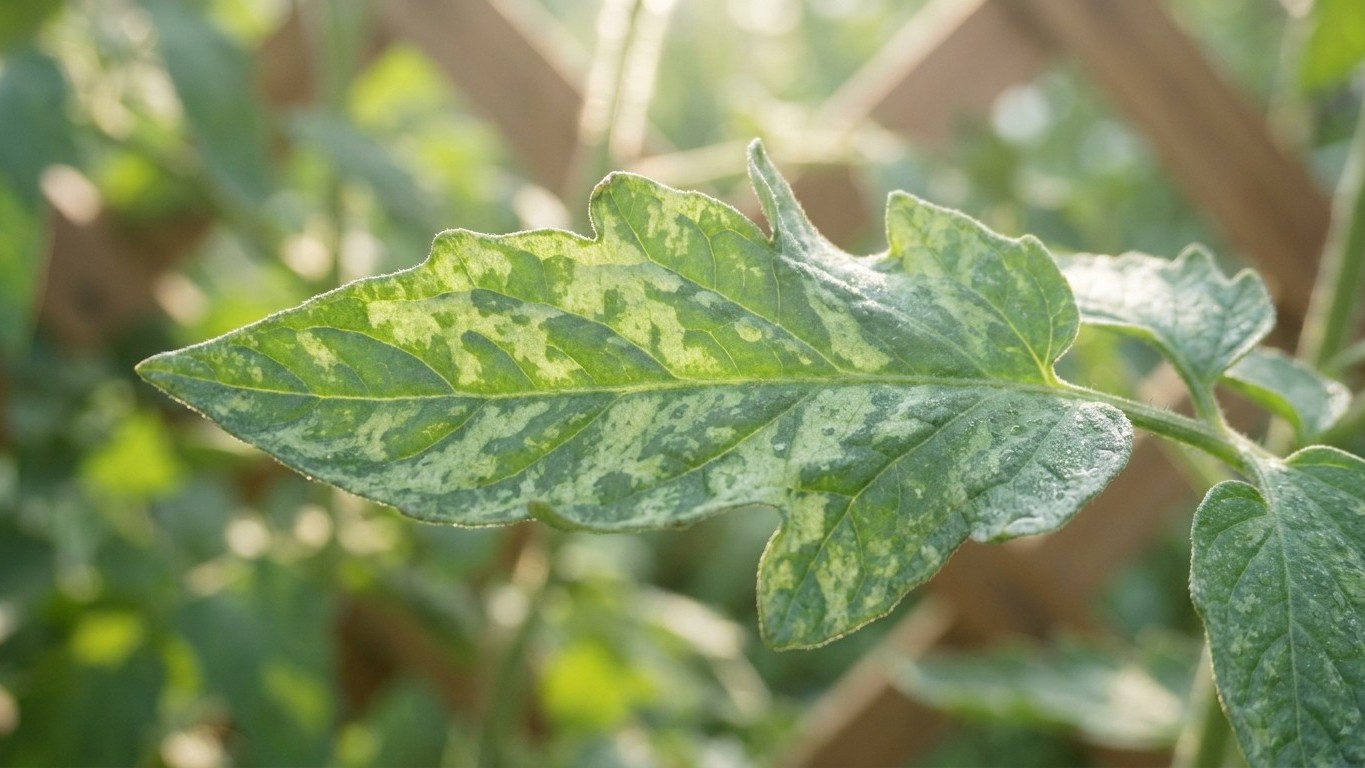
Pinching out tomato suckers with bare hands feels wonderfully low-tech. No scissors, no fuss, just a clean snap between thumb and forefinger, the way gardeners have done it for generations. The problem showed up by evening: almost every plant in the bed had developed the same unsettling pattern of mottled, distorted leaves. Light green and dark green patches swirling together, some leaves curling slightly at the edges. The culprit wasn’t a pest or a sudden weather shock. It was the gardener’s hands.
What happened is a textbook case of tobacco mosaic virus transmission, one of the most persistent plant viruses in existence. Tomatoes are highly susceptible, and the virus spreads with shocking ease through contact alone. No insect vector needed. Just the sap from one infected plant on your fingers, transferred to the next as you work down the row.
Key takeaways
- One infected plant can silently spread a decades-old virus to dozens of neighbors through a single gardening session
- The telltale mottled leaf pattern means the virus is already systemic—and there’s no cure once it takes hold
- A simple change in technique (one detail most gardeners never learn) could have prevented the entire outbreak
Why Your Hands Became the Vector
Tobacco mosaic virus, or TMV, was the first virus ever identified by science, back in 1898 by Dutch botanist Martinus Beijerinck, which gives you a sense of how long it has been causing grief for growers. What makes it particularly troubling in a home garden is its stability. The virus can remain infectious for years in dried plant debris, on tool surfaces, and yes, on human skin and clothing. Washing hands with soap and water reduces transmission risk, but it doesn’t eliminate it reliably if one plant in the row was already infected before you started working.
The mottled leaf pattern you see is the virus disrupting chlorophyll production unevenly across leaf tissue. Some cells keep producing chlorophyll normally while adjacent ones slow down or stop, creating that characteristic mosaic of light and dark green. As the infection progresses, leaves may become puckered, narrow, or fern-like in appearance, a condition sometimes called “shoestring” in severe cases. Fruit, when it sets, can develop internal browning and uneven ripening.
Here’s the detail that catches most gardeners off guard: a plant can carry TMV without showing visible symptoms for days or even weeks, especially early in the season when temperatures are moderate and growth is vigorous. That “healthy” plant at the start of the row may have been the original source all along.
Suckers, Sap, and the Biology of Spread
Suckering, removing the lateral shoots that emerge between the main stem and a branch — is standard practice for indeterminate tomato varieties. It keeps the plant focused on fruit production rather than sprawling vegetative growth. The technique itself is sound. The issue is purely about hygiene between plants.
Every time you snap a sucker, you expose fresh tissue and release sap. That sap, if the plant is infected, carries a high viral load. Your fingers are now coated. Move to the next plant, pinch another sucker, and you’ve inoculated it directly into an open wound on the stem. Repeat 20 or 30 times across a row, and you’ve essentially hand-vaccinated an entire bed with the pathogen. The symmetry is almost elegant, from a virological standpoint, if not from a gardening one.
TMV is remarkably heat-stable and can survive at temperatures that would destroy most other pathogens. Studies have found it infectious after being heated to around 90°C (194°F), which explains why it persists through composting if plant material isn’t hot-composted thoroughly. Infected plant debris left in the soil is a year-to-year reservoir that catches gardeners by surprise come spring.
What To Do With the Affected Plants Now
There is no cure once a plant is infected. That’s the hard truth. TMV is systemic, once it’s in the vascular tissue, it moves throughout the plant. Removing affected leaves won’t slow it down meaningfully. The focus now shifts to containment and damage management.
First, stop working across plants without sanitizing. A 10% bleach solution applied to pruning tools and allowed to dry, or a 70% isopropyl alcohol wipe, effectively neutralizes the virus on hard surfaces. For bare-hand suckering going forward, put on disposable gloves and change them between plants, or commit to using a clean blade and sterilizing after every cut. The gloves-between-plants method sounds tedious, but it takes roughly 10 seconds per plant and can save an entire season.
Infected plants can still produce fruit, sometimes quite a lot of it, depending on how early the infection occurred and how aggressively the virus moves through the tissue. Plants infected late in the season, after flowering has already happened, often yield reasonably well despite the mottled foliage. Manage them carefully: keep nutrient levels stable, water consistently, and avoid any additional stress that would compound the virus’s impact on growth.
At season’s end, remove all plant material completely. Don’t compost it through a cold pile, bag it for municipal green waste collection or burn it where local regulations allow. The roots and stem bases harbor the virus too, so clean removal matters.
Building a Healthier Routine Going Forward
Resistant varieties are the most durable long-term solution. Many modern tomato cultivars are bred with TMV resistance built in, indicated by a “T” or “TMV” on the seed packet or plant tag. These varieties carry a gene that prevents the virus from completing its lifecycle within the plant tissue. They won’t win every flavor comparison with heirloom types, but in a garden with a known TMV history, they’re worth serious consideration.
Smokers and those who handle tobacco products face a specific extra risk : TMV is related to tobacco necrosis virus and commercial tobacco products can carry infectious particles. Washing hands thoroughly before any garden work is genuinely good practice, not just precautionary theater.
One detail that rarely makes it into casual gardening advice: the virus can also infect weeds in the Solanaceae family, including nightshade species that grow at the edges of beds. Those weeds can act as a reservoir that reinfects your garden even after a clean-out. Keeping the perimeter of your vegetable space clear of nightshade family weeds is a low-effort intervention with outsized protective value.