
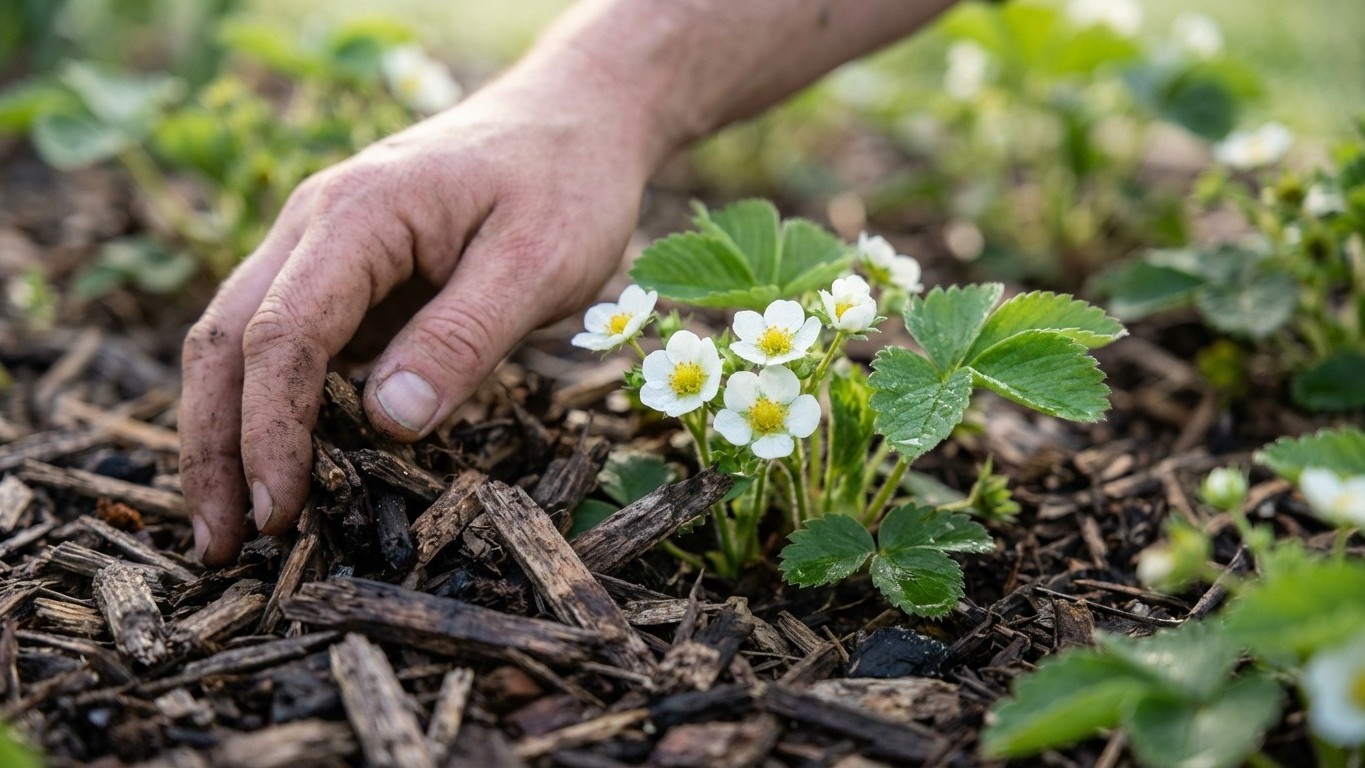
The first flowers appeared on my strawberry patch right around April 10th that year. The plants looked healthy, the weather was cooperating, and I had no particular reason to pay close attention to the calendar. So I didn’t. That single act of neglect, skipping what experienced growers call the critical 15-day window of April care — quietly dismantled what could have been an exceptional harvest. The plants looked fine on the surface. Below it, they were being shortchanged.
Key takeaways
- One gardener’s April oversight permanently reduced strawberry yields—and the reason why has nothing to do with luck
- A precise 15-day biological window in April controls decisions that ripple through three years of harvests
- The counterintuitive April action that cuts your current berries but doubles next year’s yield
What Actually Happens to Strawberries in April
Strawberries burst into life in spring, it is a time of year when the plants need lots of energy to grow leaves, flowers, and berries, and April is a peak time for growth as they start moving when the soil reaches around 50°F. Most gardeners see green growth and assume everything is on track. The reality is that April is less a month of passive watching and more a month of active intervention, concentrated into a tight window where several tasks have to happen in the right order.
Older plants can get swamped or matted in beds, so taking time to remove dead, damaged, or old leaves and any debris around the base of each plant matters, all that excess plant material from last year can harbor disease and be a home for slugs and snails. Left in place, that layer of organic debris becomes a slow-burning problem. You won’t see it in April. You’ll see the consequences in June, when berries rot before you can pick them or yields fall short of what the plant clearly promised.
The mulch timing is just as precise. Mulch should be removed in spring, usually from mid-March to early April, after the danger of freezing is past but before much leaf yellowing occurs, with the straw left in the rows as a bed for the berries to ripen on. Leave the winter mulch on too long, and you smother emerging growth. Remove it too early, and a late cold snap kills the flowers before pollination even starts. The 15-day rule isn’t arbitrary — it tracks a biological window, not a date on the wall calendar.
The Flower Decision That Defines Your Next Three Years
Here’s where most first-time growers go wrong, myself included. Flower buds of June-bearing strawberries should be removed manually in the first year to avoid flowering and fruiting stress on the young plant, removing flowers allows the plants to direct their energy into root-system establishment and the development of a healthy, large leaf canopy that will “fuel” the next year’s crop. The short-term loss is real: you sacrifice that first flush of berries. The long-term gain is disproportionate.
In the first year, picking off blossoms discourages strawberry plants from fruiting, if not allowed to bear fruit, they spend their food reserves on developing healthy roots instead, and the yields will be much greater in the second year. Think of it as compound interest for a perennial plant. Every berry you forgo in year one is partially repaid with interest in year two and three. Your plants will produce berries for 3 to 5 years, and allowing them to establish a good root system first will maximize your harvests to come. That’s the math most impatient gardeners refuse to run.
The Runner Problem Nobody Talks About Enough
By mid-April, runners are already beginning to form. This is where gardeners split into two camps: those who let them spread freely and hope for the best, and those who manage them with intention. Runner pruning makes a huge difference in productivity, if you want strong yields of big berries, it’s best to remove as many strawberry runners as possible. The logic is simple but counterintuitive: a strawberry plant spreading sideways is a strawberry plant not putting energy upward into fruit.
Such spacing gives optimal growing conditions because strawberry rows can often be too dense for good production, spaced-row culture requires more care, but higher yields, larger berries, and fewer disease problems may justify the extra effort. Density is the enemy of quality. A bed that looks lush and full in April often produces small, hard-to-find berries by June because the plants are competing with each other for light, water, and nutrients. Plant thinning is essential because beds that retain too many plants yield small berries that are difficult to find under the dense foliage. Counterintuitive but true: fewer plants, more berries per plant.
On the fertilizer question, April demands restraint, not generosity. Established plantings of June-bearing strawberries should not be fertilized in spring, spring fertilization stimulates foliar growth, produces softer berries, and increases disease problems; lush vegetative growth may make picking difficult, and soft berries are more likely to be attacked by fruit rots, so a spring fertilizer application may actually reduce fruit yield. More food in spring sounds logical. The plant disagrees.
The Frost Window You Can’t Afford to Ignore
Open flowers are the most vulnerable part of a strawberry plant. Flowers that have opened can be killed if the temperatures drop below 30°F, but there are simple ways to protect plants from frost, and keeping a close eye on forecasts and being prepared to act is the key. A single night of neglect in April can wipe out the entire flower set for June-bearing varieties, which only bloom once. That’s a year’s harvest gone in eight hours.
Frost during bloom can cause strawberries to be deformed and undersized as they ripen, frost damage is easily mistaken for tarnished plant bug damage, as both cause puckering and concentrations of seeds on parts of the berries, since the damaged part grows more slowly than the rest of the berry. The solution is low-tech: a row cover or even old bedsheets laid gently over the plants the afternoon before a cold night. Put the covers in place ahead of the cold nights, and remove them during the day once temperatures have risen so pollinators can access the flowers. Pollination still has to happen — a smothered plant is barely better than a frozen one.
The deeper lesson in all of this is that strawberry productivity is largely a spring decision made in a narrow window most gardeners walk right past. Most garden strawberries are perennials and will return for several years with proper care, though productivity often peaks in years two and three. Which means those first few Aprils are the ones that shape everything that follows. Miss the window once and you’re not just losing this summer’s harvest, you’re re-setting a perennial plant’s trajectory for years. The patch that underperformed after my neglect wasn’t broken. It was just never given the 15 days it needed to become what it was capable of.
Sources : homesandgardens.com | meadowlarkjournal.com