
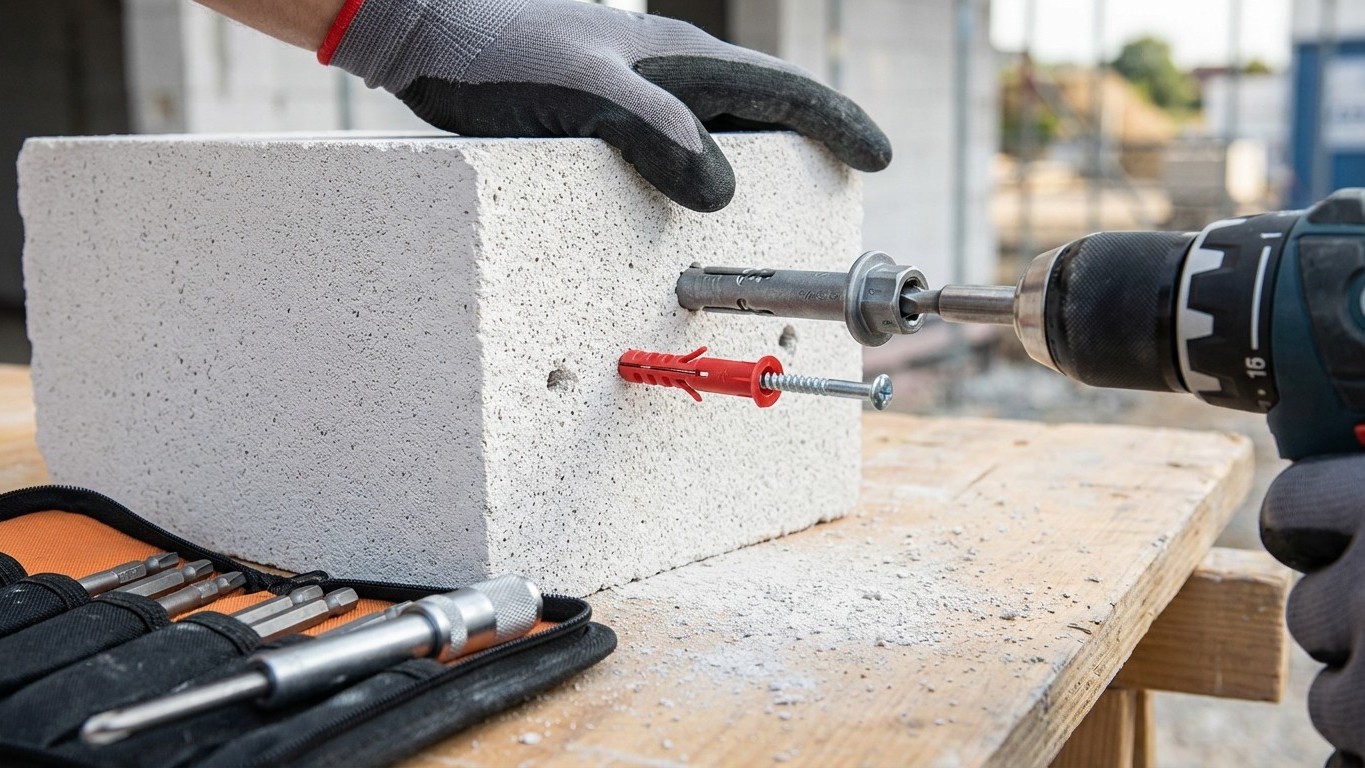
The drill bit spun uselessly as another chunk of aerated concrete crumbled away, leaving me with yet another oversized, ragged hole where a clean anchor point should have been. Sound familiar? If you’ve ever tried Mounting anything substantial on aerated concrete walls using standard fixings, you’ve likely Experienced this frustrating cycle of Drilling, crumbling, and starting over.
Aerated concrete, also known as autoclaved aerated concrete (AAC), presents unique challenges that catch many DIY enthusiasts and even some contractors off guard. This lightweight building material, filled with millions of tiny air bubbles, offers excellent insulation properties but demands a completely different approach when it comes to fixings and mounting solutions.
Why Standard Fixings Fail in Aerated Concrete
The cellular structure that makes aerated concrete so effective for thermal insulation becomes its weakness when it comes to holding power. Traditional wall plugs and anchors rely on expansion or friction against solid material to create secure connections. In aerated concrete, this expansion often causes the surrounding material to crack or crumble, creating loose, unreliable fixing points.
The problem compounds when you consider that many people instinctively reach for larger drill bits or longer Screws when their first attempt fails. This approach only creates bigger problems, literally. The larger the hole, the more Material you disturb, and the weaker the connection becomes. It’s a counterintuitive situation where more isn’t better—it’s actually worse.
Professional contractors who regularly work with aerated concrete have long since abandoned conventional wisdom. They understand that this material requires specialized solutions designed specifically for its unique properties. The key lies not in fighting against the material’s characteristics, but in working with them.
The Specialized Fixings That Change Changes-everything-when-hanging-a-pendant-light-above-your-dining-table”>everything
The game-changer comes in the form of specialized aerated concrete fixings that distribute load differently than conventional anchors. These systems typically feature wider expansion mechanisms or chemical bonding properties that work with the cellular structure rather than against it.
Frame fixings designed for aerated concrete often incorporate longer, self-tapping threads that bite into multiple layers of the material’s structure. Unlike standard screws that rely on a Mistake-i-finally-stopped-killing-my-low-light-plants-and-helped-them-thrive”>Finally-stopped-making”>single point of contact, these specialized fixings create multiple contact points throughout their length, distributing stress across a larger area. This approach prevents the concentrated pressure that causes traditional fixings to pull out or cause cracking.
Chemical anchors represent another professional-grade solution that transforms how loads are transferred in aerated concrete. These systems use specialized resins that penetrate into the porous structure of the material, creating a mechanical and chemical bond that’s often stronger than the concrete itself. The resin fills the voids in the cellular structure, essentially creating a solid anchor point within the lightweight material.
Heavy-duty applications often call for through-fixings that extend completely through the aerated concrete block to engage with the structural elements behind. These fixings acknowledge that aerated concrete, while excellent for insulation and construction, isn’t designed to be a primary load-bearing surface for heavy installations.
Installation Techniques That Actually Work
Cleaning-my-blinds-wrong-my-whole-life-this-odd-sock-trick-changes-everything”>cleaning the drilled holes becomes critical with aerated concrete. The material’s cellular structure means debris can easily become trapped in the voids, compromising the fixing’s performance. Professional installers use specialized cleaning tools or compressed air to ensure holes are completely clear before installation.
The installation sequence also matters more than with traditional materials. Many specialized aerated concrete fixings require specific torque settings or installation depths to achieve their rated load capacity. Over-tightening can compress the cellular structure around the fixing, actually reducing holding power rather than increasing it.
Choosing the Right Solution for Your Project
Heavier installations require more robust solutions. Chemical anchors excel for applications where maximum holding power is required, though they demand more careful installation and longer cure times. For the heaviest loads, through-fixings that engage structural elements provide the most reliable solution.
Understanding your specific aerated concrete type also influences fixing selection. Different manufacturers produce blocks with varying densities and cell structures, each affecting how different fixing systems perform. When in doubt, consulting with a structural engineer or experienced contractor can prevent costly mistakes and ensure long-term reliability.
The revelation that specialized fixings exist for aerated concrete transforms what was once a frustrating, hit-or-miss process into a predictable, professional installation. These purpose-built solutions acknowledge the unique properties of cellular concrete and work with them rather than against them. The result is secure, lasting connections that won’t fail over time, giving you the confidence to tackle mounting projects in aerated concrete with professional-level results.