
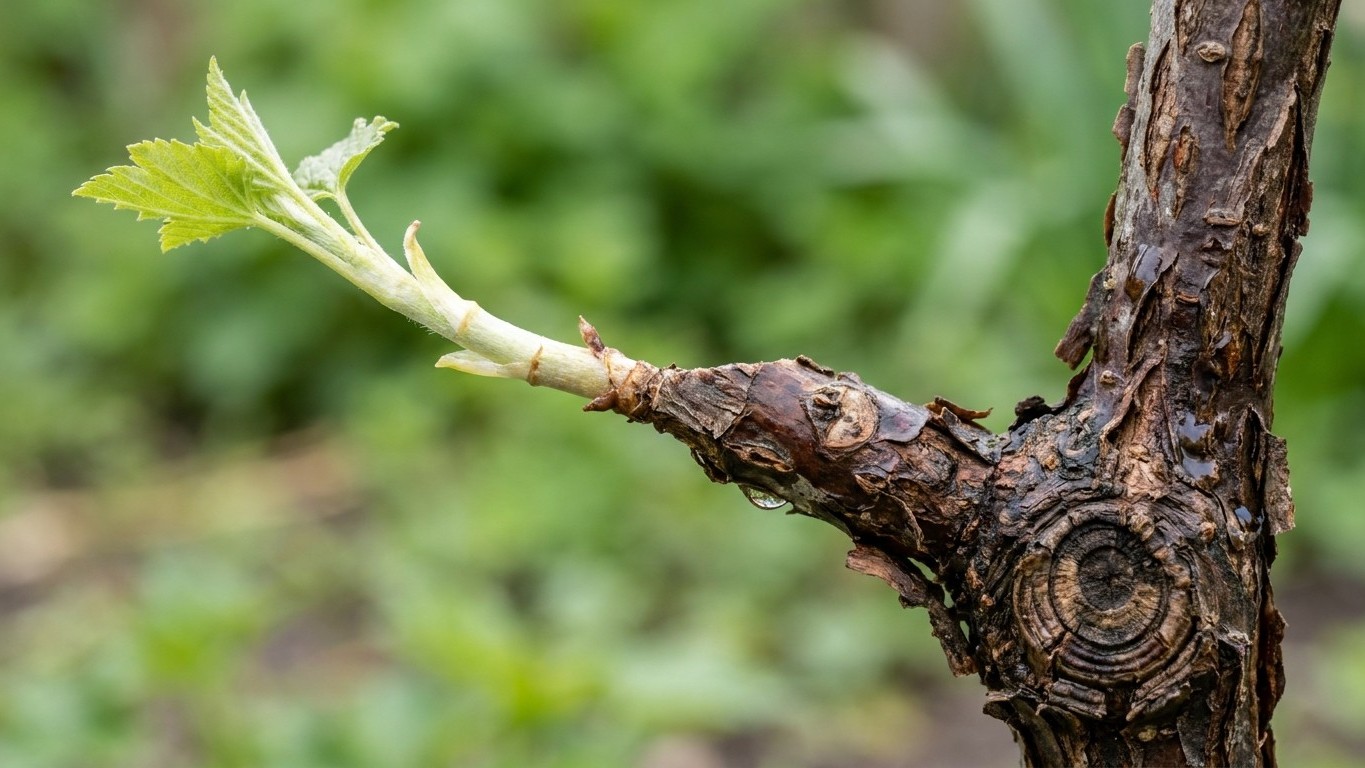
Every spring, I dumped a scoop of all-purpose fertilizer around the base of my currant bush, certain that more nutrients meant more berries. Three seasons later, I was still standing there in August with an empty basket. The bush looked healthy: green, bushy, sprawling. But almost no fruit. So I finally did what I should have done years earlier. I got down on my knees and looked at the wood itself, branch by branch, and counted.
What I found explained everything. Nearly every stem on that plant was thick, dark, and rough-barked. Old wood. The black currant bears most of its fruit on two-year-old wood, with some additional fruit on one-year-old wood. Mine had almost none of either. I’d been feeding a plant that had aged out of its productive years, and no amount of nitrogen was going to reverse that clock.
Key takeaways
- A lush, healthy-looking currant bush can be completely unproductive for a surprisingly simple reason
- The type of wood matters more than nitrogen: one wrong feeding decision can actually prevent fruit for years
- What you discover in August about your branches reveals exactly what to cut in winter
Currants don’t fruit on just any wood
This is the part most casual gardeners miss, and I certainly did for three years. Currant bushes don’t produce evenly across their whole structure. Each stem has a window, and once it closes, that branch is basically dead weight as far as fruit is concerned. For black currants, blackcurrants start producing fruits on one year old wood, but most fruit is produced on two year old stems, and from year three, the stems are less productive. Red and white currants get a slightly longer run: the fruit is produced on two- and three-year-old wood, and the quantity and quality of the fruit declines after the third year.
The visual cues are easy to spot once you know what you’re looking for. Young stems are thin and pale coloured, while the old wood is darker brown, rough and thicker. Peeling bark, near-woody thickness at the base, a grayish or blackened tone compared to the smooth younger growth nearby: that’s the wood telling you it’s retired from fruit duty, even if it’s still very much alive and soaking up water and fertilizer.
Why the fertilizer made things worse, not better
Here’s the part that stung a little to accept: my feeding routine wasn’t neutral. It was actively working against fruit production. Nitrogen stimulates leaf growth, and too much means lots of leaf, no fruit. Nitrogen tells a plant to build more stems, more leaves, more green mass, which sounds like a win until you realize that energy was pulled away from the older, still-viable fruiting wood. Meanwhile too much nitrogen causes leaf growth, too little potassium makes weak fruit or no fruit, and this is the most underrated cause of a currant bush that looks lush but produces almost nothing.
I wasn’t feeding a struggling plant back to health. I was pouring gasoline on a growth pattern that had already gone sideways: an overgrown bush with dominant old canes, getting yet another push toward leafy expansion instead of fruit. Experts who fertilize black currants professionally are blunt about this trade-off: a potassium-rich fertilizer once flowers appear enhances berry size and flavor, while excessive nitrogen leads to excessive leafy growth and fewer berries. I’d been doing the opposite of what the plant actually needed at that stage.
What checking the branches in August actually revealed
August turned out to be the smartest possible moment to do this inspection, and not by accident. You can prune currants in the summer at harvest time, because this makes it easy to see which are the older branches, since they will have the most fruit and should be removed from the base. if a branch was covered in berries this year, it was likely wood that had already peaked and needed to go once harvest wrapped up. If a branch had almost nothing on it despite being thick and dark, that was old, spent wood contributing zero to the harvest while still hogging root resources.
Sorting my own bush that way was almost comical. Out of roughly a dozen main stems, maybe three were young enough to matter. The rest were exactly the kind of overgrown, unpruned mass one gardener online described after years of neglect: most of the branches were old wood, some with peeling bark, and many nearly horizontal and close to the ground, though loaded with buds. Buds don’t guarantee fruit. Age does the deciding.
The fix isn’t more food, it’s a renewal cut
Once I understood the wood-age problem, the solution stopped being about nutrition and became about subtraction. The standard advice, and it works, is to remove roughly a third of the oldest canes at ground level every year during the dormant season, not during the growing months. Each year, prune out up to one third of the oldest stems at the base, which encourages new stems to shoot from the base. That timing matters: avoid pruning during the growing season unless it’s to remove dead, damaged, or diseased branches, since pruning during active growth can weaken the plant and reduce the following year’s harvest.
So the plan I’m following now is simple. Late winter, before buds swell, I cut the oldest, darkest, thickest canes to the base, leaving the plant with a mix of one-, two-, and occasionally three-year growth. No fertilizer boost until that structure is sorted out, and even then, less nitrogen, more potassium, applied only once flowering starts. It’s a slower fix than dumping in more feed, but it’s the one that actually matches how these plants grow.
There’s a strange kind of proof in how long-lived a properly renewed currant bush can be. One gardener who has kept up this annual removal since 1999 reports the shrub still produces fruit a quarter of a century later, simply by never letting the wood outrun its useful years. That’s not luck. That’s just paying attention to what’s actually growing, instead of assuming the answer is always more food.
Sources : ask.metafilter.com | fruitandgarden.com