
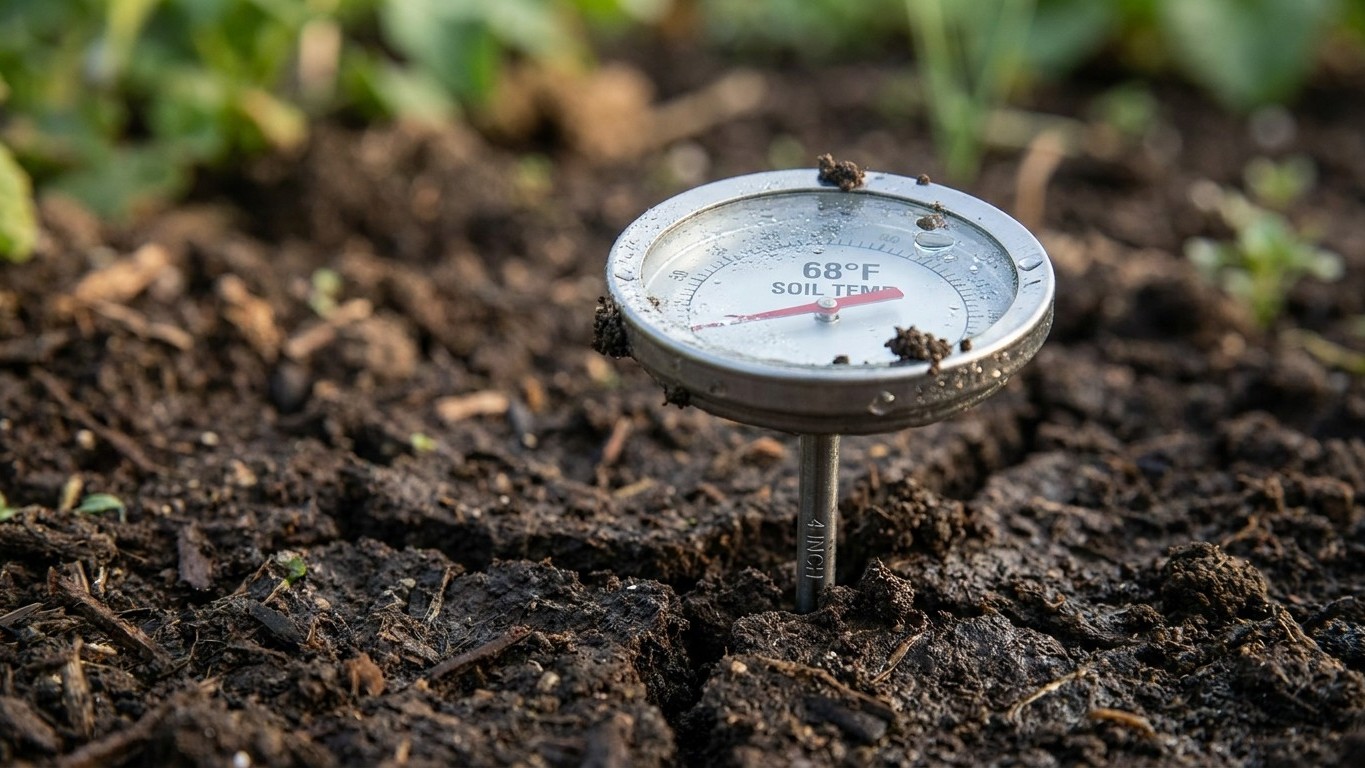
Three weeks of faithful watering, and the row stayed bare. Not a single green shoot, not even a stubborn straggler pushing through the crust. The instinct was to blame the hose, maybe the timing of the watering can, or a bad batch of seed. But the real culprit was invisible and had nothing to do with moisture: the soil itself was still too warm for spinach to wake up.
Spinach seeds carry a built-in safety switch most gardeners never hear about until it ruins a planting. Lettuce and spinach are cool-season crops, and their seeds carry a built-in switch that shuts down germination when the soil is too warm, called thermal dormancy or thermo-inhibition, and it is not a defect. It’s the plant protecting itself, since a wild seed that sprouted during a hot spell would send up a tender seedling right into conditions that could kill it, so over thousands of years the seed learned to wait for cooler soil that signals a safer season ahead. In early September, in most of the country, the ground hasn’t gotten that memo yet, even if the calendar has.
Key takeaways
- A single invisible factor stops spinach seeds cold—and it has nothing to do with water
- Soil temperature matters far more than air temperature, and most gardeners never check it
- There’s a 3-day indoor sprouting trick that completely bypasses the problem
Why “warm September soil” is the actual problem
Spinach isn’t shy about its preferences. The seeds themselves germinate when the soil is between 40 and 70 degrees, with the optimum for seed germination between 60-70 degrees. Push past that, and things fall apart fast. When soil temperatures are over 75 degrees, spinach seeds may not germinate at all, or they may germinate at a very low rate. Some sources put the ceiling even lower for reliable results: lettuce and spinach germinate best at 60–65°F and fail above 75°F, a textbook case of thermodormancy.
The tricky part is that soil rarely cools down as fast as the air does. September afternoons might feel pleasant, but four inches underground, where the seed actually sits, the temperature can still be sitting in the mid-80s. Planting too early in the fall is disastrous if the soil is above 70°F, and the germination rate drops to 50%. A soil thermometer, the kind sold for a few dollars at any garden center, would have told the real story in seconds. Checking the temperature at 2 to 4 inches depth before planting in October is the reliable way to know.
Watering more, watering less, none of that changes the outcome when the seed has essentially gone dormant on purpose. If soil temperatures get warmer than 75 degrees Fahrenheit, spinach seeds will have trouble germinating, no matter how consistently the row gets soaked. The seed isn’t dying of thirst. It’s waiting for a signal that hasn’t arrived.
What actually gets spinach out of the ground in early fall
The fix isn’t complicated, but it does require patience, or a workaround. The simplest approach: the best rule of thumb for planting spinach in the fall is to plant around 4-6 weeks before the average first frost, and up to 8 weeks in less hot areas. That means resisting the urge to jump the gun in early September just because the seed packet is sitting on the counter looking hopeful. Waiting two or three extra weeks, until nights consistently dip and morning soil actually feels cool to the touch, often does more for germination than any amount of extra irrigation.
For gardeners who can’t wait, there’s a genuine trick worth trying. If you want to plant spinach in summer for a fall harvest, you need to sprout your seeds indoors first, a technique that gets spinach to germinate in three days without any fancy setup. The method is straightforward: take a small handful of seeds and soak them in water overnight for up to 24 hours. Soaking does the heavy lifting that hot soil won’t. Soaking makes the seeds absorb water and swell up so they rupture sooner, releasing their food stores and triggering the embryo to develop. From there, the sprouted seeds go into damp potting mix in a cool, shaded spot rather than straight into baking garden soil, sidestepping the thermodormancy trigger entirely.
Timing also depends heavily on where the row actually sits. Soil temperatures above 80°F cause the seeds of crops like lettuce and spinach to go dormant, not germinating until cooler soil temperatures return; when conditions are cooler, watering after seeding and planting later in the day can help overcome dormancy effects. That last detail matters more than it sounds. Sowing in late afternoon, after the sun has already started losing its grip on the topsoil, gives seeds a few extra cooler hours before the next heat spike.
A little extra insurance for a fussy crop
Shade cloth, mulch, and simple patience do more collective good than people expect. Since lettuces (and spinach) are impossible to germinate if the soil is too hot, some growers rely on shadecloth, a soil thermometer, and even ice cubes pressed right at the seed line to nudge temperatures down during a stubborn warm spell. It sounds almost absurd, ice cubes in a September vegetable bed, but the logic holds: cooling the top inch of soil even a few degrees can be the difference between a germinating row and a silent one.
Succession sowing is the other quiet insurance policy. Instead of planting all seeds at once, sowing small batches every few weeks keeps fresh spinach coming rather than gambling everything on one date. If the first batch sits dormant because of an unseasonably warm week, the next round, planted when temperatures have actually dropped, picks up the slack.
The frustrating truth about that bare September row is that it wasn’t neglect. Spinach seed is simply built with a thermostat gardeners can’t argue with, only work around. Check the soil with an actual thermometer before the next sowing, not the air temperature on a weather app, and that empty row has a real shot at turning green in the weeks that follow.
Sources : greenupside.com | gardenbetty.com