
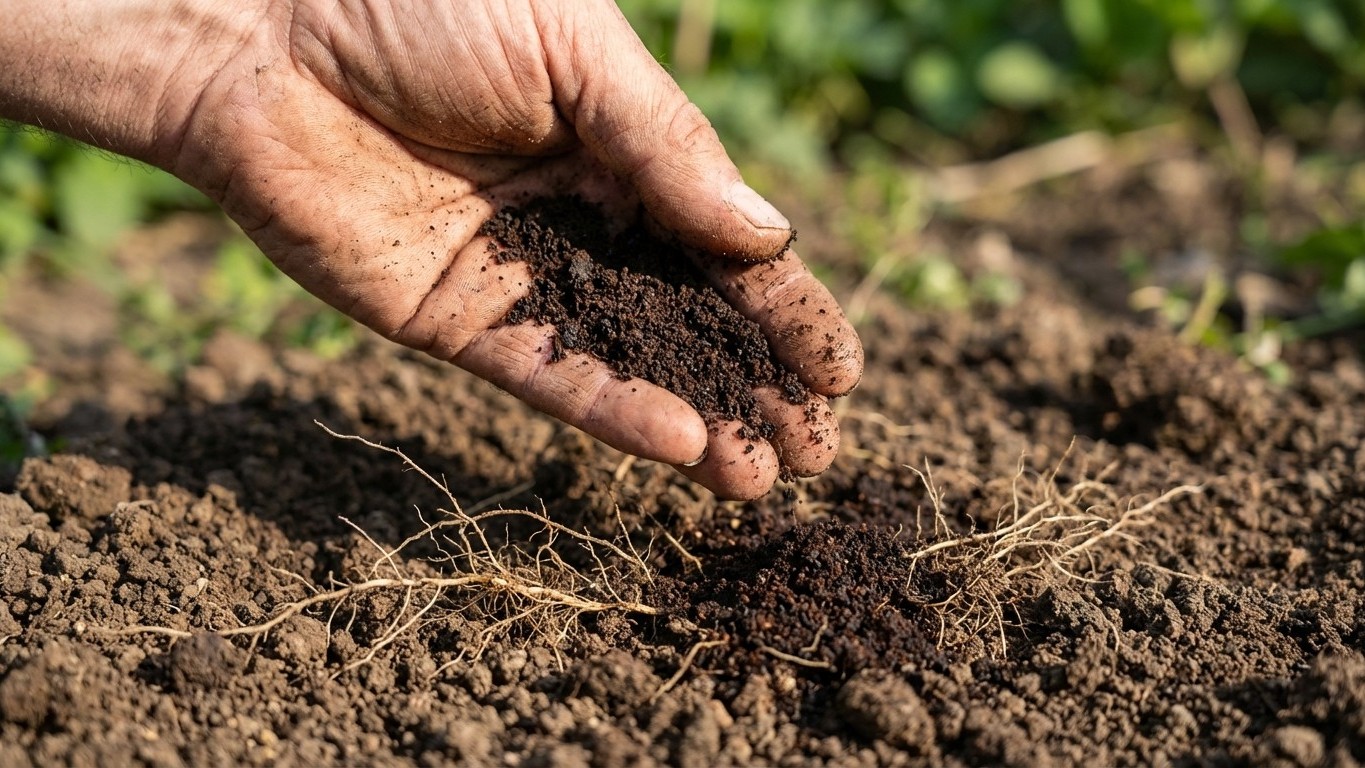
For years, I hauled my morning coffee grounds straight to the garden, convinced I was doing something good. The bags of spent grounds from my daily French press felt like free fertilizer, slightly acidic, rich-smelling, the kind of amendment that felt too logical to question. Then a soil scientist friend watched me do it and went quiet for a beat too long.
“How long have you been doing this?” she asked. Not with admiration.
What followed was one of those conversations that quietly dismantles something you thought you understood. Coffee grounds in the garden is one of the most widespread pieces of gardening advice on the internet, passed down through forums and YouTube channels with the confidence of established fact. The reality, according to soil science, is considerably more complicated, and in some cases, actively harmful to the roots you’re trying to feed.
Key takeaways
- A soil scientist’s quiet skepticism unravels everything you thought you knew about coffee grounds
- The compounds that help coffee plants survive in nature actively suppress root development in your garden
- There’s a right way to use grounds that actually works—and it’s nothing like what most gardening blogs recommend
What coffee grounds actually contain
The appeal makes surface sense. Used coffee grounds contain nitrogen, potassium, and magnesium, three nutrients plants genuinely need. They’re also slightly acidic, hovering around a pH of 6.5 to 6.8, which leads to the common recommendation to use them around acid-loving plants like blueberries or azaleas. But here’s where the logic starts to fray: soil scientists have found that grounds don’t consistently acidify soil the way most gardeners assume. A 2012 study from the Oregon State University Extension tested coffee grounds across multiple soil types and found minimal pH change in most conditions. The grounds lose much of their acid content during the brewing process. What’s left is far more neutral than the raw bean.
The nitrogen content is real, but it doesn’t release quickly. Coffee grounds decompose slowly, and during that process, they can temporarily tie up nitrogen in the soil, making it less available to plants, not more. My friend compared it to locking money in a safe and losing the combination. The nutrient is there; the roots simply can’t access it when they need it.
The root problem nobody talks about
Spread a thin layer of coffee grounds on bare soil, and something predictable happens over the next few weeks: the grounds compact. They form a dense, hydrophobic crust, meaning water beads off rather than penetrating. What looks like a helpful mulch becomes a barrier. Roots trying to expand near the soil surface hit this layer and struggle to breathe. The fine root hairs responsible for most nutrient uptake are especially vulnerable, because they depend on a consistent exchange of oxygen and moisture that compacted grounds actively disrupt.
A 2011 study published in HortScience tested the germination and root development of plants grown in soil amended with coffee grounds at various concentrations. At concentrations above 25 percent by volume, most plants showed significantly stunted root growth. The researchers identified compounds including caffeine and chlorogenic acids as likely culprits. These are allelopathic chemicals, substances that inhibit the growth of competing plants. Coffee evolved them to suppress competition around the coffee plant. Your vegetable garden didn’t sign up for that biochemical warfare.
Caffeine, my scientist friend explained, functions in soil a bit like an antibiotic in your gut. A small amount might not cause obvious damage, but repeated applications build up. And since most home gardeners don’t measure concentration, just scoop and scatter, it’s easy to tip into ranges that suppress root development without ever realizing it.
When grounds genuinely help
None of this means coffee grounds are useless in the garden. The difference is largely about how you use them, not whether you use them at all. Composting is where grounds shine without reservation. Mixed into a compost pile at reasonable volumes (under 20 percent of total material), they break down alongside other organic matter, their allelopathic compounds neutralize over time, and the nitrogen becomes genuinely available. The finished compost feeds roots in exactly the way the raw grounds don’t.
Thin surface applications, and thin really means thin, a quarter-inch or less, mixed with coarser mulch like wood chips or straw prevent the compaction problem. The grounds aerate slightly, add organic matter as they break down, and don’t concentrate long enough to release meaningful levels of caffeine into the root zone. This is the version of coffee-ground gardening that actually works, even if it’s far less dramatic than the “free fertilizer” narrative suggests.
Worm bins are another legitimate use case. Worms tolerate grounds well in moderate amounts, and their castings process the grounds into something roots can actually use efficiently. A handful of grounds added to a worm bin weekly is a genuine win, unlike the same volume dumped directly onto a seedling bed.
Rethinking the gardening shortcut
There’s something revealing about how the coffee grounds myth spread so successfully. It combined three things people want to believe: that waste can become value, that natural equals beneficial, and that a clever hack can replace more expensive inputs. All three assumptions have a grain of truth, which makes them harder to interrogate than outright nonsense.
My scientist friend wasn’t dismissive of the impulse, she was dismissive of the execution. “Most soil biology advice skips the middle part,” she said, meaning the actual mechanisms. We get the input (grounds) and the desired output (healthy plants) without understanding what happens in between, inside the dark chemistry of the root zone.
Since that conversation, I compost the grounds rather than spreading them. My garden beds look the same. Whether the roots feel the difference is harder to see, which is kind of the point. The real question worth sitting with: how many other “obviously good” gardening habits are operating the same way, doing something entirely different from what we imagine?