
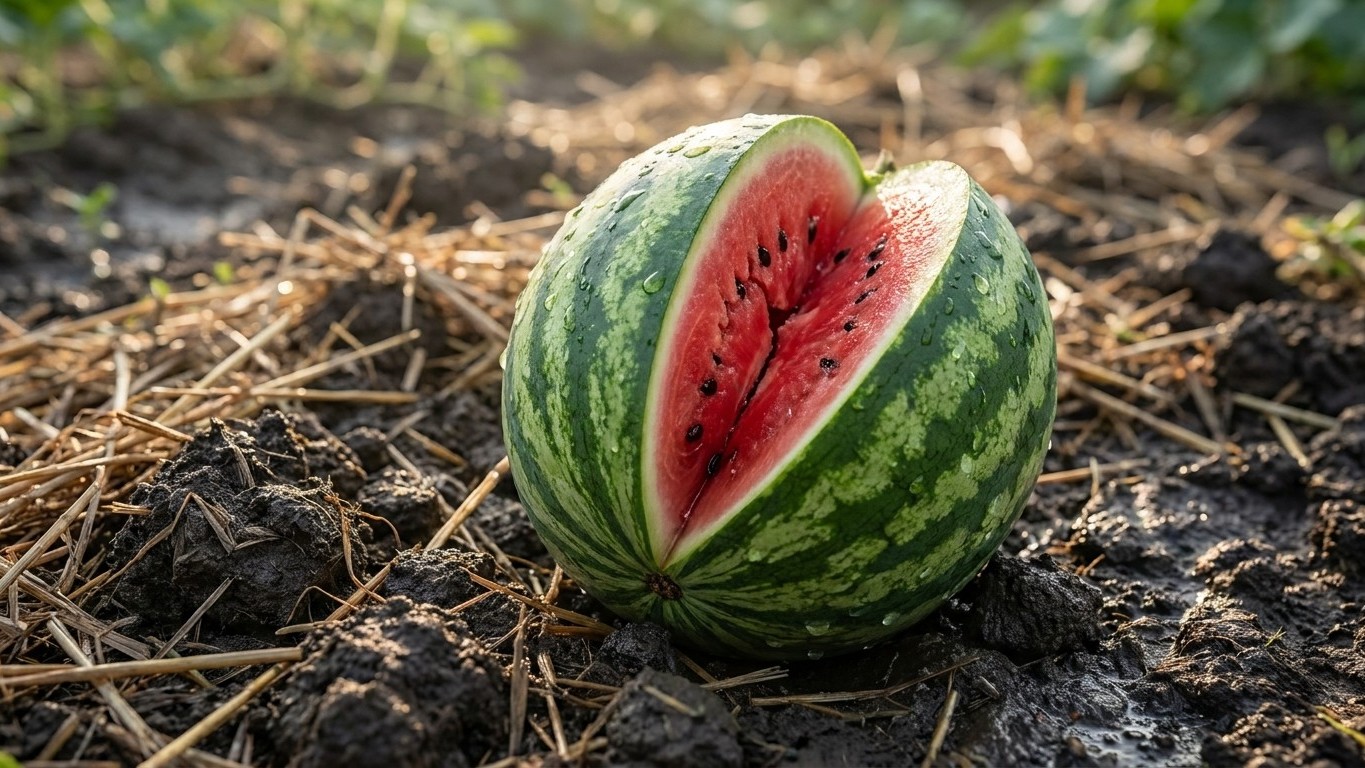
The gardener’s instinct is to water more, not less, when fruit is fattening on the vine. It feels logical: bigger fruit needs more moisture. But that evening ritual of dragging the hose out right up until picking day is exactly what turns a melon patch into a minefield after a summer storm, and understanding why starts with basic plant physiology, not bad luck.
Watermelons are roughly 92 percent water and have a shallow root system, so when the soil dries out and a gardener then overcompensates with heavy irrigation, the pressure building inside the fruit forces the rind to split. Add a July thunderstorm dumping an inch of rain onto soil that was already saturated from nightly watering, and the fruit has nowhere to put the extra volume except outward. When plants absorb too much water too fast, the excess goes straight to the fruit, and because the skin had formed a tight barrier to prevent moisture loss during drier stretches, a sudden surge of water causes that skin to expand until the melon bursts. It’s not one unlucky fruit that pays the price. It’s usually several at once, because the whole root system responds to the same rain the same way.
Key takeaways
- One gardener’s nightly watering habit turned a whole melon patch into casualties after a single storm
- The evening hose routine that feels diligent is actually working against sweetness and rind strength
- Thin-rinded varieties like ‘Sugar Baby’ carry hidden risk that neighbors growing ‘Crimson Sweet’ never face
Why the storm is only the trigger, not the real cause
Blaming the weather feels satisfying, but researchers who study fruit cracking point to a longer chain of events. Cracking is commonly linked to irregular water availability, extreme temperatures, high solar radiation, big swings between day and night temperatures, and elevated humidity. A single overnight watering habit stacked evening after evening, especially without adjusting for rainfall earlier in the week, sets up exactly the kind of irregular supply that stresses cell walls. Splitting is usually caused by sudden or too much watering in the final weeks before harvest, and uneven watering can cause cracks to form before melons even reach maturity, especially in thin-skinned varieties.
Variety matters more than most home gardeners realize. Rind thickness varies enormously by cultivar, and thinner-rinded types like ‘Gold Baby,’ ‘Hime Kansen,’ ‘New Queen,’ ‘Red Doll’ and ‘Sugar Baby’ split on the vine far more often than their thicker-skinned relatives. Some varieties have earned a blunt nickname for this exact flaw: many thin-rind types have even been called “exploding melon” because of how readily they crack. So the storm that split your melons might have done nothing to a neighbor’s Crimson Sweet growing twenty feet away. It’s not just bad timing. It’s a mismatch between variety and watering habit that had been building for weeks.
Nutrition plays a quieter role too. Multiple factors can cause cracking, including cultivar, ripening stage, irrigation or rain events, excessive nitrogen, inadequate potassium, and solar radiation, with thin-rinded cultivars and those with deep sutures being more susceptible. A high potassium supply helps minimize cracking by thickening the rind, while adequate boron keeps the skin more elastic and reduces splitting. A melon starved of potassium in sandy soil, watered erratically, and then hit with a heavy rain is carrying three risk factors, not one.
The watering mistake that costs you flavor even without a storm
Here’s the part that stings most: even melons that survive the storm intact were probably losing flavor from all that nightly watering. Reducing irrigation as fruits near maturity and allowing the soil to dry slightly between waterings concentrates sugars, enhancing flavor. Extension horticulturists are consistent on this point across the country. Melons need extra water during fruit set and development, but too much water during the last week of fruit development will reduce the sweetness of the fruit.
The advice from seasoned growers is blunt and specific. Once fruit has set, cutting back to watering once every 10 days or so, since the plant is producing sugars in the melons at this stage, means heavy watering will leave the sugar content lower and the melons far less sweet, so cutting off watering entirely about a week before harvest gives the plant its best chance to concentrate those sugars. Compare that to nightly watering right up to picking day, and the gap is obvious: stopping watering about a week before harvest concentrates sweetness in the fruit and prevents it from bursting as it continues to ripen. The evening hose habit that felt like diligent care was quietly working against the exact result the gardener wanted.
What actually protects the harvest
None of this means abandoning melons to drought. Deep roots still need moisture early on, just delivered differently as fruit matures. Melon plants are deep-rooted, and regular deep-watering during the first few weeks is essential to establish a healthy root system, but once the plant is well-established, watering should shift to regular, deep and less frequent applications. Mulch does double duty here, buffering the soil against both drought stress and sudden downpours. A layer of mulch helps maintain even moisture levels, and avoiding frequent shallow watering mixed with irregular heavy watering prevents most splitting problems in the patch.
A few practical adjustments make the biggest difference for next season. Soil should be moistened to a depth of at least 6 inches when watering rather than given a light nightly sprinkle that never reaches the root zone. Watch the fruit itself for cues, not just the calendar: when rinds begin changing from green to tan or yellow, and a crack appears in the stem where it attaches to the fruit, that’s a sign the melon is ripe enough to pick. That’s the signal to taper off entirely, not to give one last generous soak “to help it along.”
One detail growers often overlook: elevating fruit off damp soil changes outcomes too. Placing a tile, shingle or piece of wood under developing watermelons keeps them off moist soil, keeping the fruit clean and dry as it matures. Combined with a drip system that delivers water at the root rather than overhead, and a watering schedule that tapers off deliberately in the final two weeks, next July’s storm might pass right over the patch without leaving a single casualty behind.
Sources : gardeningknowhow.com | weekand.com