
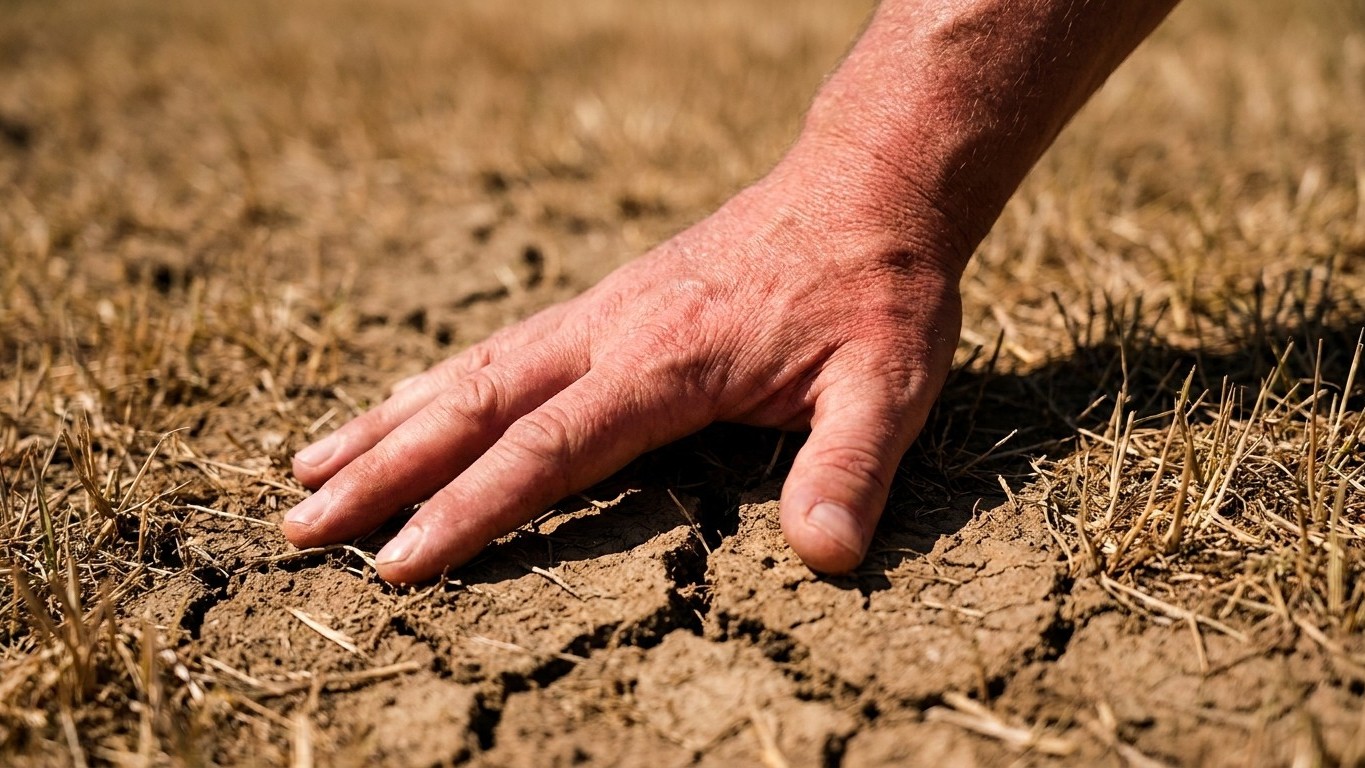
Cutting grass short before a heat wave feels logical on paper: less mowing during the worst weeks, fewer trips outside in brutal temperatures. The lawn still looks neat. Life is easier. Then the soil turns the color of cardboard, the grass stops growing entirely, and one afternoon you press your hand flat against the ground and feel heat radiating back at you like an open oven door. That’s the moment the logic falls apart.
Key takeaways
- A scalped lawn loses its natural shade system, causing soil temperatures to spike 10-15°F hotter than tall grass
- Short grass before heat waves actually produces more mowing work over the season, not less, due to stress and weed invasion
- The real strategy involves raising your mower deck higher, not lower, before temperatures peak
What happens underground when you scalp a lawn
Grass height is not just an aesthetic choice. It’s a shade system. When you mow blades down to an inch or less, the soil beneath loses its canopy. Sunlight hits the ground directly, and surface temperatures spike. Research from Penn State’s turfgrass science program has documented soil temperature differentials of 10 to 15 degrees Fahrenheit between well-maintained tall grass and closely cut turf under the same ambient conditions. That gap is enough to shift the entire biological activity in your top layer of soil.
The roots feel it first. Turfgrass roots are shallow by nature, most active in the top three to four inches of soil. When ground surface temperatures climb past 85°F, root growth slows. Past 90°F, it stops. The plant shifts all its energy toward survival rather than growth, which is exactly the opposite of what you hoped for when you wanted low-maintenance weeks ahead.
Moisture is the second casualty. Taller grass traps humidity close to the soil surface, slowing evaporation significantly. A scalped lawn loses that buffer entirely. Water evaporates faster, the soil dries out between waterings, and the grass enters drought stress regardless of how much rain fell the week before. Brown patches aren’t sunburn, they’re the plant going dormant to protect itself, a biological emergency brake.
The math on mowing frequency actually works against you
Here’s the irony: cutting short before a heat wave often produces more mowing work over the season, not less. When cool temperatures return, the lawn has to rebuild from weakened, stressed roots. Recovery is slow and uneven. Bare patches appear where the grass died rather than went dormant. Weeds move in, crabgrass in particular thrives in hot, compacted, low-cut turf because its seeds germinate best in direct sunlight at soil level, exactly the conditions a scalped lawn provides.
The one-third rule exists for a reason that has nothing to do with aesthetics. Removing more than one-third of the blade length at a single mowing puts the plant under immediate physiological stress, interrupting photosynthesis before the plant can compensate. A lawn kept at three to four inches through summer maintains enough leaf surface to keep producing energy, shading its own roots, and fending off opportunistic weeds without heroic intervention.
Frequency, it turns out, matters less than height. Mowing more often at the right height does less damage than mowing less often at the wrong one. During a genuine heat wave when grass growth slows to nearly nothing, you often don’t need to mow at all for two to three weeks if the height was appropriate to begin with.
What to do instead before temperatures peak
The week before a heat wave is the right time to raise your mower deck, not lower it. Set blades to three and a half to four inches for cool-season grasses like Kentucky bluegrass or tall fescue, which are common across much of the northern United States. Warm-season varieties such as Bermuda or zoysia tolerate closer cuts, around one and a half to two inches, but even these benefit from going into a heat event at their upper recommended height rather than their minimum.
A sharp mower blade matters more than most homeowners realize. Dull blades tear grass rather than cut it cleanly, leaving ragged edges that brown and allow moisture to escape faster. Sharpening once per season, or after every 10 hours of use, reduces stress on each individual plant at the moment of cutting.
Leaving clippings on the lawn during heat events is one of the lowest-effort wins available. A thin layer of clippings acts as light mulch, slowing evaporation at the soil surface and returning nitrogen to the turf as they break down, roughly equivalent to one full fertilizer application per season, according to University of Minnesota Extension data. The caveat is volume: thick clumps of clippings block light and air, creating conditions for fungal disease. If you mow at the right interval, clippings disperse naturally without any raking required.
Watering strategy shifts too. Deep, infrequent watering, about one inch per week, applied in one or two sessions rather than daily light sprinkles — trains roots to grow downward where soil temperatures stay cooler. Daily shallow watering keeps roots near the surface where heat does the most damage, reinforcing exactly the vulnerability that made the scalped lawn fail in the first place.
One detail that rarely makes it into basic lawn guides: the time of day you mow before a heat event genuinely affects recovery. Mowing in the early morning, when temperatures are low and the plant has overnight moisture reserves, gives grass several hours to begin healing cut surfaces before midday heat peaks. Mowing in the afternoon on a hot day compounds stress at the worst possible moment. Same task, same height, meaningfully different outcomes, just based on when you start the engine.