
Turns out grandpa wasn’t being stubborn. He was running a precise defense system against a fungus that can wipe out a tomato patch in 72 hours, and he’d figured it out through decades of trial and error, long before anyone handed him a horticulture pamphlet.
My first real harvest looked promising for about three weeks. Then the lower leaves went spotty, the stems darkened, and one morning I found fruit with soft, blackened patches spreading from the blossom end. I’d been watering around 7 p.m., after work, whenever it fit my schedule. Convenient for me. Catastrophic for the plants.
Key takeaways
- Evening watering creates the exact conditions fungi need to thrive on tomato leaves
- A simple shift to morning watering plus soil-level irrigation transformed one failed harvest into success
- Sprinklers and evening routines are sabotaging most backyard tomato gardens without gardeners realizing it
The Evening Watering Trap
Here’s what nobody tells new gardeners: timing water isn’t a superstition, it’s pathology prevention. A gardening author who’s grown tomatoes since the 1980s says the number one disease mistake he sees year after year is evening watering in warm weather, because you end up with wet leaves going into a warm night, which is precisely the environment blight thrives in. That’s not folklore. That’s a documented failure pattern repeated in backyard after backyard.
The mechanics are almost embarrassingly simple. Evening watering leaves foliage damp overnight, and wet leaves increase the risk of fungal diseases, including early blight and septoria leaf spot. Fungal spores don’t need much. They need moisture sitting still, cool air, and darkness. Water your tomatoes at 6 p.m. and you’ve built exactly that habitat, minus the invitation, right on your leaves.
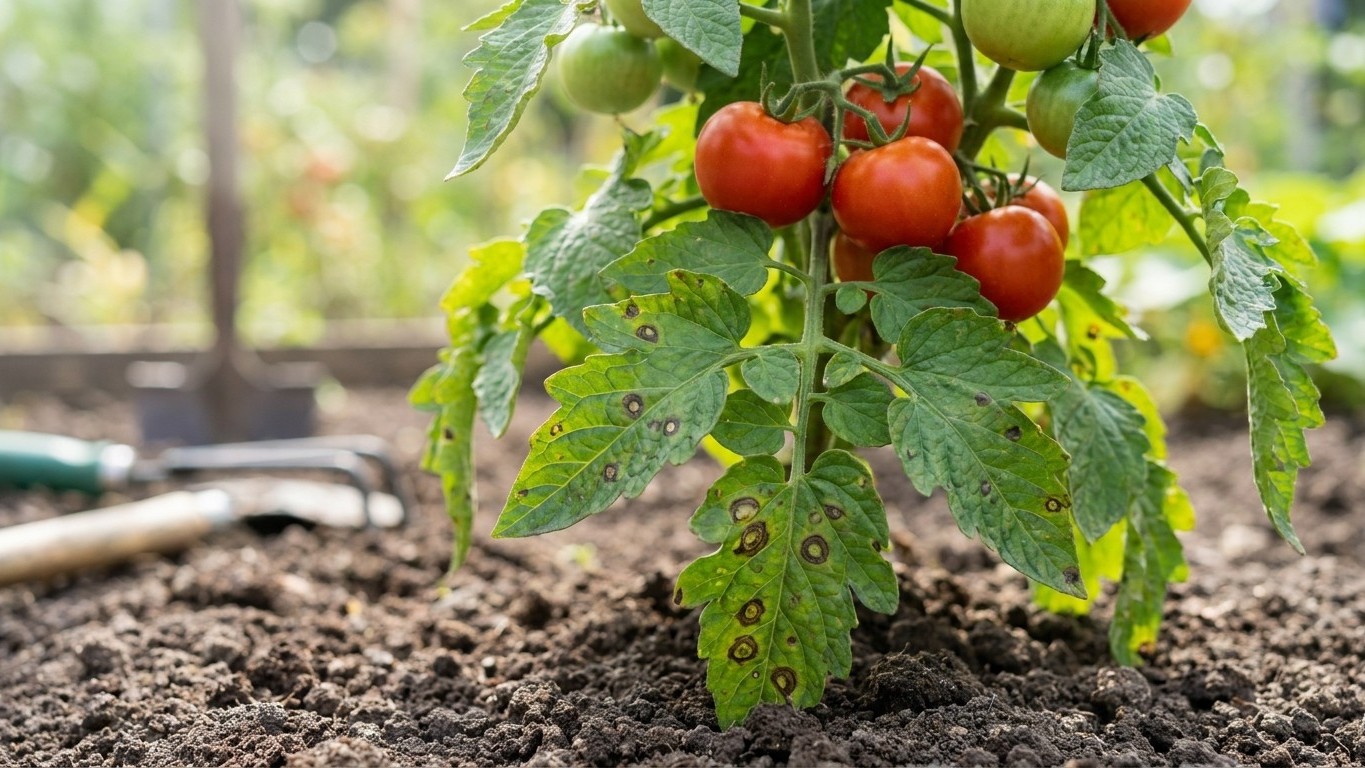
The USDA has studied this closely enough to name names. Dr. Martin Draper, a plant pathologist with the USDA’s National Institute of Food and Agriculture, walked through three culprits during a People’s Garden Workshop: septoria leaf spot, early blight, and late blight, noting that despite their names, early blight and late blight can appear at any time during the year. Septoria shows up as small, dark circular spots that often have yellow halos around them, appearing on the lower leaves of the plant first. Early blight is worse cosmetically. It can set into the stems and leaves, identified by lesions with target-like rings.
That blackening I saw on my fruit? Classic late blight territory. Late blight, or Phytophthora infestans, is among the worst problems affecting tomatoes, the same fungus that can turn potatoes to mush. Once it takes hold, there’s no undoing the damage on infected tissue. Only stopping the spread.
Why Morning Actually Wins
Grandpa’s ritual, if you flip it around, becomes a morning ritual by proxy. Water at dusk and leaves stay soaked for ten, twelve hours through the coolest, dampest stretch of the day. Water at dawn instead, and the sun does cleanup duty. Watering at the base of the plant can help prevent this, and if a sprinkler system or similar method is used to water tomatoes, doing so in the morning allows the plant an opportunity to dry throughout the day.
A Virginia Cooperative Extension master gardener coordinator put it plainly when discussing summer watering routines: developing a regular early-morning watering schedule, especially during fruit development, is critical to the successful development of tomato plants and one of the best ways to avoid common tomato problems like splits and blossom-end rot. Consistency matters almost as much as timing. Tomato plants don’t like surprises, and neither do their root systems.
Midday isn’t a great substitute either, despite what feels intuitive on a scorching afternoon. Watering when the sun is high and temperatures are peaking is the least efficient time, because the vast majority of the water will evaporate before it has a chance to reach the roots. You end up hauling water for the atmosphere’s benefit, not the plant’s.
The Fixes That Actually Move the Needle
Timing is half the equation. Where the water lands matters just as much, and this is the part most weekend gardeners skip. Watering at the base of the plants and in the morning rather than the evening minimizes the time the leaves are wet. A soaker hose or drip line does this automatically. A watering can with a narrow spout works too, if you’re patient and aim low.
Mulch turns out to be the unsung hero here, and it’s the one thing I’d skipped entirely that first disastrous season. Utilizing mulch reduces soil splashing, which reduces the likelihood of diseases present in the soil from splashing onto the leaves. A 2 to 3 inch layer of straw, shredded leaves, or dry Grass Clippings Around the base blocks that splash pathway entirely, and it also slows evaporation so you’re not out there every single evening anyway.
Sprinklers, meanwhile, are close to the worst possible delivery method for this particular plant, however satisfying they feel to run on a hot day. Sprinklers wet the foliage excessively, increasing the risk of fungal diseases, and much of the water is lost to evaporation, making targeted methods like drip irrigation, soaker hoses, or a watering can directly at the soil level far better. If you’re still swinging an oscillating sprinkler over your tomato bed, that’s the first habit to break, well before you worry about the clock.
Crop rotation and cleanup round out the defense, and both get ignored constantly because they don’t feel urgent in July. Planting tomatoes in a different location in the garden each year starves fungal spores of a familiar host, and garden clean-up is another preventative key, as the diseases’ spores can overwinter on plants left in the garden from the previous year. Skip that fall cleanup, and you’re basically mailing next year’s blight an invitation with your address on it.
I moved my watering to 6:30 a.m. the following season, soil level only, mulch down by June. The blackened fruit never came back. Grandpa never explained the science to me, and honestly, I don’t think he ever needed to. He just knew what happened when he didn’t.
Sources : aol.com | deavita.net