
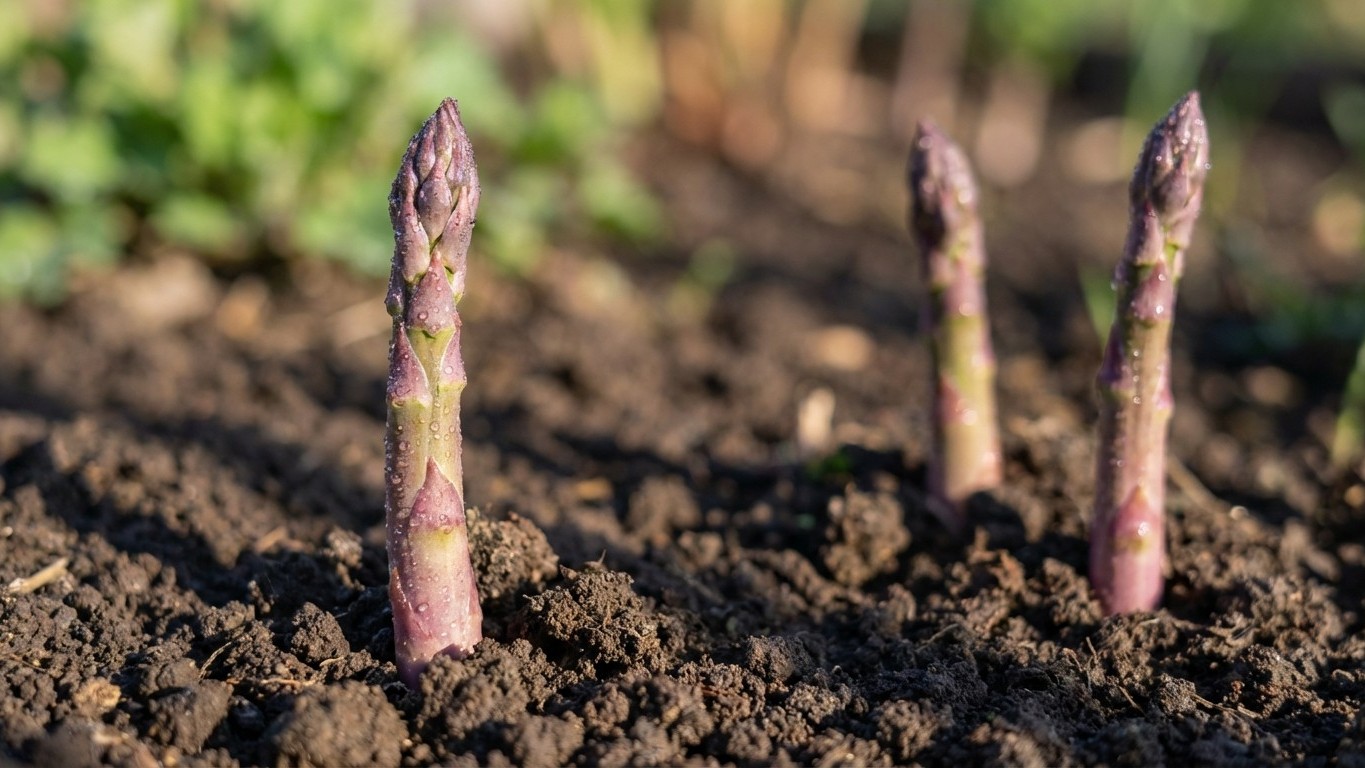
Asparagus. One planting, one afternoon of work, one patch in the corner of your yard, and then 15, 20, sometimes even 30 consecutive springs of fresh spears pushing up through the soil. If there’s a more satisfying deal in all of gardening, no one has found it yet.
Most of us garden with an annual mindset: buy seeds in March, plant in May, Harvest in August, let it die in October, and repeat the whole cycle from scratch next year. Many of us grow edible crops from seeds or plants that we start in the growing year, harvest, and then have to regrow all over again, because many common vegetables die when we pick them or eventually perish when cold weather arrives. Asparagus operates on an entirely different logic. Plant it once, treat it right for a couple of seasons, and it becomes a permanent fixture of your yard — outlasting pets, cars, and maybe even the mortgage.
Key takeaways
- A single asparagus planting can feed your family for 15-30 consecutive years
- The catch: you must wait 2-3 years before harvesting, building root reserves first
- Once established, it requires just spring compost, light weeding, and fall cleanup
Why Asparagus Is the Smartest Long Game in the Garden
Asparagus takes a few seasons to mature but will reap a harvest for 15 to 30 years, so choose a planting location that will go undisturbed for a long time. That lifespan is not a typo. Asparagus beds can be productive for 15, 20, and sometimes up to 30 years. To put that in perspective: you could plant a bed the year your child is born and still be harvesting from it by the time they leave for college.
Growing asparagus is an investment in your culinary future. Unlike most vegetables, asparagus plants are perennial, which means the same plants grow in your garden year after year. The spears we enjoy as a Vegetable are the new shoots that emerge in spring. And as one of the earliest vegetables to emerge in spring, homegrown asparagus offers superior flavor and texture compared to store-bought spears. Anyone who has snapped a spear straight off the crown and eaten it within the hour knows this is not garden-variety hyperbole.
There’s also a financial case to be made. Asparagus is one of the most expensive vegetables at the grocery store, you know this if you’ve flinched at the produce aisle in April. Edible Perennial gardening is an economical and effort-saving way to grow delicious crops. It saves the hassle of buying seeds every year, saves time sowing them, and saves the effort of caring for young plants as they establish. A well-Planted bed, by some estimates, can produce pounds of spears each spring for two or three decades without being replanted. The math is embarrassingly good.
The Only Real Catch: Patience
Here’s where most people give up before they begin. Asparagus asks for something modern gardening rarely demands, delayed gratification. Growing asparagus takes patience; it can be two to three years from planting to harvest, but the wait is worth it. You plant the crowns, you watch ferns grow, and you keep your hands off those first spears. Completely off.
Asparagus shoots should not be harvested the first season after crowns are set. Harvest lightly for 3 to 4 weeks the second year. The fleshy root system needs to develop and store food reserves for subsequent seasons. Plants harvested too heavily too soon often become weak and spindly. Think of those first two years as building a savings account. Every spear you let grow into a feathery fern is depositing energy into the root system below. Raid the account too early, and the whole thing collapses.
When the asparagus plants are in their fourth season, harvest for 8 to 10 weeks per year. That’s two full months of fresh spears every spring, year after year, from a single planting. The patience phase lasts about 1,000 days. The reward phase can last 10,000.
How to Plant It Right the First Time
Since you’re only doing this once, doing it well matters. Given that asparagus is a perennial plant that comes back year after year in the same spot, it’s important to select a proper planting site where it will thrive. Choose a site that gets full sun : 6 to 8 hours of direct sunlight. Sun is non-negotiable. A shady corner is a wasted bed.
Asparagus likes well-drained, deep soil with lots of air. The soil should be between 6.0 to 6.8 pH for the best growth. Most gardeners skip the soil test and wonder later why their spears are thin. Eliminate all weeds from the planting site, digging it over and working in a 2- to 4-inch layer of compost, aged manure, or soil mix. Weeds are the number-one enemy of an asparagus bed, once the perennial grasses move in, they’re nearly impossible to evict without disturbing the roots.
When it comes to planting method, crowns beat seeds. Growing from seed takes about three years to mature enough to harvest. If you plant crowns, you can shorten the wait time by a year and eliminate one year of tedious weeding. Dig a trench 6 inches deep and place crowns 12 inches apart, bud side up. Spread the roots and cover with 2 inches of soil. As spears grow throughout spring, continue filling in the trench with soil, keeping the tips exposed.
Spacing deserves attention too. Plant crowns 12 inches apart in rows 3 to 5 feet apart, this helps with air circulation and growth. Crowd them and you’ll get a tangle of weak stems instead of thick, satisfying spears. How much your family enjoys asparagus determines how many plants you will need. A good start is 10 plants for each person. A family of four, then, means 40 crowns — a modest investment for decades of harvest.
Keeping the Bed Healthy Year After Year
Once established, asparagus is admirably self-sufficient, but it’s not zero-maintenance. Once established in the proper site and climate, perennial vegetables can be very hardy, despite neglect. Established perennials are often more resistant to pests, diseases, drought, and weeds. That resilience is one of the great pleasures of growing them.
Asparagus has a medium-high requirement for nutrients, either from soil organic matter or fertilizers. Adding organic matter prior to planting and applying nitrogen each year in early spring benefits from yearly top-dressing of compost. A scattering of compost each spring, a light hand-weeding in April, and a mow of the dead ferns in late fall, that’s essentially the entire annual maintenance routine. Roots stay in place, preventing erosion and improving microbial activity below the surface, so the bed is actually building a better soil ecosystem with every passing season.
In the peak of asparagus season, spears can grow up to 2 inches per day, producing bountiful harvests for gardeners to enjoy. During peak spring weeks, you’ll be out in the garden every morning, snapping spears like you’re stealing from nature. The abundance feels almost absurd for something you Planted Years Ago and barely touched since.
There’s a particular kind of satisfaction in a perennial vegetable bed that annuals simply can’t offer. Every spring, when those first purple-tipped spears push through the still-cold soil, you remember that morning you dug the trench, spread the roots, and hoped for the best. The garden remembered too. And it came back, just like it will next year, and the year after that, long after you’ve stopped counting.