
The upholsterer’s face said it all when she examined my once-luxurious velvet sofa. What I thought was gentle maintenance had created permanent streaks across the fabric, turning my $2,000 investment into what looked like a patchwork of different textures. “You’ve been brushing against the grain,” she said, running her hand over the damaged areas. That single sentence Changed everything I knew about caring for velvet furniture.
Velvet’s beauty lies in its directional pile — millions of tiny fibers all pointing in the same direction to create that signature shimmer and depth. Brush against this natural grain, and you’re essentially forcing those fibers to bend backward, creating lighter and darker patches that catch light differently. The result? Permanent scarring that no amount of “corrective” brushing can fix.
Key takeaways
- The direction you brush velvet matters more than how hard you brush — and most people get it backwards
- One upholsterer’s simple grain-detection test revealed years of hidden damage from a common maintenance habit
- Professional recovery methods exist, but some damage becomes permanent — here’s what actually works
The Grain Game Everyone Gets Wrong
Most people assume brushing harder equals better Cleaning-hack-that-changed-everything”>Cleaning. Wrong. The upholsterer showed me how to find velvet’s natural grain by running my hand lightly across the surface in different directions. In one direction, the fabric feels smooth and appears rich and dark. In the opposite direction, it feels slightly rougher and looks lighter — almost silvery.
That lighter direction? That’s against the grain. And that’s exactly where I’d been focusing my cleaning efforts, thinking the lighter appearance meant the fabric was dirty.
Professional furniture restorers use a simple test: stroke the velvet in various directions and observe where it looks the most vibrant and feels the smoothest. That’s your grain direction. Mark it mentally — or even with a tiny piece of tape on the furniture’s underside — because consistent brushing in this direction is non-negotiable.
The Right Tools Make All the Difference
My biggest Mistake wasn’t just the direction — it was the brush itself. I’d been using a standard upholstery brush with stiff bristles, thinking firm pressure would lift more dirt. The upholsterer laughed. “That’s like using a wire brush on silk,” she said.
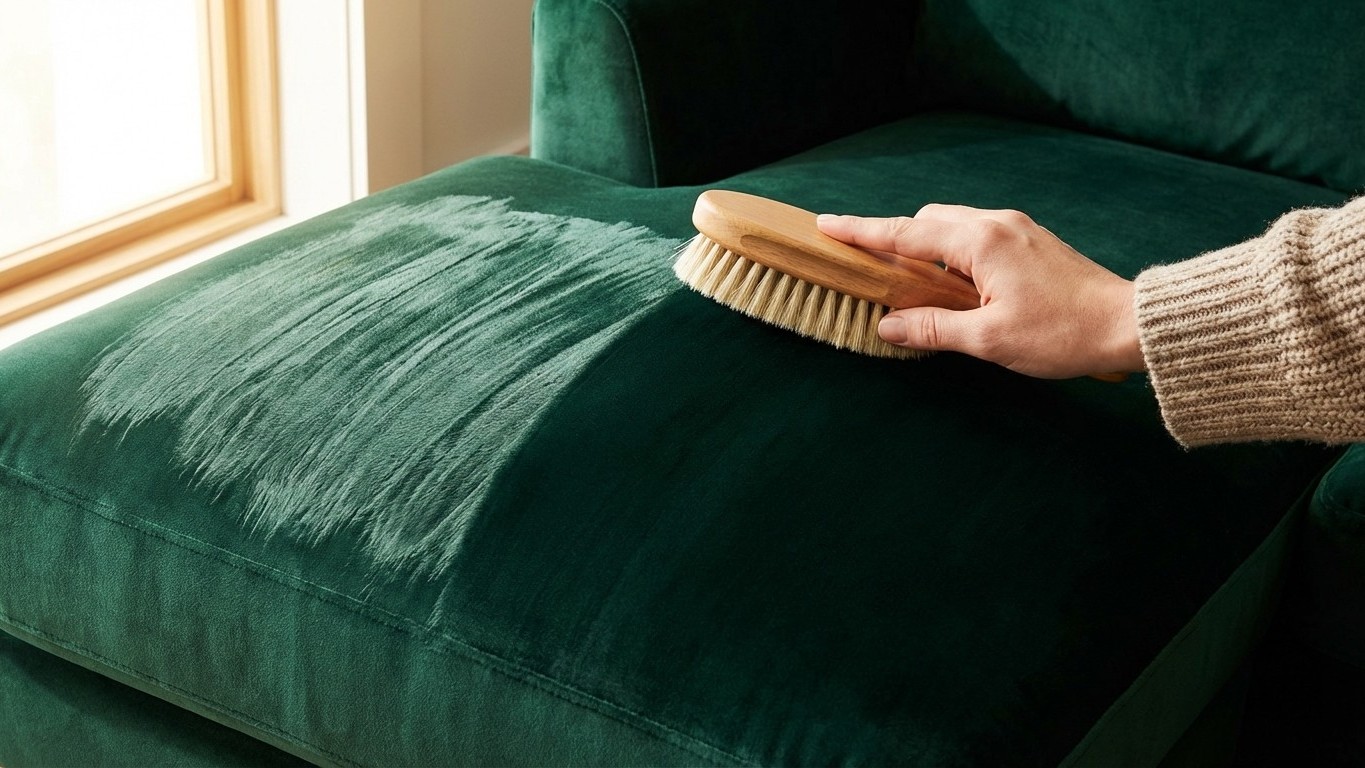
Velvet demands a soft-bristled brush, preferably one designed specifically for delicate fabrics. Natural boar bristles work beautifully, as do specialized velvet brushes with ultra-soft synthetic bristles. The key is gentle, consistent strokes that lift dust Without disturbing the pile’s structure.
She demonstrated the proper technique: light, sweeping motions in long strokes, always following the grain. No back-and-forth scrubbing. No circular motions. Just patient, methodical brushing that restored the fabric’s uniform appearance without forcing the fibers into unnatural positions.
The pressure should be so gentle that you’re barely touching the surface. Think of it as coaxing dust away rather than scrubbing it off. Heavy-handed brushing compresses the pile and creates those telltale streaks that scream “amateur maintenance.”
Recovery Strategies That Actually Work
The damage to my sofa wasn’t irreversible — thank goodness. The upholsterer shared several professional techniques for restoring misdirected pile, though she warned that severely damaged velvet might never return to its original perfection.
Steam became my secret weapon. Using a handheld steamer held several inches away from the fabric, I could relax the compressed fibers enough to gently coax them back into position. The key is never letting the steam directly contact the velvet — the moisture should be gentle and diffused.
After steaming small sections, immediate brushing with the grain helps reset the pile direction. This process requires patience and multiple sessions, but gradually, my sofa’s uniform appearance returned. The streaked areas became less noticeable, though some permanent texture differences remained as a reminder of my earlier mistakes.
For stubborn areas, the upholsterer recommended a technique using a clean, damp cloth. Press it gently against the problem area, remove it immediately, then brush with the grain while the fibers are slightly moist and pliable. This method works particularly well on Furniture arms and seat edges where repeated contact has flattened the pile.
Prevention Beats Restoration
Regular maintenance prevents most velvet disasters. Weekly brushing with proper technique keeps dust from settling deep into the pile and maintains the fabric’s directional appearance. But timing matters — brush when the room has good natural light so you can see the grain direction clearly.
Professional cleaning every 12-18 months protects your investment better than any home remedy. Velvet specialists understand the fabric’s quirks and have tools that safely deep-clean without damaging the pile structure. Yes, it costs more than DIY approaches, but replacing damaged velvet furniture costs infinitely more.
The upholsterer’s parting advice stuck with me: “Velvet is forgiving if you respect its nature, but unforgiving if you fight against it.” She was right. Once I started working with the grain instead of against it, maintaining my sofa became almost meditative.
Six months later, my velvet furniture looks better than when I first bought it. The secret wasn’t expensive products or complex techniques — just understanding that sometimes the gentlest approach yields the most dramatic results. How many other areas of home care are we overcomplicated simply because we assume more force equals better results?