
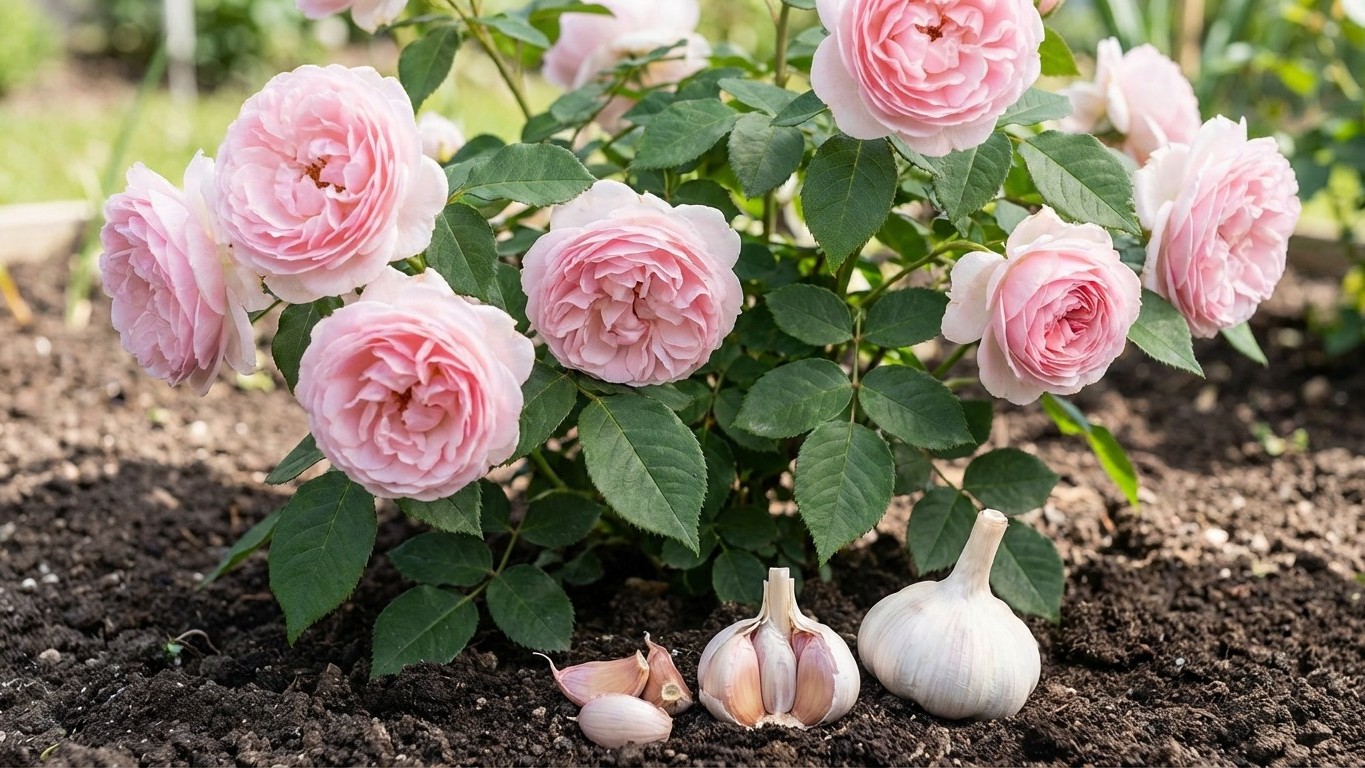
Three seasons Without a single spray bottle in sight. No fungicide, no insecticide, no synthetic anything. Just healthier roses than I’d ever managed before, all because of one planting decision I made on a whim one April afternoon. If you’ve ever stood in your garden staring at blackspot-covered leaves or watched aphids colonize your favorite climber, this is worth your full attention.
The secret isn’t a miracle product or an obscure heirloom variety. It’s companion planting, and the specific companion that changed everything for me, and for countless gardeners who’ve stumbled onto the same discovery — is garlic. Yes, the same thing sitting in your kitchen right now.
Key takeaways
- A kitchen staple transforms rose health more effectively than any spray bottle ever could
- The science behind why pests avoid garlic is eerily similar to how we find people in crowded rooms
- Year two results are so dramatic that even notoriously difficult rose varieties start thriving
Why Roses Attract So Much Trouble in the First Place
Roses have a reputation for being high-maintenance, and honestly, that reputation is half earned. They’re magnets for aphids, Japanese beetles, spider mites, and the ever-dreaded blackspot fungus. Part of this comes down to monoculture: when you plant roses in tight, isolated beds, pests find them easily and spread without interruption. There’s no disruption to the ecosystem, no chemical confusion for insects, no competition. Just a buffet.
Conventional gardening wisdom for decades pushed spraying schedules, often weekly during peak season. The problem is that systemic pesticides don’t just kill the bad actors, they eliminate beneficial insects too, including the predatory wasps and ladybugs that would naturally keep aphid populations in check. You end up in a cycle that gets harder to break every year. The spray becomes the dependency, not the solution.
What Garlic Actually Does (And It’s More Than You Think)
Garlic planted at the base of roses works through a combination of mechanisms that plant scientists have studied for years. The sulfur compounds released from garlic’s roots and foliage, allicin being the most studied, act as a natural deterrent to aphids, Japanese beetles, and several fungal pathogens including the Diplocarpon rosae fungus responsible for blackspot. One study from the early 2000s found that garlic extract applications reduced blackspot incidence by over 50% compared to untreated control plants. Planting the bulb directly offers a slower, more sustained release of these compounds directly into the surrounding soil.
There’s also an airborne component. Aphids locate host plants partly through scent, and the volatile sulfur compounds garlic emits create an olfactory smokescreen. The rose is still there, but the chemical signal that invites colonization gets scrambled. Think of it like trying to find someone at a concert when every speaker is playing a different song, the signal gets lost in the noise.
Beyond pest deterrence, garlic contributes to soil health in ways that benefit roses directly. It suppresses certain soil-borne fungi without disrupting the beneficial mycorrhizal networks that help roses absorb water and nutrients. This is the part most gardeners overlook. You’re not just repelling pests; you’re improving the growing environment underground.
How to Plant It for Maximum Effect
Timing and placement matter more than most guides acknowledge. Plant garlic cloves in fall, October or November in most U.S. growing zones, positioning them about six to eight inches from the base of each rose bush. Press them roughly two inches deep, pointed end up. They’ll overwinter quietly and begin actively growing in early spring, which is exactly when aphid populations start their seasonal surge. The timing is almost poetic in how well it aligns.
For established rose beds, aim for one garlic plant per rose, spacing cloves every eight to twelve inches around the perimeter of each bush rather than clustering them all in one spot. This distributes the chemical deterrence more evenly across the root zone and maximizes that airborne effect in multiple directions.
A few things worth knowing: don’t plant garlic right against the main stem, give it breathing room. And harvest your garlic in early to midsummer as usual; the roots left behind continue releasing sulfur compounds as they decompose. Some gardeners skip the harvest entirely and let the garlic naturalize, which works well in informal cottage-style plantings where the tall garlic scapes actually add visual interest in June.
One companion that pairs well alongside this duo: chives. Planted nearby, they extend the pest-deterrent zone and attract pollinators, particularly beneficial hoverflies, whose larvae are voracious aphid predators. The combination of garlic and chives essentially creates a layered defense system that works at soil level, root level, and in the air above the bed.
The Results : And the Adjustment Period
The first year, expect imperfection. Companion planting isn’t a switch you flip; it’s a system you build. You may still see some aphid clusters early in the season before the garlic establishes itself fully. Leave them alone if you can stomach it, ladybugs and parasitic wasps will arrive within days if you don’t spray, and they’ll do the work far more thoroughly than any bottle of pyrethrin.
By the second year, the difference is hard to argue with. Foliage stays cleaner through August, which is typically when blackspot goes into full, demoralizing effect. Bloom cycles seem longer, probably because the plant isn’t spending energy fighting constant stress. Even rose varieties known for poor disease resistance, hybrid teas, I’m looking at you, show measurable improvement when garlic is part of the picture.
There’s a deeper shift that happens too, one that’s harder to quantify. Once you stop spraying, you start watching more closely. You notice what’s actually happening in the soil, who’s visiting the flowers, what’s eating what. The garden becomes less of a maintenance problem and more of a system you’re participating in. And maybe that’s the real payoff here, not just healthier roses, but a fundamentally different relationship with the patch of ground you’ve been managing, or trying to.
Which raises a question worth sitting with: how many other “difficult” plants in your garden might Transform if you simply changed who they’re growing next to?