
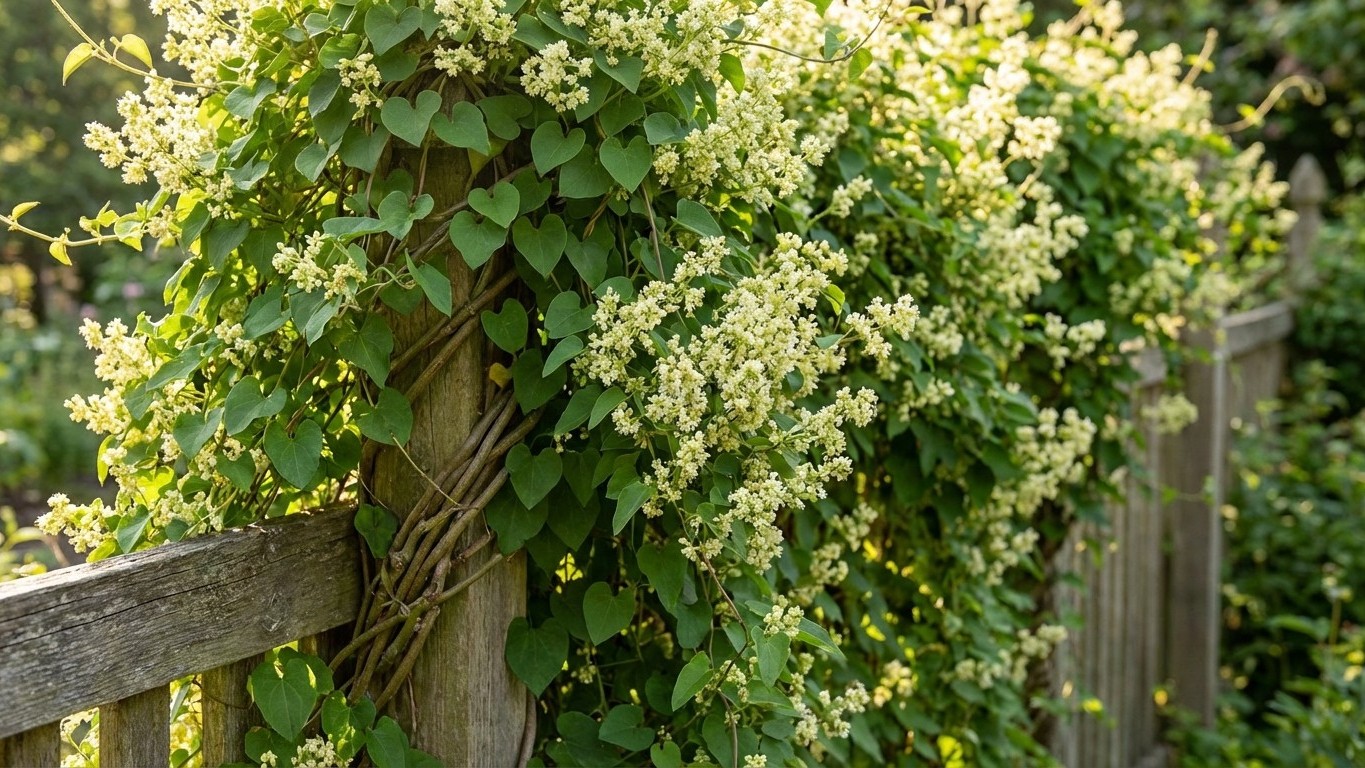
It looks charming at first. A vigorous vine with lush green leaves, spreading quickly across fences and walls, offering that romantic, overgrown cottage aesthetic so many gardeners quietly crave. Then, one season later, you realize the tree at the edge of your yard is struggling to breathe. The shrubs beneath it have gone pale and limp. And the vine is still going, relentlessly, methodically, smothering everything in its path.
The plant in question is Japanese knotweed’s climbing cousin in public imagination, but the real offender here is Fallopia baldschuanica, commonly known as Russian vine or mile-a-minute plant, though several other invasive climbers share this destructive reputation, including Oriental bittersweet (Celastrus orbiculatus) and, increasingly, the kudzu vine (Pueraria montana). These aren’t exotic curiosities anymore. They’re active ecological threats, banned or restricted in eight or more European Union member states, and they’re showing up in American backyards with alarming frequency.
Key takeaways
- A fast-growing vine banned in 8+ European countries is now appearing in American backyards—and it can grow 12 inches per day
- These invasive climbers look innocent and pretty at first, but they regenerate from tiny root fragments and can strangle mature trees
- One visual trick separates the destructive imposter from harmless look-alikes—and it could save you years of backbreaking removal work
Why “Mile-a-Minute” Is Not a Compliment
The nickname alone should set off alarm bells. Russian vine earned it honestly: under ideal conditions, it can grow up to a foot per day during peak summer growing season. Multiply that across a single growing year, and you’re looking at a vine capable of covering an entire garden shed, fence line, or mature oak in a single season. European countries including Germany, Belgium, the Netherlands, and Austria have moved to restrict its sale and cultivation, with some extending outright bans after watching it colonize riverbanks, hedgerows, and suburban gardens at a pace that overwhelmed removal efforts.
What makes these climbers so effective as invaders is their sheer biological stubbornness. Russian vine, for example, can regenerate from tiny root fragments left in the soil after removal. Oriental bittersweet does something worse: it physically strangles host trees by spiraling around their trunks, girdling them until the tree’s vascular system collapses. Foresters in the mid-Atlantic and New England states have been watching this happen to native hardwoods for decades, and the pattern is accelerating as winters grow milder.
How to Identify These Plants Before They Take Over
Early identification is everything. Once these vines establish a root system, removal becomes a multi-year project that will test your patience, your back, and your relationship with weekends.
Russian vine produces small, creamy-white to pale pink flowers in dense clusters from midsummer through fall, honestly rather pretty, which explains why it was sold in garden centers across Europe for decades before the damage became undeniable. Its leaves are heart-shaped, light green, and slightly waxy. The stems are reddish when young, turning woody and rope-like with age. If you see a vine blanketing a fence or outbuilding with this kind of floral froth and you didn’t plant it intentionally, treat it with suspicion.
Oriental bittersweet is trickier to identify because it closely resembles native American bittersweet (Celastrus scandens), a plant that’s actually becoming rare in part because of its invasive cousin’s aggression. The key visual difference: on Oriental bittersweet, the distinctive orange-and-yellow berries appear along the entire length of the stem. On native bittersweet, they cluster only at the branch tips. It sounds like a small distinction. In practice, it’s the difference between leaving a plant in place or pulling it immediately.
Kudzu, if you live in the South, needs no introduction. It’s the vine that ate the American landscape, covering an estimated 227,000 acres across the southeastern United States according to U.S. Forest Service estimates. Its large, three-lobed leaves, purple grape-scented flowers, and capacity to engulf entire utility poles and abandoned buildings make it unmistakable. Less well known is its northward creep: changing climate conditions have pushed it into Pennsylvania, New York, and even southern Ontario.
What to Do If You Find It in Your Garden
The honest answer is: act fast, and don’t underestimate the job. A vine you discovered this spring is manageable. One you’ve been watching grow “charmingly wild” for three summers is a different conversation.
For smaller infestations, manual removal works, but you need to get the roots. Cutting vines at the base without removing root systems simply triggers regrowth, often more vigorous than before, since the plant redirects energy from a large established root mass. Digging out root systems of Russian vine or kudzu can mean going down two to three feet. Wear gloves : Oriental bittersweet’s sap can cause skin irritation in sensitive individuals.
For larger infestations, a combination of cutting and targeted herbicide application (applied directly to cut stems rather than sprayed broadly) is what most land management professionals recommend. Glyphosate and triclopyr are both used effectively on these species, but application timing matters enormously: late summer and early fall, when plants are actively moving energy back into their root systems, yields better results than spring treatment.
One thing worth knowing: do not compost any part of these plants. Russian vine and kudzu especially can regenerate from stem cuttings. Bag everything in heavy-duty garbage bags and send it to landfill, or burn it where local regulations permit.
The deeper question these plants raise isn’t really about Gardening at all. It’s about how easily we underestimate beauty. These vines were imported and cultivated deliberately, for their flowers, their coverage, their fast growth. The same qualities that made them desirable in a nursery catalog made them catastrophic in the wild. As American gardeners increasingly look to fast-growing climbers for privacy screens and aesthetic impact, the invitation to make the same mistake Europe spent decades correcting is sitting right there in the seed catalog. Worth pausing before you order.