
Your favorite dresser’s drawers are sagging, the bottoms are falling out, and every time you try to open them, they stick or catch on the drawer below. Before you consider throwing away that perfectly good piece of furniture or calling an expensive repair service, there’s a brilliantly simple solution that German carpenters have been using for decades.
This ingenious repair method takes literally five minutes, requires no disassembly of your Furniture, and costs less than the price of a coffee. The secret lies in small plastic wedges that work by reinforcing the exact spots where drawer bottoms typically fail, creating an instant structural support system that can extend your furniture’s life by years.
Understanding Why Drawers Sag
Sagging drawers are a common problem that can happen over time as the wood structure loses its integrity under the weight of the load. As the drawer bottom sags, it becomes more difficult to open and close smoothly. The issue is particularly prevalent in modern flat-pack furniture, where thin fiberboard or hardboard bottoms simply can’t handle the weight of everyday items like clothing, linens, or household objects.
One of the reasons the bottom of the drawer pops out so easily is because the dado grooves along the sides, front, and back are so tiny. These shallow grooves, designed to keep manufacturing costs low, provide minimal support for the drawer bottom. Over time, the constant stress of opening, closing, and loading the drawer causes the bottom panel to bow downward and eventually slip out of these narrow channels entirely.
The problem becomes a vicious cycle: once the bottom starts sagging, it creates friction that makes the drawer harder to open and close. This increased force accelerates wear on both the drawer slides and the bottom panel itself. Eventually, you might find yourself unable to open drawers properly, or worse, having the entire bottom panel fall out unexpectedly.
The German Wedge Solution
German furniture makers and carpenters developed this wedge technique as a response to the increasing prevalence of lightweight furniture construction. Rather than accepting that thin drawer bottoms would inevitably fail, they created a simple reinforcement system using small L-shaped plastic brackets.
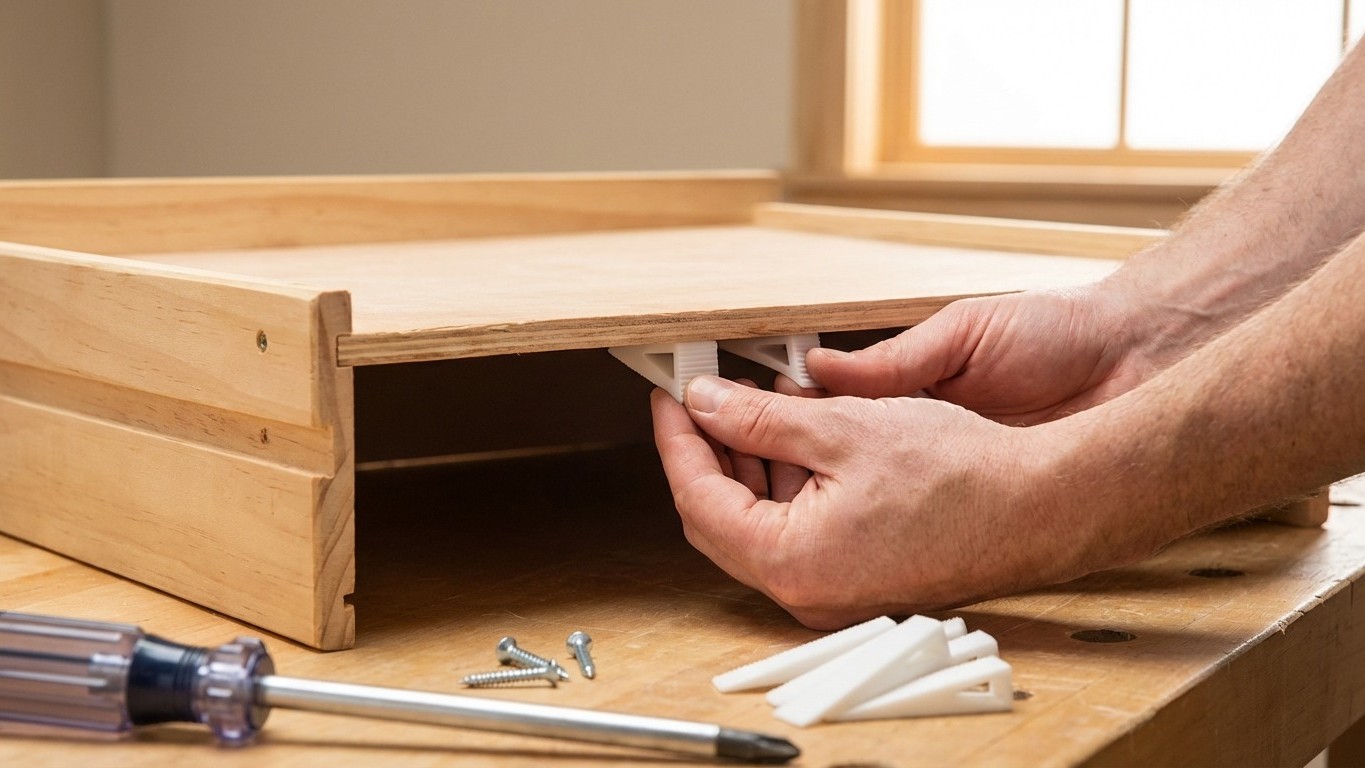
Drawer wedges, also called mending wedges or support brackets, are small plastic shims placed between the drawer bottom and the dado on the front panel. The wedges lift the drawer bottom back into proper alignment by adding support under the weak spots. These Small triangular pieces fit below the bottom panel of the drawer and prevent it from slipping out of its groove. Despite their small size, they provide a substantial amount of reinforcement that will increase your dresser’s lifespan and allow you to put more weight in the drawers.
The genius of this system lies in its simplicity. Instead of requiring you to completely disassemble the drawer, replace the bottom panel, or add complex reinforcement structures, these wedges work with the existing construction. They essentially create additional contact points that distribute the load more evenly across the drawer’s structure.
Amazon sells them in packs of 50 or 100 for about $6. Get a bag, and you’ll have plenty for your drawers. I fixed three chests of drawers and had leftovers for future use. This makes the repair not only quick and easy but also incredibly cost-effective compared to replacing furniture or hiring professional repair services.
Step-by-Step Installation Process
The installation process is refreshingly straightforward, requiring no special tools beyond a basic screwdriver. Step 1: Empty the contents of the drawer. Flip the drawer over with the bottom facing up. Inspect where the sag is occurring. It’s usually in the middle front of the drawer. This inspection step is crucial because it helps you identify exactly where the structural support is needed most.
Push the drawer bottom panel – usually a thin fiberboard – back into position within the dado. This is the most critical step to ensure the wedges work correctly. Don’t skip this step – if the bottom panel isn’t properly seated in its groove, the wedges won’t be able to provide optimal support.
Step 2: Place a drawer wedge flat against the drawer bottom in the problem area, parallel to the front of the drawer. I start in the middle, where the sag is most severe. Slide the thin edge of the wedge into the groove. The wedge should fit snugly without forcing, creating immediate upward pressure that supports the sagging bottom.
For drawers with significant sagging, you’ll typically need 2-4 wedges spaced evenly across the front edge where the problem is most pronounced. Step 6: Replace any contents and test the drawer motion. It should now glide smoothly in and out. The transformation is often immediately noticeable – drawers that once stuck or required extra force to open should now operate smoothly.
This repair method works on virtually any type of drawer construction, from expensive hardwood furniture to budget flat-pack pieces. The wedges will work on most saggy drawers, not just IKEA. The universal nature of this solution makes it an invaluable technique for Anyone dealing with drawer problems, regardless of the furniture’s origin or construction quality.
Long-Term Benefits and Prevention
Drawer wedges are a quick, inexpensive way to regain years of use from a drawer starting to droop. With just a few minutes of work, you can fix the problem and keep your kitchen or bedroom storage organized and functional. Beyond the immediate repair, these wedges also serve as a preventive measure, distributing weight more evenly and reducing stress on the original construction.
Tip: Add them when assembling new fiberboard IKEA drawer bottoms to prevent the bottom panel from sagging. This proactive approach can prevent drawer problems before they occur, essentially upgrading the structural integrity of your furniture during initial assembly.
The beauty of this German technique lies not just in its effectiveness, but in its accessibility. Unlike traditional furniture repair methods that require woodworking skills, specialized tools, or complete disassembly, this solution empowers anyone to extend their furniture’s useful life. It represents a perfect example of how traditional craftspeople have developed elegant solutions to common problems – solutions that remain relevant and valuable in our modern world of increasingly lightweight furniture construction.
With drawer wedges in your repair arsenal, you’ll never again have to live with frustrating, sagging drawers or consider discarding otherwise functional furniture. This simple German innovation proves that sometimes the most effective solutions are also the most elegantly simple ones.