
Every March, home gardeners rush to fill seed trays with tomato seeds, excited by the first hint of spring light through the window. Commercial farmers watch them do it, and quietly wait. The detail they check first isn’t glamorous. There’s no special tool required, no expensive input to buy. It’s a date. One specific date. And everything — the seeding schedule, the transplant window, the entire season’s harvest, flows backward from it.
That date is the last expected frost date for their growing zone. Frost dates help decide when to start tomato seeds indoors. The last spring frost marks when it’s safe to transplant seedlings outside. Before a commercial farmer touches a single seed tray in March, they’ve already confirmed this date, because the entire growing calendar is built around it.
Key takeaways
- There’s a specific date that controls everything about your tomato season—and most gardeners ignore it completely
- Planting too early leads to weak, spindly seedlings that never recover, costing you weeks of harvest time
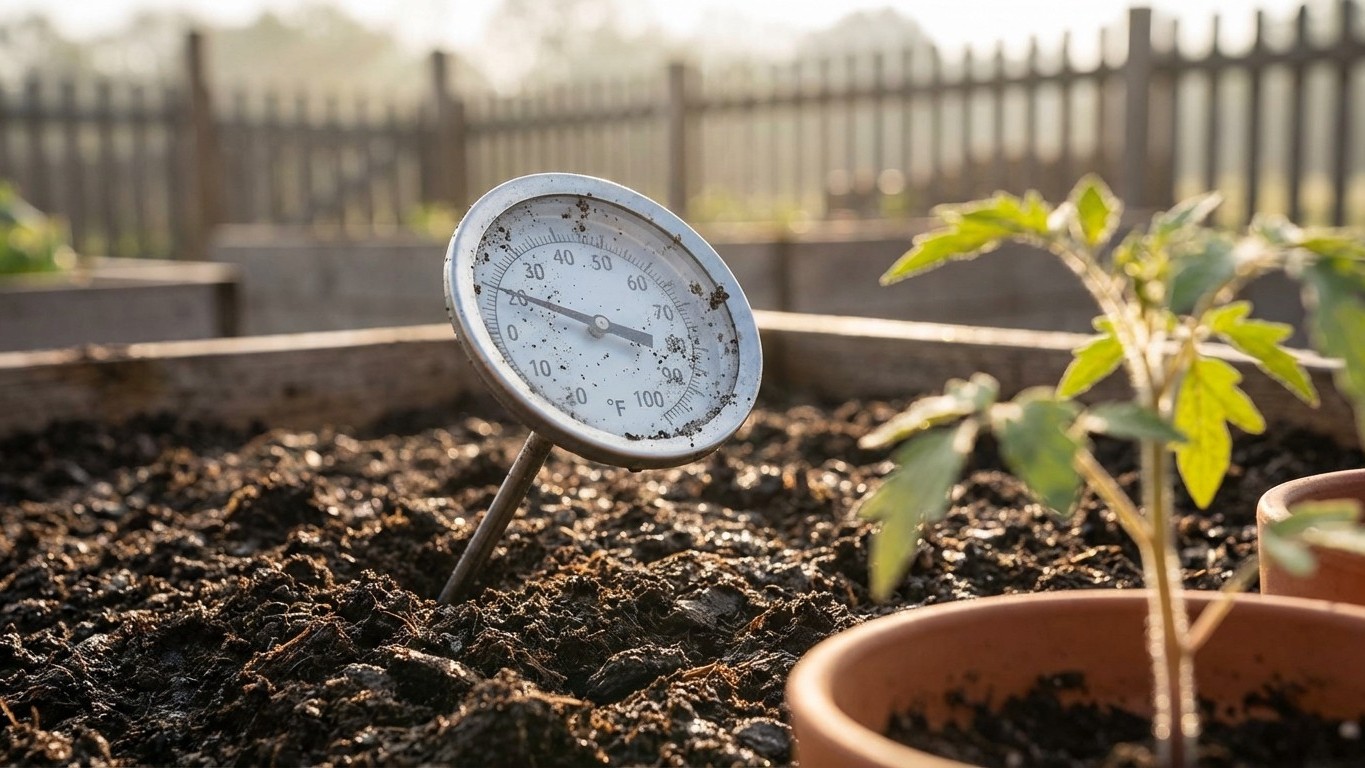
- One simple tool reveals the second factor that determines success or failure—and it’s not what you’d expect
The Calendar Math That Separates Amateurs from Professionals
Tomatoes are deceptively patient plants. They don’t reward eagerness. These tender, heat-loving plants require warm temperatures and plenty of sunlight; they are susceptible to cold temperatures and frost. Which means the seed-starting window isn’t about planting as early as possible, it’s about planting at exactly the right time.
Plant tomato seeds 6 to 8 weeks before your last frost date, and transplant seedlings outdoors 1 to 2 weeks after the last frost when soil temperatures routinely reach at least 60°F (16°C). That window is tight by design. If seeds are started too early, plants become weak and struggle indoors. If started too late, they may not have enough time to grow before the season ends. Commercial farmers treat this like a non-negotiable production deadline, because it is one.
Here’s where the detail gets interesting: most tomato seed packets recommend starting seeds indoors six to eight weeks before the last frost. The average last frost date is just that, the average last frost date, meaning there is still a 50% chance of frost. Experienced growers account for this by adding a buffer. Plan to wait a week or two after your average last frost date to set out your tomato transplants; then start your seeds six to eight weeks before this later set-out date. Small adjustment. Huge difference in crop survival.
What Happens When You Ignore It
Starting too early feels like a head start. It isn’t. Leggy tomatoes, those tall, spindly plants with weak stems, are the most common issue when starting seeds indoors. The cause is almost always insufficient light, though heat, overcrowding, and timing play roles too. A plant that’s been sitting in a tray for ten weeks waiting for outdoor temperatures to cooperate isn’t a mature, robust seedling. It’s a stressed, root-bound candidate for transplant failure.
The research backs this up starkly. Researchers concluded that transplanting a tomato seedling earlier had no positive effect on tomato fruit yield, earliness, or fruit size. Not only are tomato transplants younger/smaller when planted before the last frost, but they are planted when temperatures are still very cold. All that eagerness, all those weeks of indoor care, for nothing, or worse.
Kicking things off more than 8 weeks before your last frost date almost always leads to leggy, overgrown seedlings. They quickly outgrow their little pots, their roots get all tangled and “root-bound,” and the whole plant becomes stressed. You’ll see yellowing leaves and a general lack of vigor. Then, when it’s time to move them outside, these coddled plants often suffer from serious transplant shock, which can set back your harvest by weeks. For a commercial operation, weeks of lost production isn’t an inconvenience, it’s a financial hit.
The Soil Temperature Factor: The Second Check
Once the frost date math is done, smart growers layer in a second variable: soil temperature. Air temperature is what you feel stepping outside in the morning. Soil temperature is what determines whether your transplants Actually thrive or simply survive.
So often we concentrate on only the air temperature to decide when to plant these crops, but the soil temperature is actually just as important. Tomatoes should be Planted when the soil temperature reaches a minimum of 60°F in the daytime. If you plant too early in cold soil, tomato seedlings sulk and will not be happy. Root development is very slow and the roots have difficulty absorbing nutrients.
Few gardeners check the soil temperature before planting, yet it is probably the most important factor affecting seed germination and plant growth. Planting too early, before allowing the soil to warm up, can lead to seed rot, delayed germination, root decay, poor growth, and disease. The thermometer costs less than a bag of potting mix. The information it provides is worth a season’s yield. The bare minimum for soil temperature is 57°F (14°C); the optimum is between 65 and 70°F (18 and 21°C).
For germination specifically, the numbers are even more telling. The optimum temperature range for tomatoes is 65° to 85°F. Within that range, it takes approximately 6 to 8 days before seeds germinate. Tomato seeds may still germinate at 50°F, but it will take over 40 days, and there will probably be no germination if the soil temperature is 104°F. Forty days versus six. That’s the difference between a productive tray and a frustrating one.
Getting Your Own Timing Right
The good news: this calculation is entirely within your control, regardless of the size of your operation. Many online tools provide frost dates based on zip codes or regions. The local agricultural extension office also offers accurate frost information. Take that date, count back six to eight weeks, then add a week or two to your transplant date for safety, and you’ve essentially replicated what commercial growers do every single year before placing one seed.
Warm weather crops like tomatoes, basil, and pumpkins should not go out into the garden until several weeks after your last frost date, once the soil has adequately warmed up along with the nighttime temps. Even though you can sow those tomato seeds 6 to 8 weeks before your last frost, the reality is those tomato seedlings will need to remain indoors for a good 3 to 4 weeks after your last frost. Plan for that buffer. It changes everything.
Once your seedlings are growing and approaching transplant size, move them outside into the sun, first for a few hours, then gradually increasing over a week’s time until they are in full sun all day. This process is called “hardening off” and it avoids transplant shock. Commercial growers build this acclimatization period right into their schedule, another week-long buffer that home growers often skip and then wonder why their plants look rough for the first two weeks outside.
The real insight here isn’t about any single trick or product. It’s that commercial farmers think in systems, not impulses. They don’t walk into March with a handful of seeds and a sunny window. They walk in with a calendar, a frost date, and a soil thermometer. The question worth sitting with is this: what would change in your garden if you started treating your tomato timing less like a feeling and more like a formula?