Bent-over tops on onions are not a mystery, they’re a message. When the green stalks of your onion plants fall over and lie flat on the soil, the bulb has stopped actively growing and is beginning its natural curing process. The neck is softening, signaling that the outer layers are ready to dry down and form that papery skin that protects the bulb for months in storage. At that point, the plant is done. And if you keep watering it, you’re essentially waterlogging a bulb that’s trying to seal itself shut.
Key takeaways
- That bent-over onion foliage you see as wilting is actually the plant’s natural signal that it’s sealing itself shut—and you might be destroying it with every extra watering
- A single gardener’s mystery of rotting onions across multiple seasons was solved by digging up one bulb three weeks too late and discovering slimy, mushy necks
- The difference between onions that store for months versus weeks isn’t harvest timing or curing technique alone—it’s a decision made weeks earlier in the garden that most gardeners never realize they’re making
The moment everything clicked
Many gardeners make the same mistake: they see drooping tops and assume the plant is stressed, maybe thirsty, possibly diseased. So they water more. The logic feels reasonable, a wilting plant usually needs water. Onions, though, follow a completely different script. That collapse is the finish line, not a distress signal. The whole crop rots in storage not because of some mysterious fungal problem introduced at harvest, but because excess moisture at the wrong time keeps the neck tissue soft and open, giving pathogens a direct entry point into the bulb.
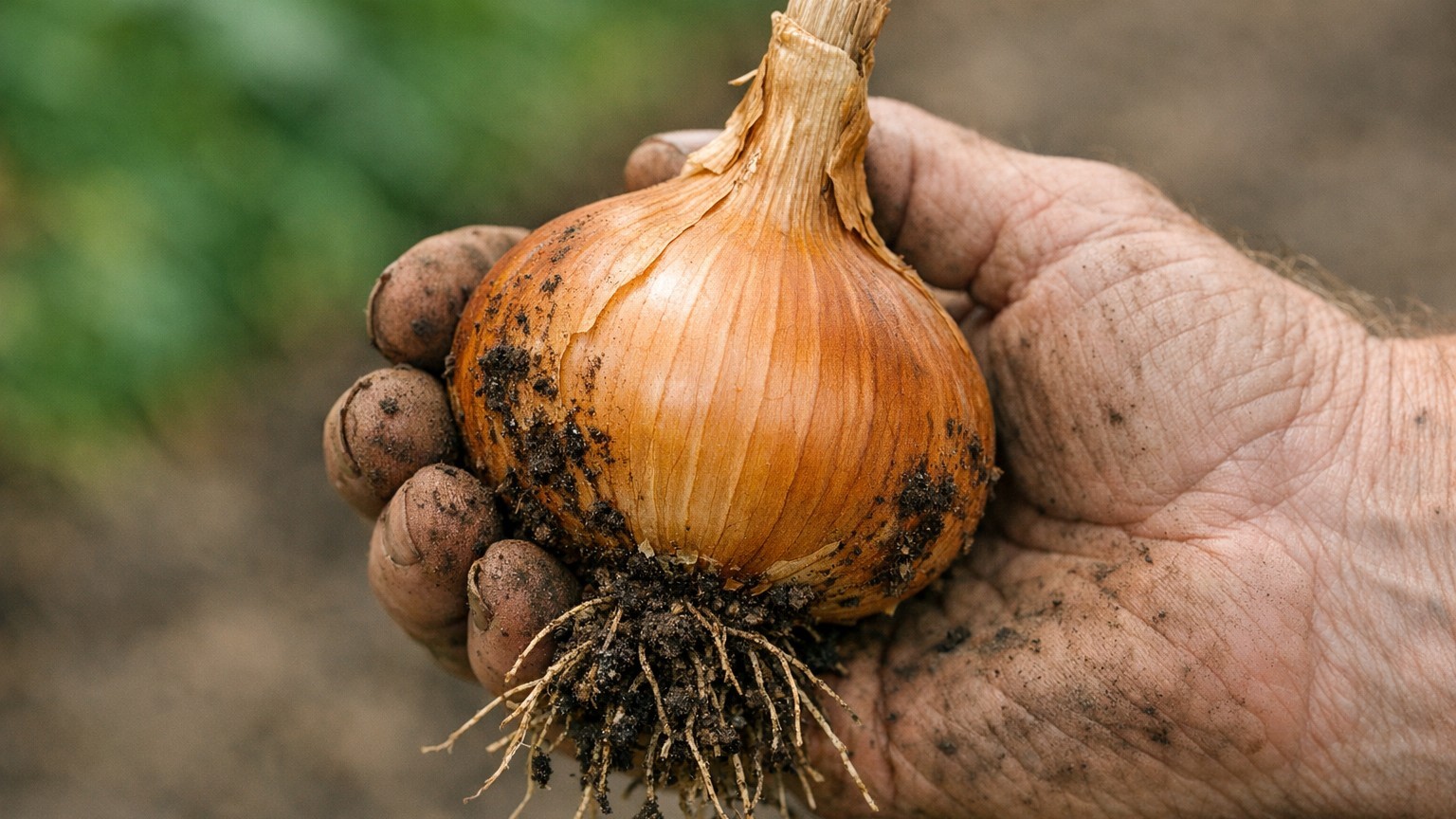
One gardener described digging up a bulb about three weeks after the tops had bent, only to find the outer layers slimy and the neck completely mushy. The rest of the row looked fine from above. The damage had happened underground, quietly, while the watering schedule continued as usual. That single rotted bulb explained a pattern that had repeated itself across multiple growing seasons.
What’s actually happening inside the bulb
When an onion bulb reaches maturity, it starts pulling energy back from the leaves into the bulb itself, a process called senescence. The neck, which is the thin tissue connecting the green tops to the swollen bulb, needs to dry and contract. Think of it like a natural seal forming. Dry neck tissue is tight neck tissue, and tight neck tissue blocks the bacteria and molds that cause storage rot, primarily Botrytis allii (neck rot) and various soft-rot bacteria from the Pectobacterium family.
Continued irrigation after the tops fall over keeps the soil and the neck moist at exactly the moment the plant needs the opposite condition. Research from cooperative extension programs across the U.S. consistently recommends stopping irrigation once 50 to 75 percent of the tops have fallen over, allowing the soil to dry out for the final 10 to 14 days before harvest. That window is short but decisive. A bulb pulled from dry soil with a firm, dried-down neck will store for months. A bulb pulled from wet soil with a spongy neck might last three weeks.
Harvesting and curing: the steps that actually protect your storage
The harvest itself matters less than what comes immediately after. Onions need to cure before they go into any storage bin, basket, or braid. Curing means leaving the bulbs in a warm, dry, well-ventilated space, ideally with temperatures between 75 and 85 degrees Fahrenheit — for two to four weeks. During this time, the outer skin dries into that familiar crinkly paper, the neck shrivels and closes completely, and the roots dry to a brittle crisp. Any bulb stored before this process is complete is a liability.
A common shortcut that backfires: pulling the onions, brushing off the dirt, and bringing them inside to a humid basement within a day or two. The interior of the bulb is still metabolically active. Without proper air circulation and dry heat, the moisture inside the bulb has nowhere to go, and rot follows. Garages, covered porches, and greenhouse benches with screens all work well for curing, as long as the bulbs aren’t sitting in a damp pile. Spread them out in a single layer, or hang them in mesh bags so air reaches every surface.
One detail most guides skip: don’t trim the tops immediately after harvest. The green foliage and dry stems continue to pull moisture out of the neck even after the bulb is out of the ground. Cutting the tops to an inch or two right at harvest removes that natural wick. Wait until curing is fully complete before trimming, then cut the neck down to about an inch, check that it’s bone-dry, and store.
Varieties, timing, and what most gardeners get wrong
Storage life is partly a variety question that gets decided long before harvest. Short-day onions, which are common in Southern states and mature earlier in the season, generally have higher sugar content and thinner skins, they’re sweeter but they store for a shorter time, often just a few weeks to a couple of months even when cured perfectly. Long-day varieties, grown in the northern half of the country and harvested in late summer, have lower water content and form thicker, tighter outer skins that can keep them firm in storage for six months or more. Planting a short-day variety with the expectation of long-term winter storage is a setup for disappointment regardless of how carefully you cure them.
Timing the final watering cutoff to match the variety’s maturity window takes a bit of attention, but there’s a reliable rule of thumb: when about half the tops in a bed have bent, walk through and bend the rest manually, then stop all irrigation. This slightly accelerates the curing process in the remaining bulbs and synchronizes the bed so you’re not harvesting in multiple passes over weeks. Onion tops are tough, bending them doesn’t damage the bulb, and it prevents you from second-guessing whether each plant is “really done.”
Neck rot caused by Botrytis allii is worth a separate mention because it often shows no visible symptoms at harvest, the damage only becomes apparent two to four weeks into storage, which is why so many gardeners blame storage conditions rather than looking back at what happened in the final weeks in the ground. The fungus infects the neck tissue before harvest when it’s still moist and vulnerable. By the time you see gray mold spreading inside your storage bin, the decision that led there was made weeks earlier, still in the garden.