
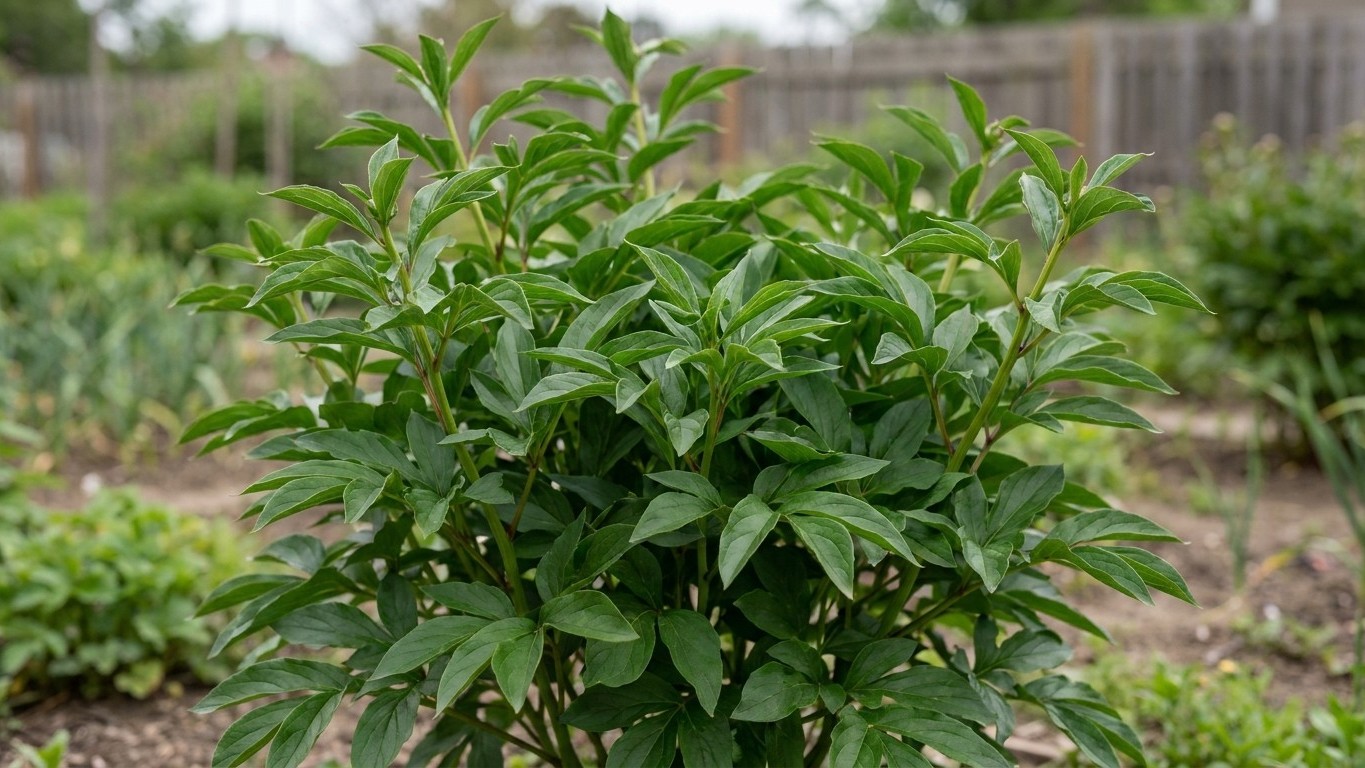
Two springs in a row without a single bloom from your peonies is not bad luck. It’s a message. And in most cases, the message is coming from the ground, specifically from what you’ve been adding to it every April with the best of intentions.
Peonies are perennial overachievers. Given the right conditions, a single plant can bloom reliably for fifty years or more. Gardeners who inherited plants from their grandmothers know this firsthand. So when a peony goes silent for two consecutive seasons, something specific has changed, and high-nitrogen fertilizer is the most common culprit hiding in plain sight.
Key takeaways
- A common April fertilizer mistake suppresses peony blooms for years without any visible signs of distress
- What looks like a thriving plant on the surface could be starving underground in ways you can’t see
- The fix exists, but peonies move slowly—and patience is the final ingredient
The fertilizer habit that backfires spectacularly
Walk into any garden center in April and you’ll see the same scene: bags of general-purpose fertilizer stacked near the register, usually labeled with some variation of “feeds everything.” People grab them for roses, hostas, tomatoes, and yes, peonies. The problem is that peonies don’t want what tomatoes want. High-nitrogen formulas, anything where the first number in the N-P-K ratio is significantly larger than the other two — push plants to produce lush, dark green foliage at the expense of flowers. The plant essentially uses all its energy growing leaves, leaving nothing for bud development.
Nitrogen is the growth accelerant of the plant world. A soil flush with it tells every living thing in the ground to go vertical, go green, go fast. For a lawn or a vegetable patch, that’s often exactly what you want. For a peony, it’s a season-killer. Two seasons if you apply in back-to-back Aprils without reassessing.
The frustrating part is that the plant looks fantastic. Deep green stems, full canopy, no visible disease. From a distance, your peony bed appears to be thriving. The blooms just never come. That disconnect, healthy foliage, zero flowers, is the signature of nitrogen overload, and it leads many gardeners to add more fertilizer, convinced the plant must be hungry.
What peonies actually need from the soil
Peonies are native to Asia and Southern Europe, where they evolved in well-drained, moderately fertile soils. They’re not heavy feeders. The few things they genuinely benefit from are phosphorus (to support root development and flowering) and potassium (for overall plant resilience). A low-nitrogen fertilizer, or better yet, a bloom-booster formula with an N-P-K like 5-10-10 or similar — applied lightly and infrequently does far more good than the standard spring feed routine.
A soil test is the most underused tool in home gardening. For around $15 through most university extension programs, you get a precise read of your soil’s pH and nutrient profile. Peonies prefer a pH between 6.5 and 7.0. Soil that’s too acidic blocks phosphorus uptake even when phosphorus is present, meaning you could be adding exactly the right nutrient and still starving the buds because the pH won’t let the plant access it. This is the kind of compounding problem that turns a one-season disappointment into a two-season mystery.
Fresh manure is another frequent offender that doesn’t get enough attention. Well-intentioned gardeners sometimes top-dress beds with manure in fall or early spring. Fresh or hot manure releases nitrogen in concentrated bursts, replicating the same flower-suppressing effect as a high-nitrogen synthetic fertilizer, sometimes worse, since the release is less predictable.
The planting depth problem that compounds everything
Nitrogen overload doesn’t always work alone. The other silent bloom-killer is planting depth, and it’s worth checking if fertilizer wasn’t the issue, or if you’ve corrected your fertilizer habits and still see no flowers. Peonies planted too deep won’t bloom. The “eyes” (the reddish buds on the root system) should sit no more than one to two inches below the soil surface in most climates. Plant them three or four inches down, and the plant redirects energy indefinitely without ever triggering its flowering cycle.
Shade is the third factor in this trio of failures. Peonies need at least six hours of direct sun daily. A tree that was small when you planted your peony five years ago might now be casting enough shadow to suppress blooming without anyone noticing the canopy has crept over the bed. This is one of those garden changes that happens so gradually it registers as a mystery rather than a cause.
How to reset a non-blooming peony starting this April
The fix is not complicated, but it does require patience, peonies respond slowly, and improvements made in April 2026 typically show results in May or June 2027. Start by skipping nitrogen-heavy fertilizers entirely this season. If you want to feed, use a diluted phosphorus-focused amendment or simply top-dress with compost, which feeds more gently and improves soil structure over time.
Check your planting depth if you can do so without major disturbance. In early spring, before growth fully emerges, you can carefully scrape away soil and verify that the eyes sit near the surface. If they’re buried, a careful lift and reset in early fall (when the plant is dormant) can reverse years of non-blooming within a single season afterward.
One thing worth knowing: peonies that have been stressed by nitrogen, incorrect pH, or poor depth for multiple years sometimes need a full growing season just to “reset” their energy reserves before they bloom again, even after you’ve corrected every problem. Growers who’ve brought neglected plants back from years of dormancy often report that the first corrected spring yields only modest growth, while the second brings an explosion of flowers. The plant remembers, in its way. Give it time, and give it the right soil, and a fifty-year peony does exactly what it was always capable of doing.