
Wood ash has been a gardening staple for centuries. Roman farmers spread it. Colonial homesteaders relied on it. Your grandfather probably kept a bucket by the fireplace just for the garden. The pitch was simple: burned wood contains potassium and calcium, so why not put it back in the soil? The logic held for generations. The science, however, tells a more complicated story, one that most gardening guides still haven’t caught up with.
Key takeaways
- A single ash application can push soil pH high enough to chemically trap essential micronutrients, making them invisible to plant roots
- Symptoms of ash-induced deficiency (yellowing leaves, stunted growth) mimic other problems, causing gardeners to chase the wrong fixes for years
- Soil pH testing before and after ash application is the only way to know if you’re helping or harming—and most gardeners skip this step entirely
The pH Problem Nobody Warned You About
Wood ash is strongly alkaline. A single application can push soil pH from a neutral 6.5 toward 8.0 or higher, depending on how much you use and what your baseline is. That shift might sound abstract, but it has immediate, measurable consequences for your plants. Soil pH controls which nutrients dissolve into water, and which ones lock up into forms roots simply cannot absorb.
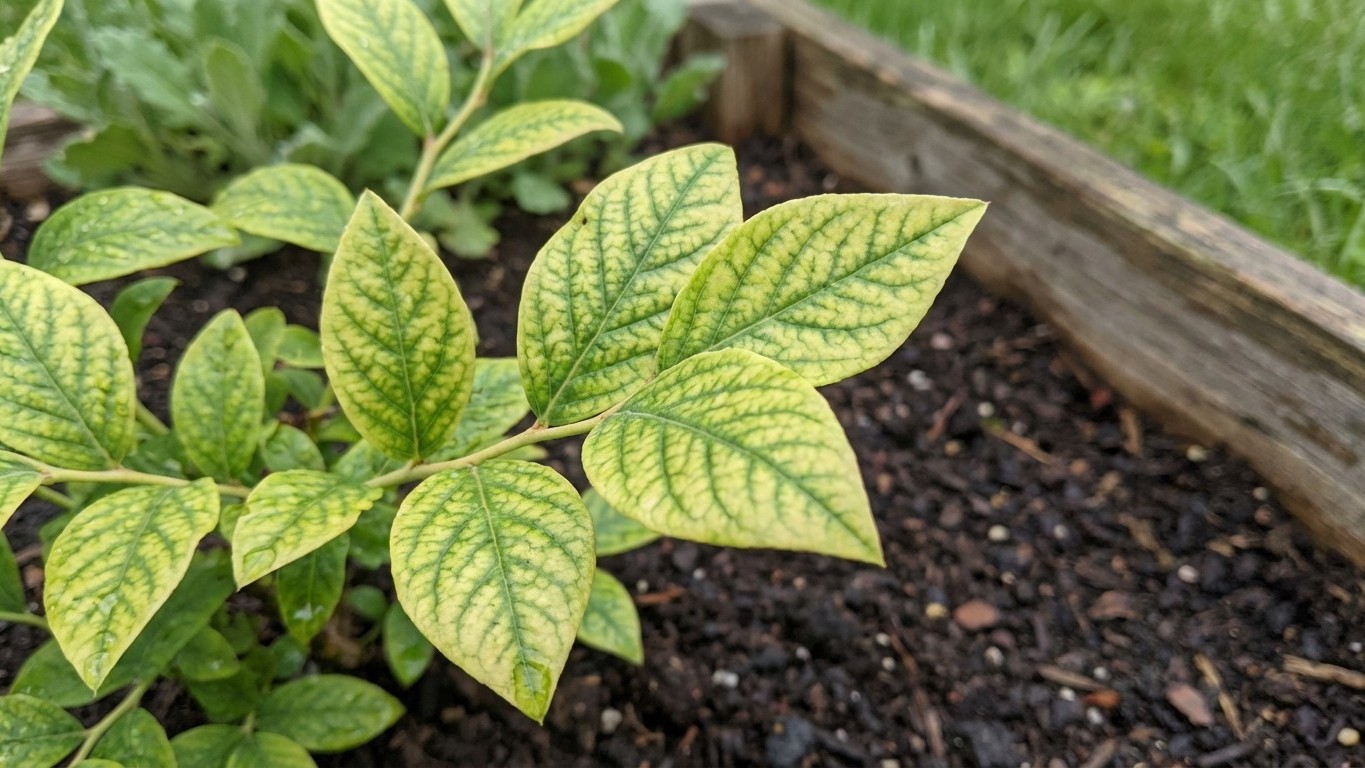
Here’s where the deficiency comes in: when pH climbs above 7.5, manganese and boron become chemically unavailable. Iron and zinc start to precipitate out of solution. Your soil can be physically full of these micronutrients, yet your plants starve for them. Botanists call this “induced deficiency”, a condition not caused by an absence of nutrients, but by chemistry that puts them out of reach. The plants show classic deficiency symptoms (yellowing leaves, stunted growth, poor fruiting) even when you’ve fed them well. The ash created the problem while appearing to solve it.
A guidance note from the Royal Horticultural Society acknowledges this risk directly, recommending wood ash only for soils that test below pH 6.0, and only in modest, controlled quantities. Most home gardeners never test their soil. Most apply ash by feel. That gap between assumption and reality is where the damage happens.
The Manganese Trap: A Deficiency That Mimics Other Problems
Manganese deficiency is particularly sneaky. The symptoms, interveinal chlorosis, where leaves turn yellow between the veins while the veins stay green — look almost identical to iron deficiency and magnesium deficiency. Gardeners who don’t know to test for pH often chase the wrong fix, adding iron supplements or Epsom salts while the real culprit (an overly alkaline soil from repeated ash applications) goes unaddressed. The problem compounds season after season.
Raspberries, blueberries, rhododendrons, and azaleas are the most visibly sensitive plants. Blueberries, which evolved in acidic soils with a pH around 4.5 to 5.5, can go into complete nutrient collapse within a single growing season if ash is applied nearby. Roses and tomatoes aren’t far behind. Even grass can develop a washed-out, pale appearance when soil tips too alkaline, a condition often misread as drought stress or nitrogen hunger.
The irony is real: ash contains potassium, which is genuinely useful for fruiting plants. But the potassium benefit arrives bundled with a pH spike that cancels much of the nutritional gain. You’re giving with one hand and taking away with the other.
When Wood Ash Actually Helps
Not every garden application is a mistake. Genuinely acidic soils, common in the Pacific Northwest, parts of New England, and areas with heavy rainfall — can benefit from careful ash use. If your soil tests below pH 6.0, a light dusting of wood ash (no more than 10-15 pounds per 100 square feet, according to most extension service guidelines) can correct acidity and supply calcium in a form plants absorb readily. Hardwood ash is considerably richer in these minerals than softwood ash, which is worth knowing if you’re burning a mix of wood types through winter.
Compost bins are another reasonable destination. Mixing ash into a hot compost pile dilutes its alkalinity, neutralizes some of the pile’s acidity, and adds trace minerals that survive the composting process. The resulting compost delivers a much gentler, buffered amendment, less of a blunt instrument than raw ash scattered directly on beds.
Timing matters too. Spring application, just before planting, gives rain a chance to integrate ash into the soil before roots are fully active. Fall application lets it work over winter but risks leaching potassium into groundwater before plants can use it. Either way, you absolutely need a soil pH test before you start, and another after a full season to see what the ash has actually done.
The Science Is Catching Up to Grandmother’s Garden
Soil science has become considerably more precise over the past two decades. Researchers can now map nutrient availability curves across pH ranges with accuracy that simply wasn’t possible in earlier eras of gardening. A 2021 review of soil amendment research in European agricultural journals noted that the alkalizing effects of biomass ash had been systematically underestimated in traditional horticulture guidance, partly because the studies were conducted in naturally acidic northern European soils where the buffering capacity was high enough to absorb the impact.
American soils vary enormously. A gardener in Georgia clay starting at pH 5.5 has a very different experience with wood ash than a gardener in Arizona desert soil already sitting at pH 7.8. The same handful of ash that helps one may lock a second into years of micronutrient struggle. This context-dependence is exactly what folk wisdom can’t account for, it aggregates experience without accounting for variables.
The $15 soil test kit at your local garden center, or the more precise mail-in analysis from your state’s cooperative extension service, changes that calculation entirely. Wood ash doesn’t need to be abandoned. It needs to be demoted from sacred tradition to conditional tool, useful in specific circumstances, genuinely harmful in others, and never something to apply on autopilot just because it’s free and your grandfather did it.