
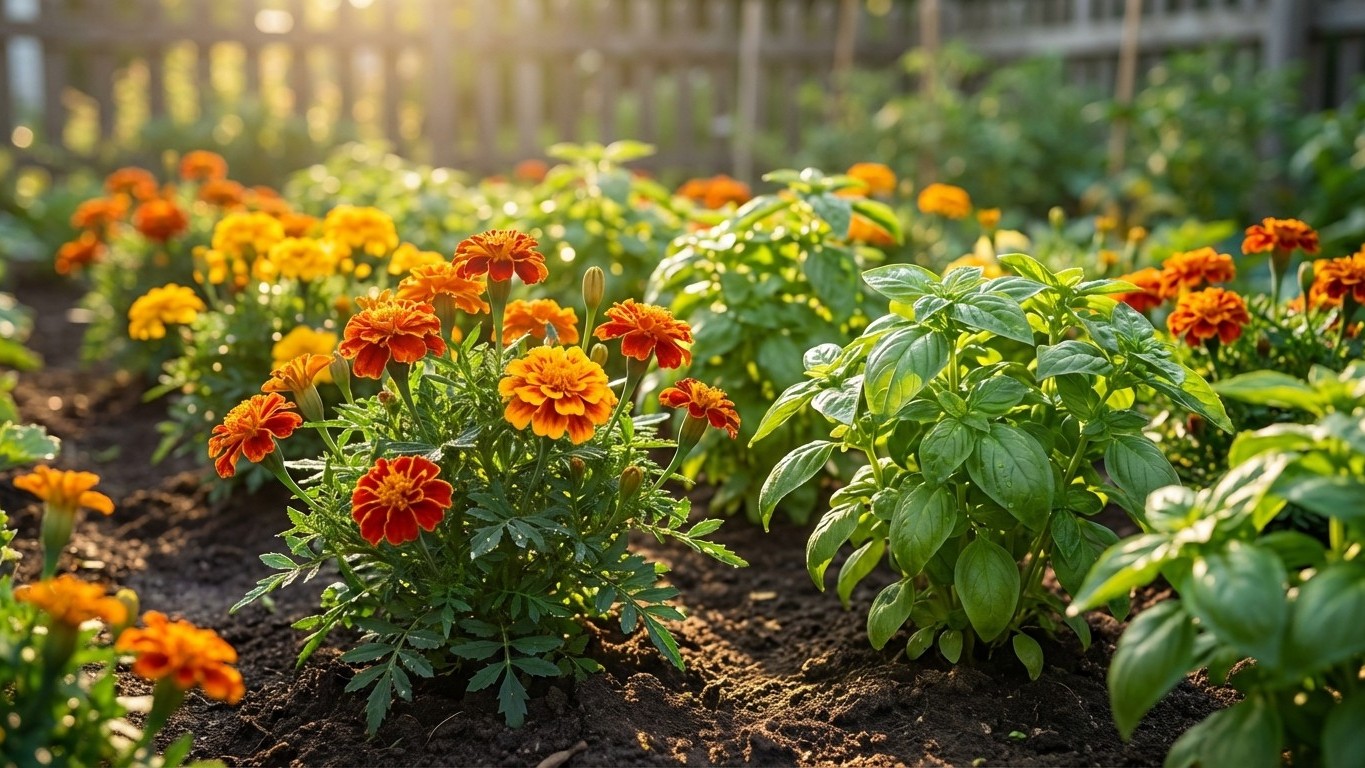
Walk into any garden center today and you’re confronted with a wall of sprays, granules, and powders, each promising to annihilate whatever pest dares show up. Our grandparents didn’t have that wall. They had something better: knowledge accumulated over generations about which plants, grown side by side, could keep a garden thriving Without a single synthetic chemical. Companion planting, the practice of establishing two or more plant species in close proximity for some cultural benefit, including pest control and higher yield, was not a trend for them. It was simply how you grew food.
Many of the modern principles of companion planting were present many centuries ago in forest gardens in Asia, and thousands of years ago in Mesoamerica. More recently, starting in the 1920s, organic farming and horticulture have made frequent use of companion planting, since many other means of fertilizing, weed reduction, and pest control are forbidden. this is ancient wisdom that the 20th century briefly forgot, and that we’re now scrambling to rediscover.
Companion planting works by creating a balanced ecosystem where certain plants repel insects, attract beneficial predators, or mask the scent of vulnerable plants. This traditional method relies on plant diversity and strategic placement to create multiple layers of defense, using the natural properties of plants to communicate through chemical signals and protect each other. Six plants stood out in the kitchen gardens of generations past. Here’s what they are, and exactly why they worked.
Key takeaways
- Your ancestors used a completely different pest control system—and it actually worked better
- Modern research is proving what gardeners knew for centuries about certain plant combinations
- These six plants do something sprays can’t: they create a self-sustaining garden ecosystem
The Scent Defenders: Marigold, Lavender, and Chives
Marigolds were practically a fixture in every row. Not decoration, protection. Marigolds are ideal for repelling pests like nematodes, aphids, beetles, and slugs while attracting beneficial insects like ladybugs, hoverflies, and wasps that control pests in the garden. The science behind this is now well-documented. The smell of the foliage of marigolds is claimed to deter aphids from feeding on neighboring plants. A 2005 study found that oil volatiles extracted from Mexican marigold could suppress the reproduction of three aphid species by up to 100% after five days of exposure. That’s not folklore. That’s a chemistry lab confirming what grandmothers already knew.
Lavender earned its place in the rows for similar reasons. Lavender paired with marigolds creates an excellent barrier to repel insects from vegetable crops in your garden. Lavender repels harmful insects, and the bright purple blooms attract pollinators and other beneficial insects. The practical bonus: it’s drought-tolerant, nearly indestructible, and smells extraordinary. A row of lavender bordering tomatoes or peppers does double duty as both garden guardian and free air freshener.
Chives deserve more credit than they usually get. Chives, onions, leeks, scallions, and garlic emit a strong, sulfur-like fragrance that repels a wide range of pests. Japanese beetles and aphids are known to avoid allium plants, but deer and rabbits aren’t fond of them either. Chives taste great and have protective properties against cabbage moths and aphids. Chives, leeks, and onions are welcome additions to any garden, and some vegetable pests really dislike them. The pests they deter include damaging moths, aphids, and spider mites. Tuck them between rows of carrots, brassicas, or tomatoes and let them do their quiet work.
The Trap Croppers: Nasturtium and Dill
These two operate on a completely different strategy. Instead of repelling insects, they lure them away from the vegetables you actually want to eat. Nasturtium is the classic example. The queen of flowers to use for pest control is nasturtium. It is Thought to deter pests. Also, act as a “trap crop” for pests who prefer its taste over your prized vegetables. Aphids, in particular, will flock to nasturtium and ignore neighboring beans or cabbage. Nasturtiums make a good trap crop for aphids, and they deter whiteflies, cucumber beetles, and attract predatory insects. The plant sacrifices itself, in a sense, so the rest of your garden doesn’t have to.
Dill works differently again. Plant members of the carrot family, such as dill, fennel, and cilantro, in the vegetable garden and allow them to come into flower. Their blooms are very attractive to parasitic wasps, tachinid flies, ladybugs, and other beneficial insects that prey upon many common vegetable garden pests. Allow dill to flower between rows of cabbage and you’ve essentially built a habitat for the pest-eaters. One study showed that when dill was interplanted with eggplant, there were lower populations of the Colorado potato beetle. The flowering dill plants encouraged more natural enemies of the Colorado potato beetle. One plant, doing three jobs simultaneously. That’s efficient gardening.
One important caveat with dill: dill does attract the tomato hornworm, so it would be wise to plant it somewhere away from your tomato plants. Every tool has its limits.
The Multitasker: Basil
If companion planting had a celebrity, it would be basil. Basil will improve vigor and flavor of tomatoes when planted side-by-side. It is also good with asparagus, oregano, and peppers. Basil helps repel aphids, asparagus beetles, mites, flies, mosquitoes, and tomato hornworm. That list of repelled pests is almost comically long for a plant you can also put on a pizza.
Beds planted with basil and thyme were best able to repel the yellow-striped armyworm. A different study showed that basil helped to repel the tomato hornworm as well. Basil between tomato rows is one of the most time-tested pairings in garden history, and modern research keeps vindicating it. The aromatic oils released by basil leaves physically mask the scent of nearby plants, making it harder for pest insects to zero in on their preferred targets.
Putting the System to Work
In general, plants with known positive relationships should be planted within two or three rows of each other. The beauty of this system is its flexibility. Companion plants can be tucked in flower beds or interplanted between rows of vegetables. In small gardens, companion plants can even be grown in pots for space savings and placed near vulnerable crops. You don’t need acres. You need intention.
Though there will always be skeptics, pretty much everyone agrees that the more diversity you have in the garden, the fewer pests you will deal with. What we know for sure is that having diversity in any garden is better than a monoculture. Large-scale industrial agriculture runs on monocultures, which is precisely why it runs on pesticides too. The two are inseparable. A garden planted with six different companion plants between every row is, by its nature, harder for any single pest to dominate.
There’s something quietly radical about reclaiming this knowledge. Traditional pest control methods have stood the test of time, offering effective solutions before modern chemicals dominated the market. These time-honored techniques eliminate unwanted critters. Also, minimize environmental impact. The next time you reach for a spray bottle, ask yourself: what would happen if you planted a row of marigolds instead? Your grandparents probably already knew the answer.