March is a liar. It teases you with mild afternoons and then drops frost overnight, but experienced gardeners know exactly how to use that instability to their advantage. The plants you put in the ground this month, while the soil is still cold and the growing season hasn’t fully committed, are precisely the ones that will ask nothing of you come July. They root deep before the heat arrives, build their own defenses against drought, and in many cases, reseed themselves so reliably you’ll wonder why you ever watered anything at all.
This isn’t about laziness, it’s about working with plant biology instead of against it. A self-sustaining garden isn’t a neglected one. It’s a thoughtfully planted one, where every choice made in early spring pays dividends for months without requiring a single additional intervention.
Key takeaways
- One surprising month changes everything about summer garden maintenance
- These plants solve the drought problem before heat even arrives
- The difference between a garden that demands work and one that doesn’t comes down to one simple biological principle
The Plants That Practically Raise Themselves
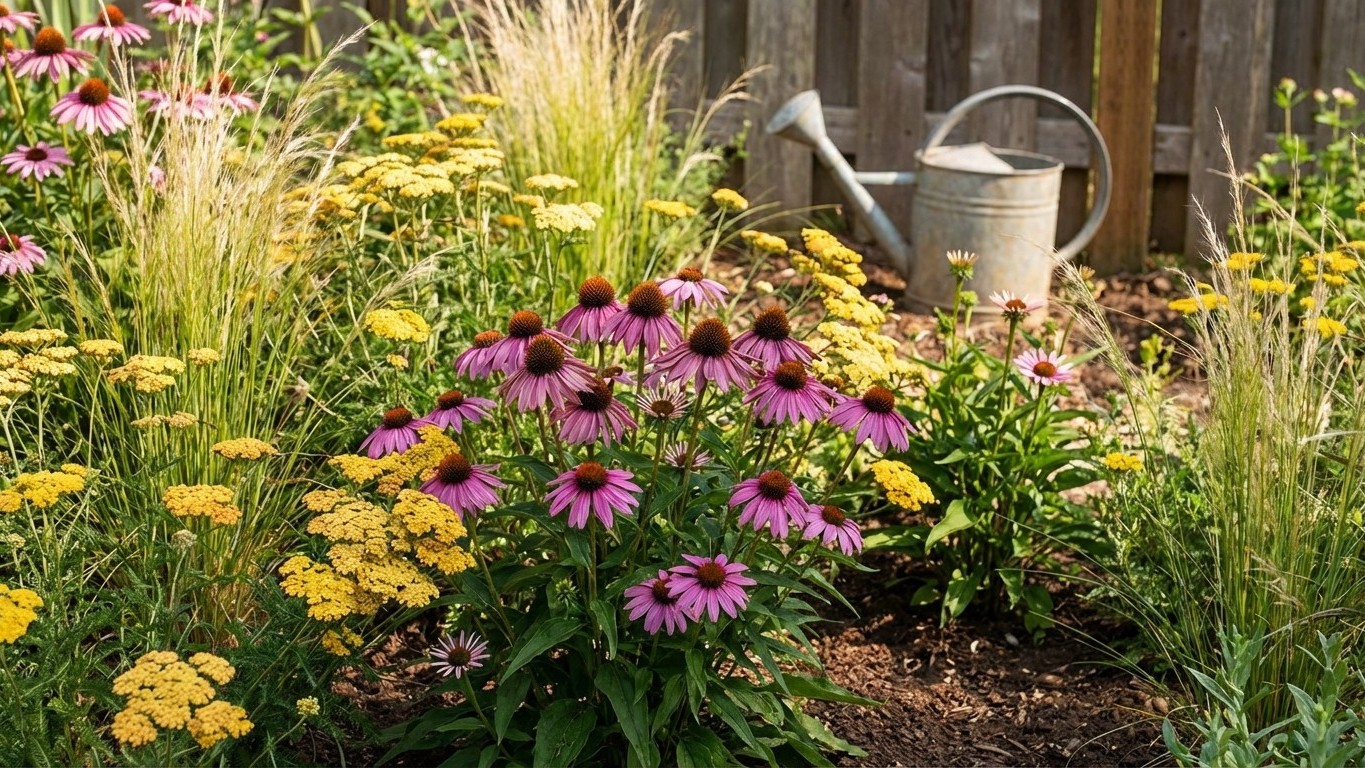
Echinacea, commonly called coneflower, is the undisputed anchor of a low-maintenance perennial garden. Start seeds directly in the ground in March, the cold stratification from lingering cool soil actually improves germination rates. By midsummer, those plants are flowering with zero supplemental watering. More importantly, they self-seed prolifically. One plant becomes five within two seasons. The bonus is ecological: goldfinches and chickadees strip the dried seed heads through winter, so leaving them standing does double duty as both wildlife habitat and free propagation.
Yarrow (Achillea millefolium) is another March-ready performer that most gardeners underestimate. It spreads aggressively via rhizomes, which sounds alarming until you realize it’s essentially weeding out actual weeds by occupying the space first. Plant it in a dry, sunny border and walk away. It tolerates poor soil the way most plants only tolerate good soil, enthusiastically. By August, when your neighbors are fighting brown patches and hose restrictions, yarrow looks like it was watered yesterday.
California poppy (Eschscholzia californica) deserves a special mention here. Scatter the seeds in March, rake them in lightly, and forget them. These poppies self-seed so aggressively that many gardeners treat them as permanent ground cover rather than annuals. They close their petals at night and during overcast days, a phototropic response that, honestly, makes them feel more alive than most houseplants. They need no deadheading, no fertilizer, and actively prefer dry conditions.
Herbs That Free You From the Garden Entirely
The herb garden is where low-maintenance dreams either come true or collapse into a weekly watering obligation. The difference is almost entirely in which herbs you choose. Thyme, oregano, and sage planted in March will establish root systems deep enough to survive drought conditions that would kill basil within a week. These Mediterranean natives evolved in thin, rocky soil with irregular rainfall, your clay-heavy suburban bed is practically a spa by comparison.
Lemon balm is worth planting with a warning: it will spread. Aggressively. Consider growing it in a buried container to contain the roots, or assign it a wild corner and let it do its thing. By midsummer it’s lush, aromatic, and completely self-sufficient. The same applies to mint, though its lateral spread makes it ideal as a living ground cover under taller plants where you’d otherwise be pulling weeds by hand every two weeks.
Chives are perhaps the most forgiving plant you can put in soil. They return every year from the same clump, produce edible purple flowers that look deliberate and designed, and reseed into bare patches nearby without becoming invasive. Planted in March, they’ll be harvestable by May and producing a second flush of growth by September with zero attention paid to them in between.
Perennials That Solve the Water Problem Before Summer Starts
The logic behind March planting is really a logic about root development. A plant that goes in the ground when soil temperatures are still in the 40s has six to eight weeks of cool, moist growing conditions to push roots downward before summer heat arrives. Compare that to a plant installed in June: it’s fighting heat and drought simultaneously from day one, which is why so many garden centers sell plants that die within weeks of purchase.
Black-eyed Susans (Rudbeckia) follow this pattern beautifully. Start them from seed or transplant bareroot divisions in March, and they’ll establish before the heat hits. Come August, when irrigation becomes a daily concern for most gardeners, rudbeckia flowers as if the drought is a personal affront to its ego. It’s a native plant that evolved with American summers, and that evolutionary history is essentially a built-in maintenance schedule, one that requires nothing from you.
Sedum (stonecrop) is the architect’s choice for sloped, rocky, or otherwise “problem” spots where nothing else survives. Plant in March, and the succulent leaves begin storing water immediately. By July, a well-established sedum patch on a dry slope is handling conditions that would require daily irrigation for conventional ground cover. The fall blooms attract late-season pollinators when most garden flowers have already quit.
Lavender, planted in March into well-drained soil with full sun exposure, behaves similarly. The key mistake most gardeners make is planting it too late into warm soil and then overwatering in a compensatory panic. Early planting, minimal water from the start, and lavender becomes genuinely self-sufficient within its first growing season.
One More Thing Worth Considering
There’s a broader philosophy hiding inside a March planting list. The most maintenance-heavy gardens are usually the ones that fight local climate, importing water-hungry plants into dry regions, growing shade-lovers in full sun, planting annuals that need replacing every year. A self-sustaining garden is really just a garden that accepted its zip code. The plants listed here work across most of the continental United States, but the deeper question is what grows native to your specific region, because those plants have already solved the maintenance problem across thousands of years of adaptation. Your local native plant society probably has a seed swap happening this month. That might be worth a Saturday morning.