
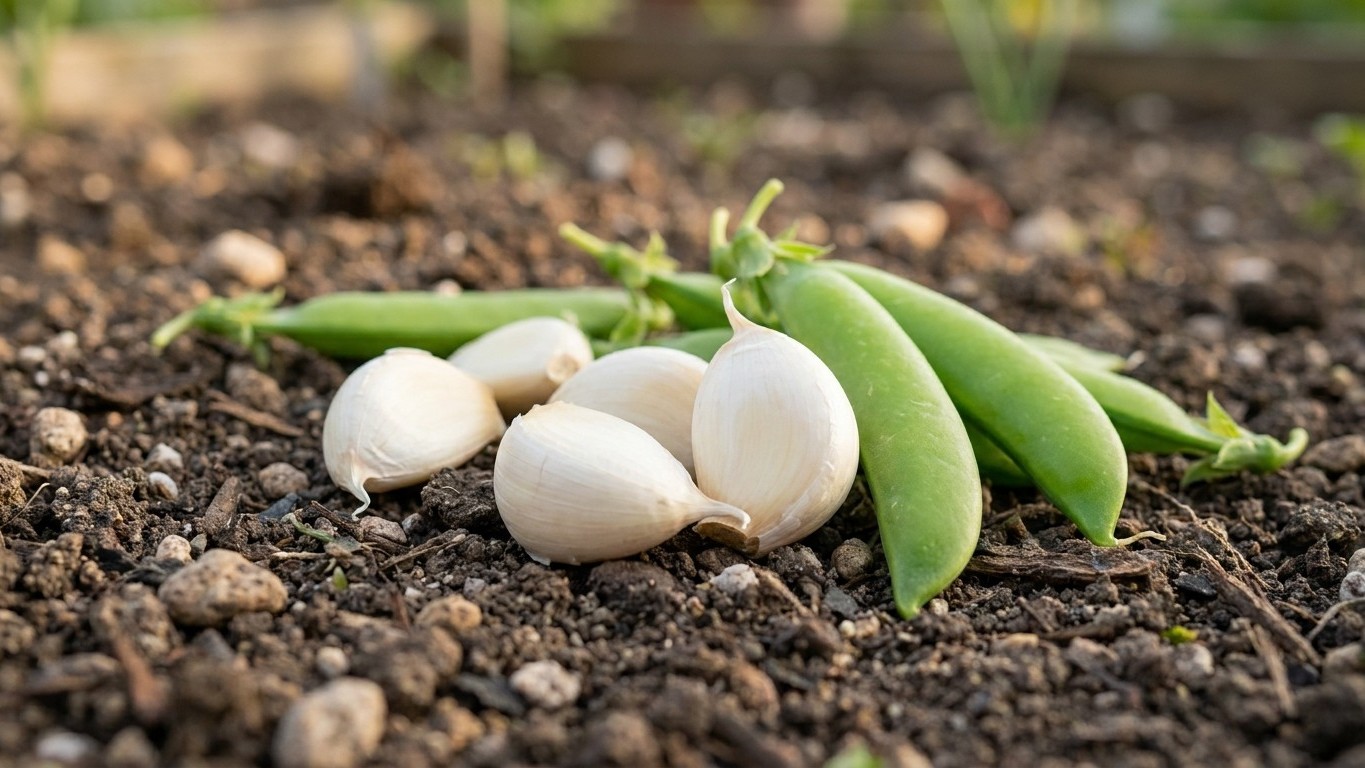
Garlic has spent decades enjoying a near-mythical reputation in the vegetable garden. Companion planting guides, gardening forums, and grandmotherly advice columns have consistently placed it beside roses, tomatoes, and leafy greens as a natural protector, a pungent sentinel that repels aphids, confuses pests, and generally keeps the garden humming along. The pairing of garlic and peas, specifically, has been repeated so often that most gardeners accept it without question. The problem is, the soil tells a completely different story.
Key takeaways
- A beloved gardening tradition turns out to be based on confirmation bias, not actual plant biology
- The very compounds that make garlic an effective pest deterrent suppress the soil bacteria peas need to survive
- Scientific research reveals measurable yield losses when garlic grows within 12 inches of legumes
A partnership that looks good on paper
The logic behind garlic-as-protector makes surface-level sense. Allicin, the sulfur compound responsible for garlic’s sharp smell, does demonstrate documented repellent properties against certain insects. Studies have confirmed that allicin-based sprays can deter aphids and spider mites on contact. Garlic also has antifungal properties, which is why it gets mentioned as a deterrent against soil-borne pathogens. Pair that with peas, which are famously vulnerable to aphid infestations, and the combination sounds almost too convenient.
Gardening lore has a long memory for success stories and a short one for failures. If a gardener plants garlic near peas and gets a decent harvest, the garlic gets the credit. If the peas underperform, the weather, the slugs, or the seed quality takes the blame. This confirmation bias has protected the garlic-and-peas myth from serious scrutiny for generations.
What’s actually happening underground
Peas, like all legumes, depend on a specific and rather extraordinary relationship with soil bacteria. Rhizobium leguminosarum colonizes the roots of peas and other legumes, forming small nodules where atmospheric nitrogen gets converted into a form the plant can actually use. This process, biological nitrogen fixation, is how peas fertilize themselves and enrich the surrounding soil for whatever comes next in the rotation. Take away those bacteria, and peas become nutritionally stunted, slower to grow, and far less productive.
Garlic is the threat that nobody warned you about. The sulfur compounds that make garlic such a compelling pest deterrent above ground are genuinely antimicrobial below it. Research into allium root chemistry has demonstrated that these compounds suppress bacterial activity in the rhizosphere, the narrow zone of soil directly surrounding plant roots. Rhizobium bacteria are not immune to this effect. Planting garlic in close proximity to peas doesn’t just fail to help them, it actively disrupts the microbial community those peas depend on to thrive.
A 2019 study published in Applied Soil Ecology examined allelopathic interactions between allium species and legume root bacteria and found measurable reductions in nodule formation when the plants were grown in close proximity. Fewer nodules means less nitrogen fixation, which translates directly to slower growth and reduced yields, the exact opposite of what a companion plant is supposed to deliver. The effect was most pronounced within a 12-inch radius, which is well within the typical spacing gardeners use when interplanting.
The broader problem with companion planting dogma
Companion planting as a practice sits in an uncomfortable middle ground. Some pairings have solid scientific support: the classic “Three Sisters” combination of corn, beans, and squash has been validated repeatedly, with the structural and ecological benefits of each plant genuinely complementing the others. Basil planted near tomatoes may reduce thrips pressure under certain conditions. Marigolds planted as a border genuinely suppress some nematode populations over a full growing season.
But a significant portion of companion planting recommendations circulate purely on tradition, not evidence. The garlic-and-peas pairing is one of the more stubborn examples, partly because garlic does work as a companion for many other plants. It performs well near brassicas, carrots, and fruit trees, where its pest-deterrent properties operate without the complicating factor of rhizobial bacteria. The mistake is treating garlic as a universal garden ally rather than a plant with specific and sometimes contradictory effects depending on its neighbors.
Onions and leeks, garlic’s closest relatives in the allium family, create similar problems for legumes. The entire allium-legume combination is one that serious permaculture designers and vegetable farmers actively avoid, even if the casual gardening world hasn’t fully caught up. Cornell University’s extension resources on vegetable gardening explicitly list alliums as poor companions for beans and peas, though this caveat rarely makes it into the social media posts and Pinterest boards where most home gardeners now get their planting advice.
What to plant near peas instead
Peas are not difficult to support, they just need neighbors that won’t compromise their root biology. Carrots work well, partly because they share no chemical antagonism with rhizobial bacteria and their deep taproot structure doesn’t compete significantly with the shallow, spreading roots of peas. Mint, planted in a container sunk into the soil to control its spread, offers genuine aphid deterrence without the antimicrobial side effects of alliums. Spinach and lettuce fill horizontal space without interfering with the nitrogen-fixing activity happening underground.
Radishes serve double duty near peas: they break compacted soil, making it easier for pea roots to expand, and they act as a trap crop for flea beetles, drawing them away from the peas before the beetles have a chance to cause real damage. The combination has the kind of ecological logic that companion planting claims to be built on but often isn’t.
One more thing worth keeping in your back pocket: the damage from a single season of garlic-and-pea interplanting is largely reversible. Rhizobium populations recover once the allium pressure is removed, especially if you inoculate new pea seeds with a commercial rhizobial inoculant before planting. These inoculants, available at most garden centers for a few dollars, coat the seed in a concentrated dose of the right bacteria and effectively give your peas a head start regardless of what the surrounding soil has been through. They work. Most gardeners have never used one.