
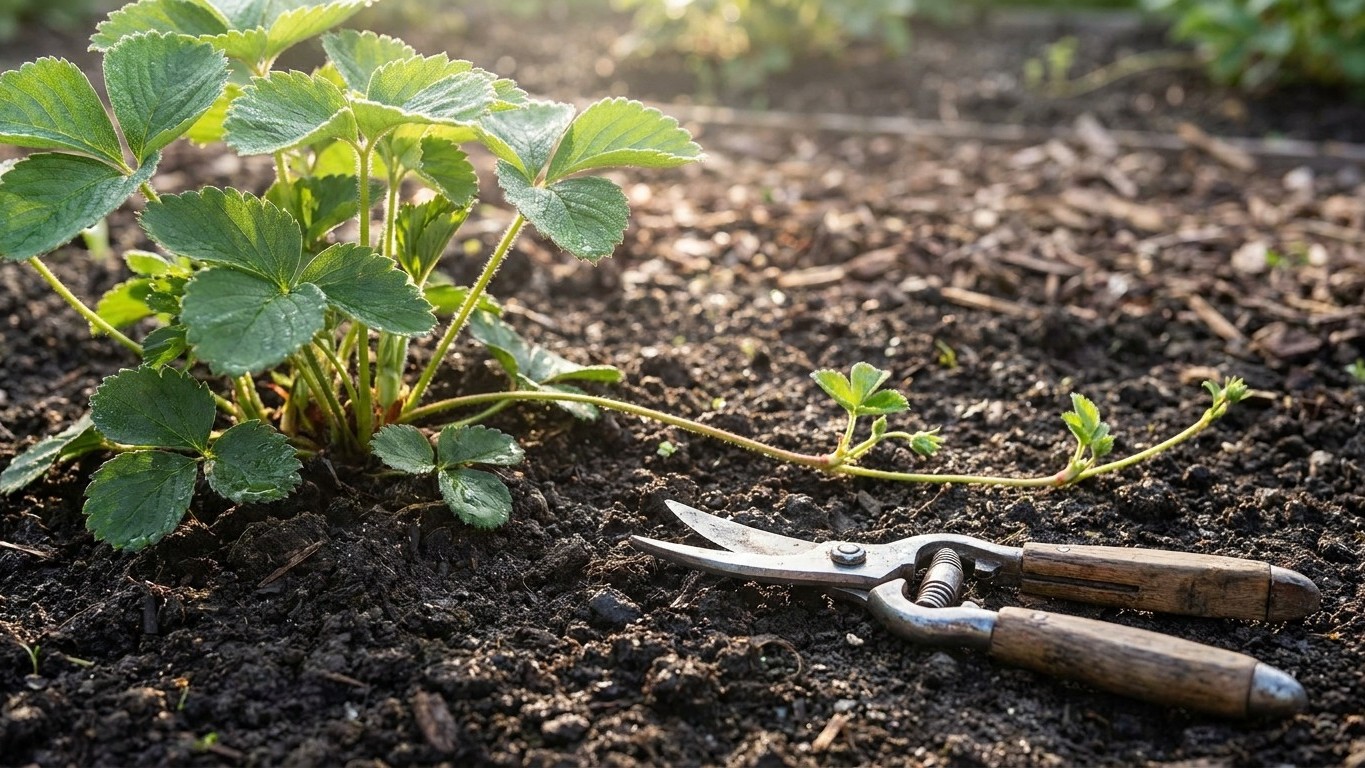
Strawberry plants are generous, sometimes too generous. For three seasons, I let every runner stay attached to the mother plant, convinced that more foliage meant more fruit. The harvest weighed in at roughly half what my neighbor pulled from an identical bed. That gap sent me down a rabbit hole of strawberry biology, and what I found reshaped how I manage the patch every spring.
Key takeaways
- A single strawberry plant can send out four runners per season, each one draining energy away from flowers and fruit
- The critical window most gardeners miss happens in early spring, before flower buds set—and timing matters more than you’d think
- One gardener’s 15-minute weekly routine doubled their harvest compared to an identical bed left unmanaged
What runners actually cost the plant
A strawberry runner, that long, horizontal stem shooting out from the base, is the plant’s reproductive system. Each one carries up to five daughter plants along its length, and the mother plant pushes real energy into developing them. The problem is that energy budget. A single strawberry plant can produce anywhere from three to five runners in a season, and each runner draws carbohydrates and water away from flower and fruit development. Research from the University of California Cooperative Extension has confirmed that unmanaged runner production can reduce fruit yield by 30 to 50 percent in established June-bearing varieties.
The math is brutal when you lay it out. A bed of 20 mature plants, each sending out four runners, creates 80 competing sinks for the same root system. Those aren’t just theoretical losses, they show up directly on the scale at harvest time. Smaller berries, fewer clusters, shorter fruiting windows. The plant isn’t failing; it’s just doing exactly what its biology demands when nobody intervenes.
The spring window most gardeners miss
Timing is where most home gardeners go wrong, including me for longer than I’d like to admit. The critical period is early spring, before the first flower buds set. Once a strawberry plant commits energy to flowering, any runners that appear afterward are pulling from a smaller pool. Removing runners before that bud set, typically when soil temperatures reach around 50°F (10°C), lets the plant consolidate resources into the crown, building the structure that actually supports fruit.
After flowering begins, the calculation shifts slightly. Runners that appear during fruiting should still come off, but the urgency is less acute than pre-blossom. The real damage, the kind that compounds season after season, happens when spring runners go unchecked and the plant essentially “decides” that reproduction, not fruiting, is the year’s priority. Left alone long enough, a mature strawberry bed converts itself into a nursery, crowded with young plants that won’t fruit reliably until their second year.
There’s one legitimate exception: if you’re renovating an aging bed or expanding your patch, keeping a small number of runners, one or two per mother plant, maximum, makes sense. Peg them into small pots of compost sitting beside the plant, let them root over six to eight weeks, then sever the connection. You get free propagation without sacrificing the bulk of the harvest.
What to do instead of leaving them on
The mechanical act is simple: a sharp pair of snips, removed as close to the mother plant as possible, done every seven to ten days during peak growing season. That frequency matters. Waiting three weeks between checks means some runners will have already rooted into the soil and begun establishing independently, which creates competition even if you remove them afterward.
Disposal is worth a thought. Runners from healthy plants can go straight to compost. But if your bed has shown any signs of verticillium wilt or red stele root rot, two of the most common strawberry diseases in American gardens — those runners should go in the trash, not the compost pile. The pathogens survive and recirculate. It’s a small detail that prevents a much larger problem two seasons later.
Mulching the bed with straw (the material that gave the strawberry its name, according to one popular theory) also helps suppress rogue runners from rooting between checks. A two-inch layer keeps the soil surface drier, reduces the chances of accidental rooting, and protects the crowns from late frost heaving, one intervention doing three jobs simultaneously.
How renovation changes the equation after year three
Strawberry plants aren’t indefinite producers. Most varieties peak in years two and three, then decline as the crown becomes woody and crowded. After year three, many experienced growers shift strategy entirely: they let runners root deliberately in a new section of the bed, then remove the old mother plants at the end of the season. This “moving bed” approach keeps the planting perpetually young without requiring a complete restart.
June-bearing varieties, the type most commonly grown in U.S. home gardens, respond best to the runner-removal discipline described here. Everbearing and day-neutral varieties, which produce multiple smaller flushes rather than one concentrated crop — are slightly more tolerant of light runner loads, but the general principle holds: fruit energy and runner energy compete for the same source.
One detail that surprised me in the research: strawberry crowns that have been consistently managed through runner removal tend to overwinter better. Without a dense mat of daughter plants shading the crown and trapping moisture, air circulation improves enough to reduce botrytis (gray mold) pressure going into fall. The spring harvest benefit starts, in a real sense, with the decisions made the previous autumn about what got left on and what got cut.
The neighbor whose harvest put mine to shame? She checks her bed every Sunday morning with a coffee in one hand and snips in the other. Fifteen minutes a week, from April through July. That’s the entire practice. The scale doesn’t lie.