
Every spring, the same ritual plays out in backyards across the country. Gardeners circle a date on the calendar, wait for it, then rush their tomato seedlings into the ground the day after the last frost passes, only to watch them sit there, sulking, for weeks. The plants don’t die. They just refuse to thrive. And most gardeners spend the rest of the season blaming the variety, the watering schedule, or the weather. The real culprit is almost always something they never thought to check: what’s happening four inches underground.
Key takeaways
- The last frost date is just a 50/50 coin flip, not a reliable planting guide
- Soil temperature is the hidden factor most gardeners completely ignore
- A simple $5 thermometer can reveal why your early plantings never catch up
The last frost date is an average, not a promise
The last frost date is the date when the last spring frost typically occurs in your area, based on historical weather records collected over many decades. This date is an average, meaning there’s a fifty percent chance of frost occurring on or after this date. A coin flip, . “One of the biggest mistakes people make is to plant too early,” says Weston Miller, a former horticulturist with the Oregon State University Extension Service. “They get excited when it’s sunny for a few days, put plants in the ground and think they will grow. But the seeds either rot from damping off fungus or germinate very slowly. At the very least, they’ll be stressed for the rest of the season and never catch up.”
In a nutshell, your last frost date is not a green light to go outside and plant your entire garden. All it simply is, is an estimated date that predicts the winding down of nighttime temperatures dipping below freezing level, and it is only an estimate. The air above your beds can register 65°F on a warm afternoon while the soil below stays stubbornly cold. Those two temperatures tell completely different stories.
The real signal: what the ground is actually telling you
Many gardeners watch air temperature but ignore soil temperature. This is a critical mistake that causes stunted growth and disappointing harvests throughout the season. Soil temperature is more important than air temperature for tomato success. The number to know is 60°F, that’s the floor. “Fifty degrees is a good benchmark for cool-season crops,” says Miller. “And the soil should be 60 degrees or more for warm-weather plants like tomatoes, peppers and basil. In fact, for tomatoes it should ideally be 65 to 70.”
The science behind this isn’t complicated, but most gardeners have never heard it spelled out. When soil temperatures drop below 50–55°F, a tomato plant’s ability to absorb phosphorus is severely hindered, even if there’s plenty in the soil. Cold, wet soil makes phosphorus less soluble and less available to plant roots, which is why you often see purple leaves in early spring after a cold snap, or if you’ve planted before the soil has had a chance to properly warm up. Those purple-tinged seedlings that look so alarming? They’re not diseased. They’re starving — because the cold soil has locked away the nutrients sitting right beneath them.
Root development is severely stunted in cold soil. Plants sit dormant even when air temperatures are pleasant. Nutrient uptake nearly ceases. The plant never recovers from this early cold damage, and growth remains slow all season. Weeks of apparent progress lost. And the frustrating part is that a tomato planted in properly warmed soil two or even three weeks later will catch up, and often surpass, one planted too early.
How to check (and speed up) your soil
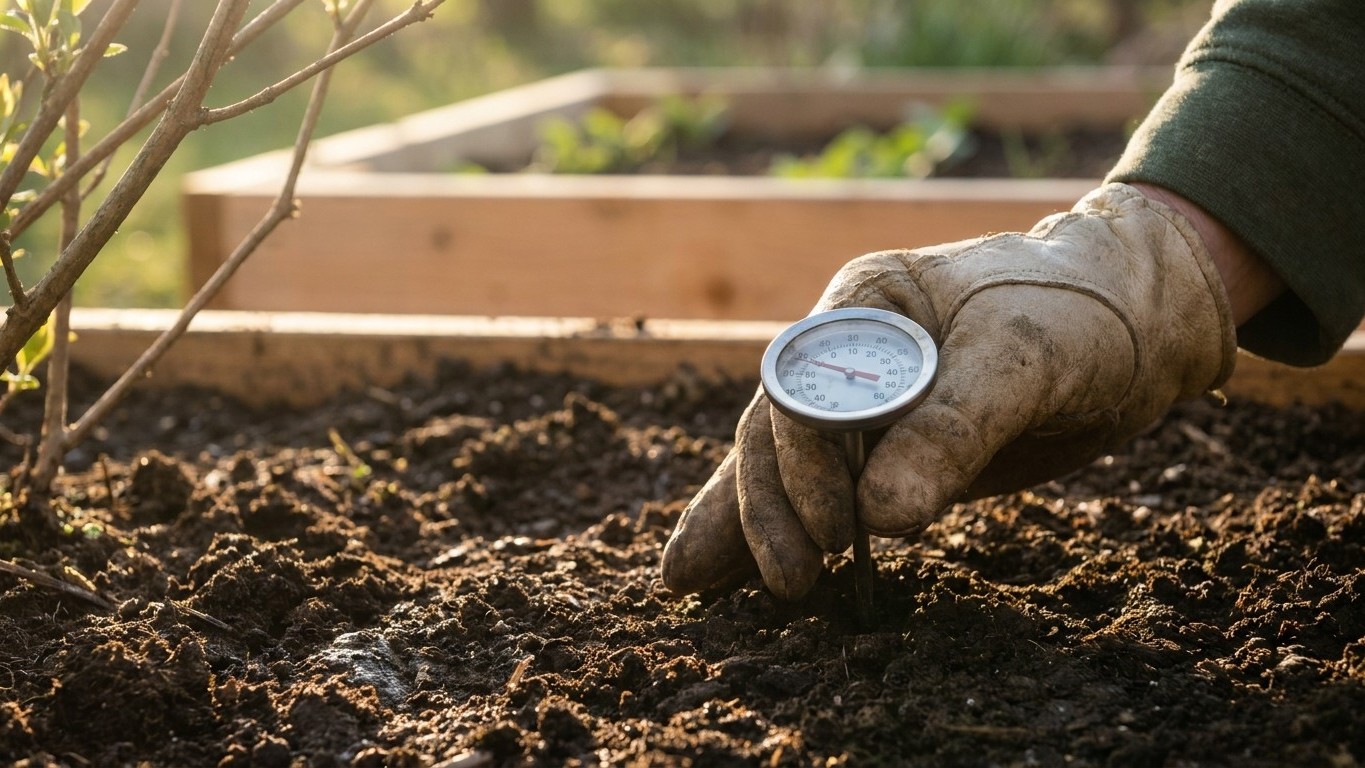
A soil thermometer costs less than a bag of potting mix and changes everything. To determine soil temperature, push the thermometer into the soil at about 4 inches deep for transplants. Do it in the morning, when the reading is most conservative, if it clears 60°F then, you’re genuinely ready. Soil temperature can vary by as much as 10°F between sunny and shaded spots in the same garden, so test exactly where you plan to plant, not a patch nearby that gets more sun.
No thermometer yet? A simple finger test works: push your finger roughly three to four inches deep and hold it there for one full minute. If you can’t comfortably keep your finger in the ground for that length of time, it’s too cold for tomatoes, a small trick that has prevented many premature plantings.
For gardeners who want to push the season, the fix is practical and cheap. Black or clear plastic sheeting is a simple and inexpensive way to warm the soil and get a jump on the growing season. You can also dig, loosen, and turn over the soil in planting beds so that solar heat reaches it. Dark colors absorb heat, so the soil beneath plastic will warm much faster than other portions of the garden, making a more welcoming environment for tomatoes. When plants are set out in the warmer soil, they acclimate easier, blossom faster, and produce fruit earlier. Lay the plastic two to three weeks before you intend to plant, and you can gain meaningful ground on your season without gambling on a frost.
Raised beds offer another structural advantage worth knowing: raised beds warm 7 to 10 days faster than ground soil. For gardeners in cooler zones, the northern Midwest, New England, the Pacific Northwest, that head start can be the difference between an August harvest and picking green tomatoes before October frost hits.
What “ready” actually looks like
The first sign of proper planting time for tomatoes is when the nighttime temperature stays consistently above 50°F. Tomato plants will not set fruit until the nighttime temperature reaches 55°F, so planting when it’s 50°F at night gives them enough time to mature before fruiting. Both conditions need to align: soil temperature at 60°F or above, and nights reliably above 50°F. One without the other still leaves the plant in a compromised state.
Few gardeners check the soil temperature before planting, yet it is probably the most important factor affecting seed germination and plant growth. Planting too early, before allowing the soil to warm up, can lead to seed rot, delayed germination, root decay, poor growth and disease. None of those outcomes can be fixed by better fertilizer or more careful watering. The window closes quickly, but it does open, reliably, every year. The gardeners who wait for the soil to confirm it are the ones hauling tomatoes by the basketful in August while their impatient neighbors are still puzzling over why their plants look stressed.
One thing worth noting as a final layer: warmer zones can plant tomatoes earlier in the spring and can often get a second late-season crop of tomatoes planted in July to August. The calendar logic gets inverted in the South, waiting too long means planting into summer heat that causes blossom drop above 90°F. The soil thermometer remains the honest guide regardless of zone. In gardening as in most things, the instrument that measures reality beats the one that measures expectation.
Sources : news.oregonstate.edu | plain2growsystems.com