Pinching tomato suckers with your bare hands feels like the most natural thing in the world. You’re in the garden, the sucker is right there, and your fingers are faster than any tool. Snap, done. Repeat fifty times down the row. By late June, the plants look clean, vertical, trained like they belong in a seed catalog. Then July comes.
My entire row of indeterminate tomatoes, twelve plants, eight weeks of work, went from thriving to struggling in under two weeks. Leaves curled inward at the edges. A few stems showed soft, water-soaked spots near the base. Fruit set dropped off. I thought it was the heat. A local grower who has been producing market tomatoes for over twenty years walked through my beds, crouched down, looked at one stem, and didn’t even need to think before telling me exactly what I’d done wrong.
Key takeaways
- A crushed wound from bare-hand pinching stays open longer than a clean cut, creating a highway for soil bacteria and pathogens
- The same unwashed hands moving plant to plant spread disease faster than the wound itself—and timing matters more than most gardeners realize
- A knife wiped with rubbing alcohol between plants, combined with morning pruning in dry conditions, changes everything
The wound you leave behind is the problem
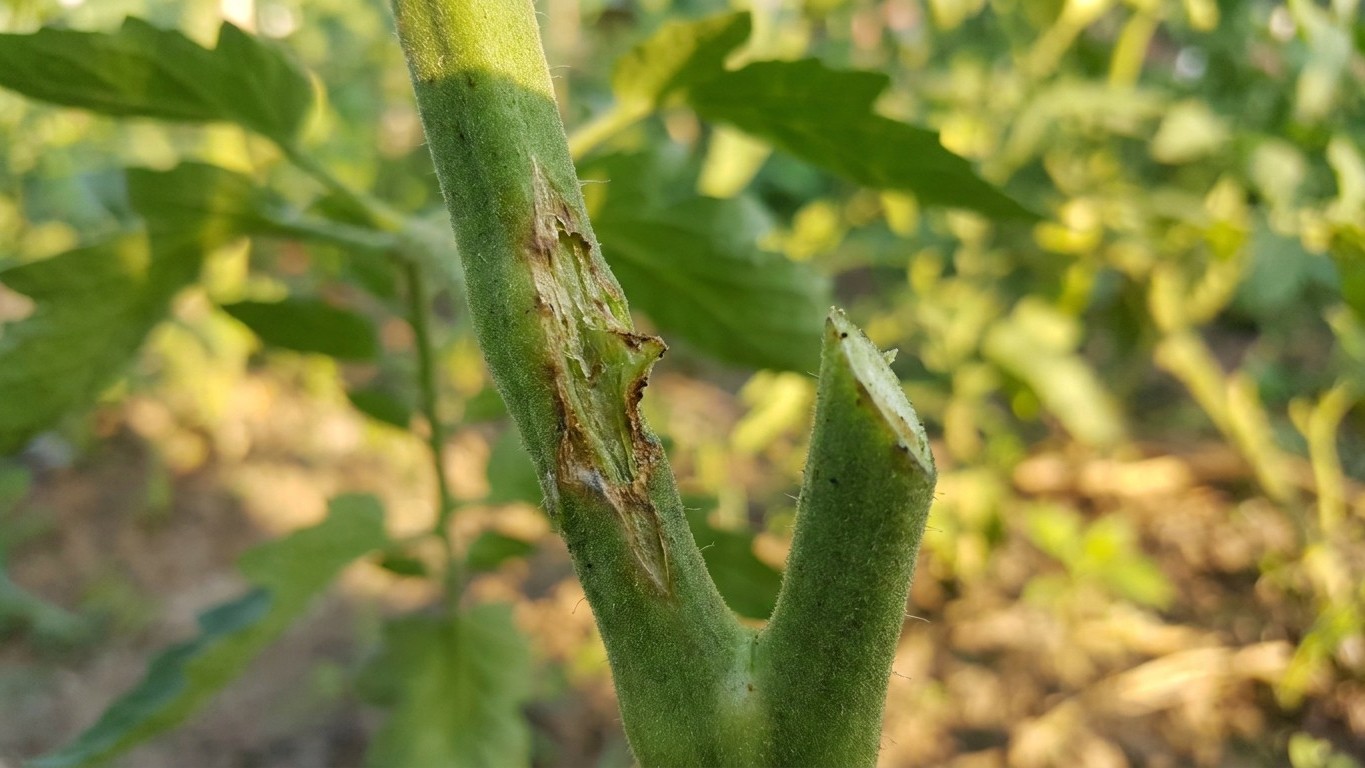
Every time you snap a sucker with your fingers, you create a ragged, crushed wound. Unlike a clean cut from sharp pruning shears or a knife, a pinched wound compresses plant tissue rather than slicing through it. That crushed tissue doesn’t close cleanly. It stays open, wet, and warm, a near-perfect entry point for bacterial and fungal pathogens.
The grower pointed to a specific culprit in my case: Pseudomonas syringae and possibly early-stage bacterial speck, both of which are transmitted through open wounds on stems and leaves. These bacteria are present in most garden soils and on human hands, especially after handling multiple plants. Every sucker I pinched was essentially a fresh inoculation point. Twelve plants, dozens of pinches each. The math was not in my favor.
The University of Florida IFAS Extension has documented that mechanical wounds from improper pruning are among the primary entry routes for bacterial diseases in Solanaceae crops. The risk compounds when the same unwashed hands move from plant to plant, which is exactly what most home gardeners, myself included, do without a second thought.
Why the “pinch small” advice isn’t the whole story
You’ve probably read that the solution is simply to pinch suckers when they’re tiny, under an inch long. That advice is real and useful, but it’s only half the picture. Smaller suckers do leave smaller wounds. But smaller wounds are still wounds, and bare hands still carry pathogens. The real variable isn’t just sucker size, it’s wound management after the cut.
The grower’s actual practice: he uses a folding knife wiped with isopropyl alcohol between every plant, not just every session. He also pinches in the morning when humidity is lower and the plant’s vascular system is less pressurized, which reduces sap weeping at the wound site. Dry wounds close faster. A sucker pinched at 7 a.m. on a clear day heals differently than one snapped off at 5 p.m. after rain.
There’s a secondary issue that took me by surprise: hand oils and residue. If you’ve handled fertilizer, pest spray, or even certain soils before pinching, trace amounts transfer directly into the open wound. Some fungicide residues are fine. Nitrogen-heavy fertilizer residue near a fresh wound can actually encourage bacterial colonization in the surrounding tissue.
What actually works, and it’s simpler than you’d think
The fix doesn’t require expensive tools or a complicated protocol. A cheap folding knife or single-edge razor blade, cleaned with rubbing alcohol between plants, changes the outcome dramatically. The cut is clean, the tissue seals faster, and you’re not dragging bacteria from one open wound to the next.
For gardeners who genuinely prefer hands-only pruning, the minimum viable habit is this: wash hands thoroughly before starting, work plant by plant without touching anything else in between, and only pinch suckers in dry conditions. Avoid pinching within 24 hours of rain or irrigation, when plant tissue is most saturated and vulnerable. That alone won’t eliminate all risk, but it dramatically narrows the infection window.
Some experienced growers also apply a thin layer of diluted copper fungicide paste to larger wounds, anything over a half-inch diameter, immediately after pruning. Copper has documented antimicrobial properties against the bacteria most commonly responsible for tomato stem infections, and it’s widely used in both conventional and organic production. It’s not a standard home garden step, but on a year when you’re growing paste tomatoes for months of sauce, it’s worth the five extra minutes.
One more thing the grower mentioned, almost as an aside, that stuck with me: he never prunes the same variety twice in one session if one plant is showing any leaf discoloration. Isolating a potentially symptomatic plant from the pruning routine has saved him entire rows before. He treats each variety block as its own contained system. A level of discipline that feels excessive until the year your row collapses in July.
Rethinking the casual garden habit
Tomato sucker removal is framed in most gardening content as a quick, low-stakes task. Pull the sucker, move on. The casualness is the trap. These are open vascular wounds on plants that will spend another two or three months producing fruit, in warm, humid conditions that favor exactly the pathogens waiting on your skin and in your soil.
The science is clear enough: a 2019 study published through the American Phytopathological Society confirmed that mechanical pruning wounds are significantly more likely to become infection sites when tools aren’t sanitized between plants. Bare-hand pinching wasn’t specifically studied, but the wound quality and cross-contamination logic applies directly.
By August, my replanted row (three survivors, nine replacements from a local nursery) was back on track with a knife and a small spray bottle of alcohol in my apron pocket. The new plants didn’t know what I’d done to their predecessors. The grower said something I keep thinking about: “Your hands remember every plant they’ve touched. The tomato doesn’t know that’s supposed to be helpful.”