
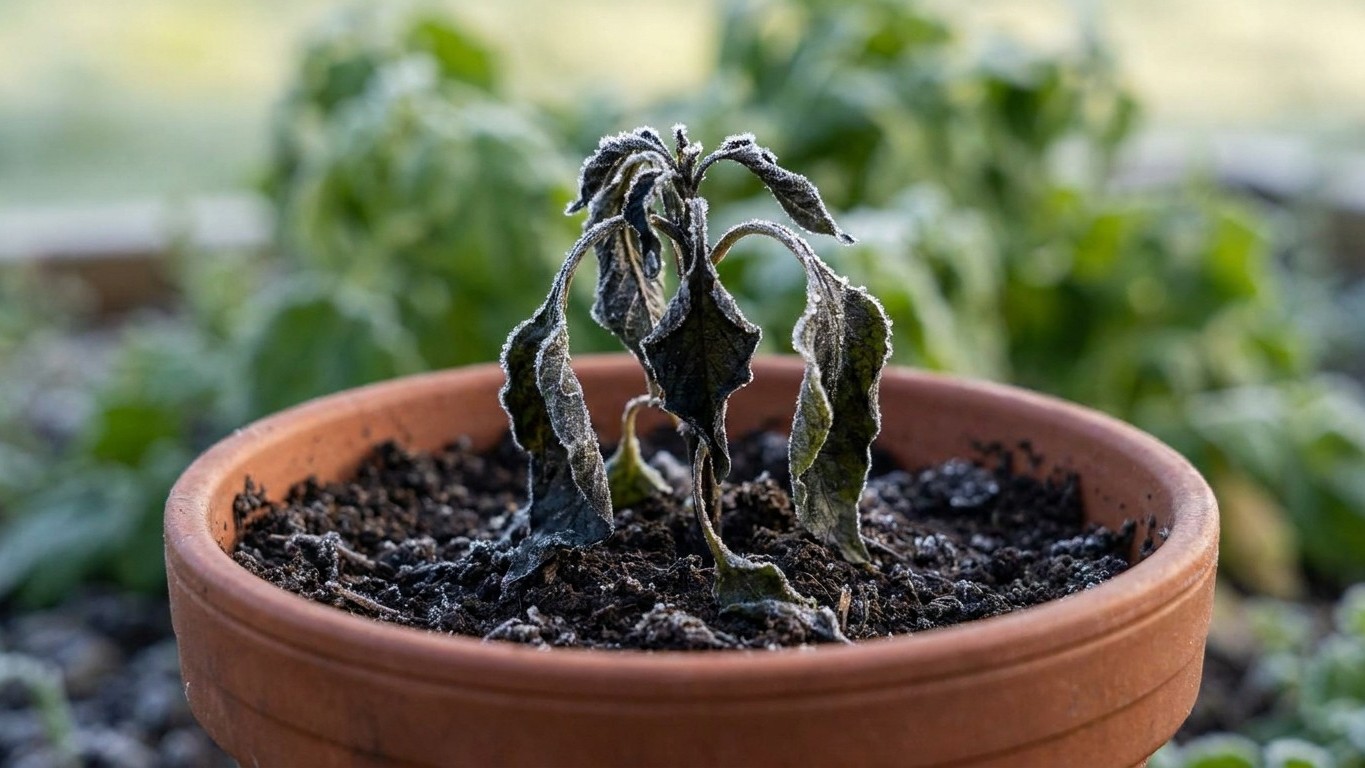
Two weeks past your last frost date, seedlings dead by morning. You followed the rules. You waited. And still, you lost everything. Before you blame yourself, know this: the last frost date is one of the most systematically misunderstood concepts in home gardening, and it catches thousands of gardeners every single spring.
Key takeaways
- The ‘last frost date’ is just a 50/50 coin flip based on historical averages, not a guarantee
- Frost forms several degrees colder at ground level than forecast air temperatures predict
- Soil temperature matters far more than air temperature, and most gardeners ignore it completely
The date on the calendar is not a promise
The average last frost date is the date on which, in half of previous years, the last frost had already occurred. This means that half the time, if you plant after this date, there won’t be any more frosts, but half the time, there could be. Read that again. A coin flip. That’s the real statistical weight of a date that most gardeners treat as gospel. Your average last frost date is just that: an average. Historical weather data from your location is analyzed and a date is generated for the last day you are likely to see frost. This date is not a guarantee. It’s just an average built off previous years. This is why planting strictly by the calendar can be risky.
These dates are based on historical climate data using a 30% probability threshold, meaning there is still a chance of frost after the listed date. What that means in practice: waiting two full weeks past the “official” last frost date still leaves you exposed. Spring weather doesn’t consult almanacs. Since the last expected frost date is an average, your actual last frost could vary greatly from one year to the next. For example, if you live in zone 6, you may get your last frost in March. You could also have an extra long winter in which the last frost does not occur until the end of April. That is why this date, while helpful, cannot be the deciding factor for when you start your garden.
What actually kills a seedling overnight
As temperatures drop below freezing, water in the spaces between cells begins to freeze first because the liquid inside cells contains more metabolites and soluble sugars that lower its freezing point. This extracellular freezing creates dehydration and mechanical stresses on the plasma membrane. The concentration gradient pulls water out of the cells themselves, severely stressing the plant. As more ice forms, the expanding crystals pierce and rupture cell walls and membranes, destroying the plant’s internal architecture. The blackening you find in the morning is literally the aftermath of structural collapse at the cellular level. This is why frost-damaged plants often appear water-soaked, wilted, or blackened. The single most important cause of freezing damage is when this dehydration exceeds what cells can tolerate, causing damage to cell membranes. The cellular destruction is permanent. Affected leaves and stems cannot recover because their internal structures have been physically destroyed.
There’s another detail that catches gardeners off guard: weather forecasts report air temperature at five feet above ground, but frost forms at ground level where it’s several degrees colder. On clear, calm nights, heat radiates away from the ground, making it coldest right at plant level. This is why frost can damage plants even when the forecast shows 35–36°F. A thermometer on your porch says 37°F. Your seedlings, two inches off the ground, are experiencing something closer to 31°F. The math is brutal. A light freeze is when the temperature ranges from 29°F to 32°F. This type of freeze is enough to kill tender plants like tomatoes and basil.
Some seedlings are more sensitive than others, too. Basil can start getting frost damage at 38 degrees F. That’s well above freezing, a detail most gardeners never encounter on a seed packet.
The soil temperature nobody talks about
Here’s what catches people off guard: plants care way more about soil temperature than air temperature. You can have gorgeous 70°F sunny days, but if your soil is still 50°F from winter chill, warm-season crops are going to struggle. They’ll germinate slowly or not at all if direct sown. Transplanted seedlings develop poorly, stay more susceptible to disease, and grow at a crawl compared to what they’d do in warm soil. The counterintuitive part? A seedling planted two weeks later into properly warmed soil will often outpace one planted earlier into cold ground. Even after your last frost date, these crops suffer in cold soil. A tomato planted May 20 into 65°F soil will often outgrow one planted May 1 into 55°F soil within weeks.
Use a soil thermometer and wait until soil reaches at least 60°F for warm-season crops, even if frost danger has passed. A cheap kitchen meat thermometer works just as well as a dedicated garden model, push it four inches deep for an accurate reading, and test in the morning when soil is at its coolest. Soil temperatures do not fluctuate quickly, so it is a more accurate deciding factor for planting. The date is a suggestion. The soil temperature is a fact.
Geography adds another layer of complexity that flat frost-date charts simply ignore. Low spots can collect cold air. Raised beds warm faster than in-ground gardens. South-facing walls act like heat reflectors and warm soil faster. Microclimates matter more than people realize. Low spots collect frost longer. Windy areas stay cooler. These differences can shift your effective frost date by a week or more in different parts of your garden. Two beds, ten feet apart, can have meaningfully different frost risks on the same night.
Hardening off: the step that changes everything
Hardening off is the process of allowing a plant to transition from a protected indoor or greenhouse environment to the harsh outdoor conditions of fluctuating spring temperatures, wind, and full sun exposure. Skip this step, and even a frost-free night can damage your plants. A gradual introduction of these outdoor stresses will cause the plant to accumulate carbohydrates, to trigger more root development, to reduce the amount of freeze-prone water in the plant, and to actually thicken its cell walls. That last point deserves attention: seedlings raised indoors hold more water in their cells, making them more vulnerable to ice crystal formation when temperatures dip. Hardening physically changes the plant’s biology to reduce that risk.
About two weeks prior to transplanting plants outside, it is recommended to start the hardening off process. Start by placing plants outside during the warmer part of the day for about two to three hours, gradually increasing the amount of time each day. After working the plants up to being outside for ten to twelve hours a day for a few days, leave the plants outside for 24 hours for a couple days. A cold frame speeds the process considerably and lets you start earlier without losing plants to a surprise cold snap. Pay attention to weather forecasts and avoid exposing seedlings to extreme conditions, such as frost or strong winds. Bring seedlings indoors if temperatures will drop below freezing or during severe strong wind or rain.
The practical checklist for anyone who has already lost seedlings and wants to replant correctly: check your 10-day forecast obsessively, not just your frost date. Regularly checking the 10-day forecast around the time you want to plant hot weather vegetables is wise. If there’s any chance of frost you should definitely hold off on planting. Keep a set of row covers or frost blankets within arm’s reach through late spring. Keep row covers, frost blankets, or cloches ready through late spring. One layer of lightweight fabric can provide two to eight degrees of protection on a clear, calm night, enough to save every plant in the bed. Worth the $15. Every time.
One more fact that reframes the whole experience: climate models predict an increase in the magnitude and frequency of late-frost events, which, together with an observed loss of soil insulation, will greatly decrease plant primary production due to damage at the root level. Late spring frost events aren’t anomalies anymore. They’re increasingly part of the pattern, which means the habits that protected gardeners a generation ago need updating for the seasons we’re actually gardening in now.
Sources : housedigest.com | parkseed.com