
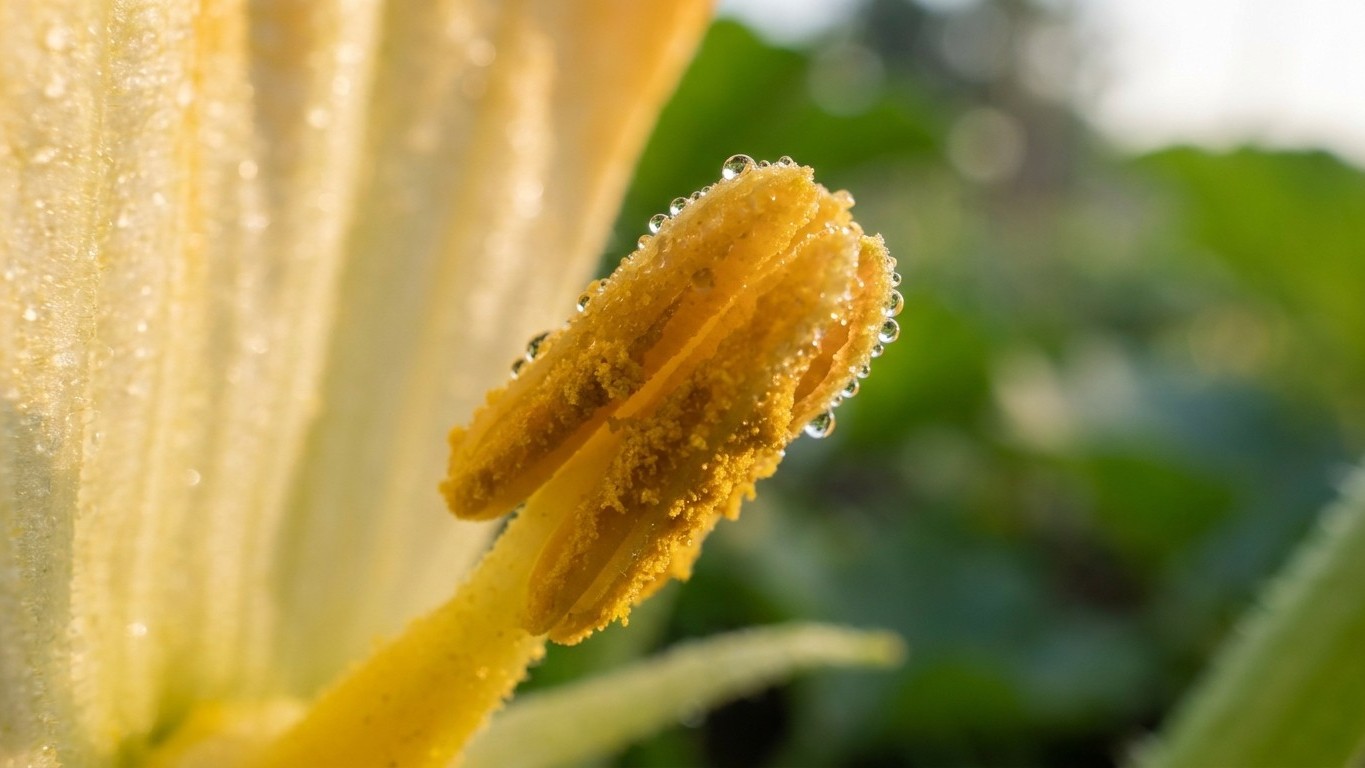
Picking zucchini blossoms at dawn feels poetic. The light is soft, the garden is quiet, the flowers are wide open and luminous, it genuinely seems like the right moment. For two summers, that was my ritual. Then, three days after a particularly enthusiastic harvest, the tiny zucchinis that should have swelled into fruit just… stopped. Yellowed. Dropped off. Every single one.
The culprit wasn’t a fungus, wasn’t a nutrient deficiency, wasn’t the heat. It was me, harvesting at exactly the wrong moment, washing away the one thing those flowers existed to transfer: pollen.
Key takeaways
- Dew on flower anthers clumps pollen and makes it non-viable for the exact 4-6 hour window when pollination must happen
- Bees aren’t even foraging yet at dawn; they wait for warmth, meaning your harvest removes pollen when pollinators need it most
- Female zucchini flowers abort fruit within 24 hours if they’re not pollinated during that narrow morning window—and you’re removing the pollen source
The biology your gardening book glossed over
Zucchini plants produce two distinct types of flowers on the same plant, male flowers (which appear first, on long straight stems) and female flowers (which sit atop a tiny proto-fruit). This is standard knowledge. What gets mentioned less often is the precise timing of when each type is biologically active.
Male zucchini flowers release viable pollen for roughly four to six hours after they fully open. On a warm summer morning, that window typically runs from about 6 a.m. to 10 a.m. Dew, which condenses on cool surfaces overnight, doesn’t evaporate from flower stamens and anthers until the air warms and humidity drops, often well past 8 a.m. in humid climates. Harvesting at dawn means harvesting flowers whose anthers are still coated in moisture, which clumps the pollen and renders much of it non-transferable. Bees that visit those damp flowers carry away far less viable pollen than they would an hour or two later.
The female flowers, meanwhile, are most receptive to pollination during that same short morning window. Miss it, or reduce the pollen load available during it, and the fruit simply aborts. The plant doesn’t invest resources in a zucchini that wasn’t properly fertilized. Three days later, you find a row of yellowing miniature fruits that never had a chance.
What “washing away the dew” actually means for your harvest
Dew on flower petals looks harmless. On the petals, it largely is. But dew on anthers, the pollen-bearing structures inside the flower, is a different story. Pollen grains are hygroscopic, meaning they absorb moisture readily. When they do, they clump, lose motility, and in some cases become non-viable entirely. Research on cucurbit pollination (zucchini belongs to the Cucurbitaceae family) has consistently shown that pollen viability is highest under low-humidity conditions, typically mid-morning after dew has lifted.
The practical consequence: if you’re harvesting male flowers to cook with, stuffed blossoms, fritters, the Italian classics, picking them while wet doesn’t just affect that individual flower. It removes a pollen source from the garden during the window when pollinators are most active. On a small plot with limited male flowers open on any given day, that subtraction matters.
There’s also a secondary issue with bees themselves. Honeybees and native bumblebees are less active before the dew lifts. They prefer temperatures above roughly 55°F (13°C) and tend to increase foraging activity as the morning warms. A dawn harvest catches flowers before the pollinators have even started their shift.
The right harvest window (and why it changes your whole approach)
The adjustment is simple but counterintuitive if you’ve absorbed the cultural idea that early morning is always the best time to work in the garden. For zucchini blossoms destined for the kitchen, aim for mid-morning, roughly 9 to 11 a.m., after the dew has fully lifted and the flowers are still open but beginning to think about closing. At that point, the male flowers have already done most of their pollination work for the day. Harvesting then is genuinely low-impact on fruit set.
A few practical rules worth keeping in mind:
- Always leave at least two or three male flowers open and undisturbed per female flower you see on the plant.
- Female flowers have the small swelling at the base; never harvest those unless you want to sacrifice that fruit entirely.
- On cool, overcast days, pollination is already reduced, skip the harvest altogether and let pollinators work undisturbed.
- Flowers harvested after dew lifts store better in the refrigerator too, since they’re drier and less prone to rot.
Hand-pollinating is another option that completely sidesteps the timing issue. Using a small paintbrush or simply detaching a male flower and rubbing its anther directly against the stigma of a female flower gives you precise control, and it works well in the 8 to 10 a.m. window even if pollinators are absent. Gardeners in urban environments or those growing zucchini in greenhouses often rely on this method entirely.
Reading the plant after the fact
Yellow, shriveled baby zucchinis are the most reliable signal that pollination failed. But the plant gives earlier warnings too. A female flower that wasn’t pollinated will often close and drop within 24 hours, rather than remaining attached as the fruit begins to swell. If you’re seeing this pattern consistently, especially after cool nights or rainy spells that suppressed bee activity — pollination is the first variable to examine, not soil nutrition or watering habits.
One detail that surprised me when I looked into it: zucchini pollen remains viable for a surprisingly short period after the flower opens, sometimes as little as four hours in hot conditions above 90°F (32°C). Heat stress compounds the problem significantly, which means midsummer harvests in warmer climates require even more precision about timing. Growing a few extra plants specifically as pollen donors, without harvesting their male flowers at all, is a strategy used by market gardeners who can’t afford a bad fruit set week.