
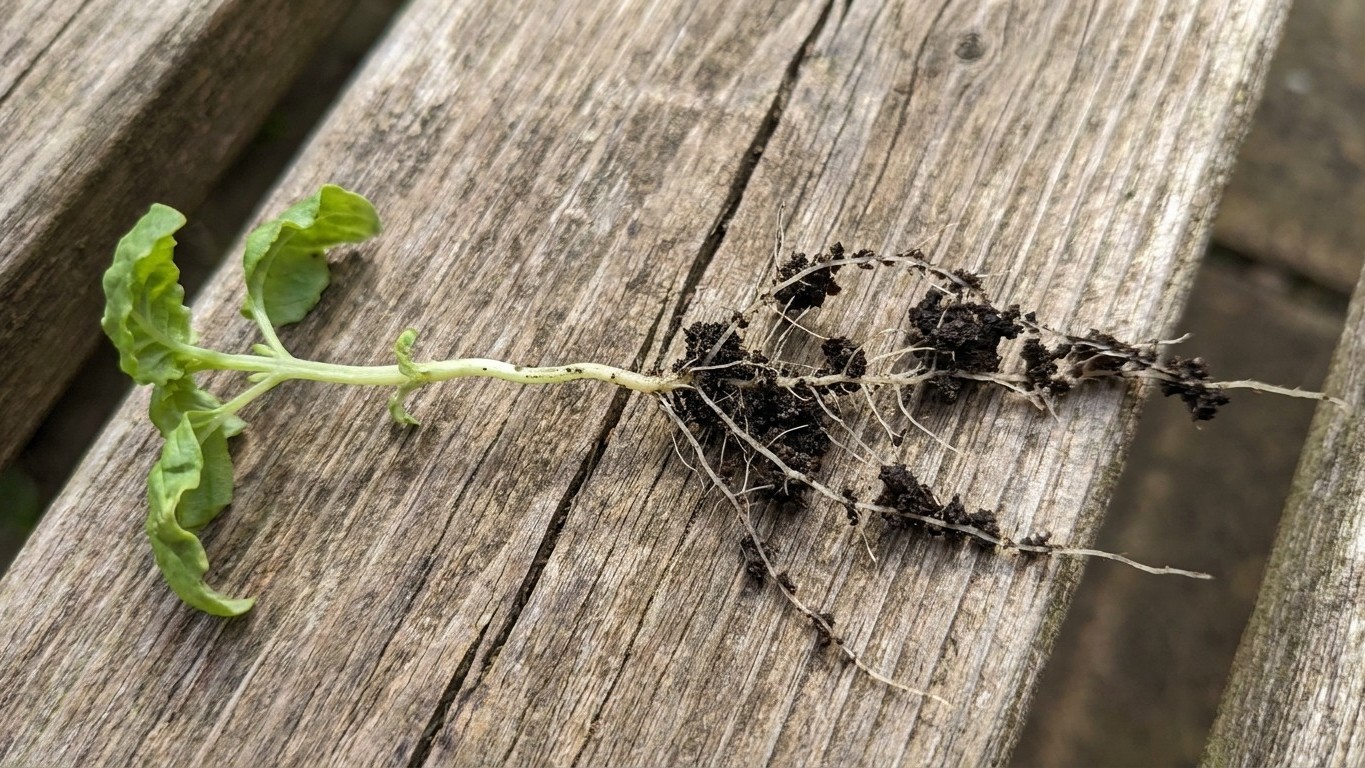
Basil is one of the most popular herbs in American gardens, and also one of the most misunderstood. The promise feels simple: scatter some seeds, water regularly, harvest by July. What actually happens for a lot of home gardeners is a plant that sprouts fine, reaches about four inches, then just… stops. Weeks pass. The stem stays thin. The leaves refuse to multiply. The whole pot or bed looks like it’s waiting for a signal that never comes.
That was my situation exactly, two seasons ago. I direct-sowed basil into a garden bed in early May, soil temperature hovering around 58°F, convinced I was getting a head start. The seeds germinated in about a week, encouraging. Then the seedlings hit roughly 10 cm and stalled there for close to two months. I assumed it was a nutrient problem, then a watering problem, then maybe just a bad seed lot. When I finally pulled one plant out of the ground to take a closer look, the root system showed me something I hadn’t considered at all.
Key takeaways
- A basil plant’s above-ground stall is always a below-ground problem—and most gardeners are looking in the wrong place
- Your last frost date means nothing for basil; soil temperature is what matters, and it’s probably 10-15°F colder than you think
- Once soil hits 65°F consistently, a June-planted basil will outperform a May-planted one by summer’s end
What a stunted root actually looks like, and what it means
The root was short, pale, and almost completely horizontal. Instead of driving downward into the soil to anchor the plant and access deeper moisture, it had spread laterally just below the surface, barely an inch deep. The tips were slightly brown. This isn’t a disease symptom, it’s a stress response. Basil roots stop vertical development when the soil temperature stays consistently below 60°F, sometimes even 65°F. They essentially go into a holding pattern, expending energy to survive rather than to grow.
This matters more than most gardening guides acknowledge. The above-ground part of a basil plant is a direct reflection of what’s happening underground. A plant with a shallow, underdeveloped root system cannot take up water efficiently, cannot access soil nutrients properly, and cannot support the kind of lush, bushy growth that makes basil worth growing. The two months I spent waiting and adjusting surface conditions were basically irrelevant, the problem was six inches below where I was looking.
Basil is native to tropical regions of Asia and Africa, where soil temperatures stay warm year-round. Unlike, say, spinach or kale, which evolved in cooler climates and actually prefer cold-weather root development, basil’s entire physiology is calibrated for warmth. Research from university extension programs has consistently found that basil growth rates nearly double between 60°F and 70°F soil temperature. Below 50°F, root cell damage can occur that affects the plant for its entire life cycle, even if it technically survives.
The timing mistake most gardeners make (and the fix that actually works)
Air temperature is the wrong metric. A warm afternoon in late April can feel like summer on your skin while the soil underneath sits at 52°F, cold enough to suppress root activity entirely. Most gardeners, myself included, use the last frost date as the signal to plant warm-season crops. But last frost dates track air temperature, not soil temperature. A $12 soil thermometer changes the entire equation. The rule for basil: wait until soil consistently reads 65°F at a depth of 2 inches, measured in the morning before the sun has had a chance to warm the surface.
In most of the continental United States, that doesn’t happen until late May or even early June. In the Pacific Northwest or higher elevations, sometimes not until July. This feels counterintuitive because basil is sold everywhere starting in March, grocery stores, garden centers, hardware stores. Those transplants were grown under controlled greenhouse conditions. Putting them directly into cold spring soil outdoors triggers the same root stress response whether you’re starting from seed or transplanting a nursery plant.
The alternative that genuinely works: start seeds indoors 6 to 8 weeks before your true outdoor planting window (not the frost date, the 65°F soil date), then transplant once the soil is ready. Or, if you prefer direct sowing, wait until the soil is warm and accept that a June-sown basil plant will outperform a May-sown one by August. The late starter catches up fast once root conditions are right. In warm soil, basil can go from seedling to full harvest size in under four weeks.
Helping the soil warm up faster, without buying anything expensive
Black plastic mulch laid over the bed two to three weeks before planting can raise soil temperature by 5 to 10°F at the 2-inch depth. It’s low-tech and unglamorous, but extension research from land-grant universities consistently shows it as one of the most effective interventions for warm-season crops in cool climates. Clear plastic warms soil even faster (it lets sunlight through directly), though it also encourages weed germination underneath, which complicates things.
Raised beds offer a structural advantage here: they drain faster and their smaller soil mass heats up more quickly than in-ground beds. A 12-inch-deep raised bed filled with a loose, dark-colored growing mix can be ready for basil a full two to three weeks ahead of the surrounding ground. If you’ve ever noticed that basil in raised beds seems to perform dramatically better than in-ground plantings, this temperature differential is almost certainly part of the explanation.
One detail worth knowing: soil temperature fluctuates less than air temperature, which is actually useful. Once your soil hits 65°F and stays there, a few cool nights won’t drag it back down immediately. The thermal mass of the ground acts as a buffer. That stability is what basil roots are really looking for, not peak warmth, but consistent warmth, sustained long enough for the root system to commit to downward growth rather than lateral survival mode. That’s the difference between a plant that sits at 10 cm for two months and one that turns into a full, harvestable bush before the Fourth of July.