
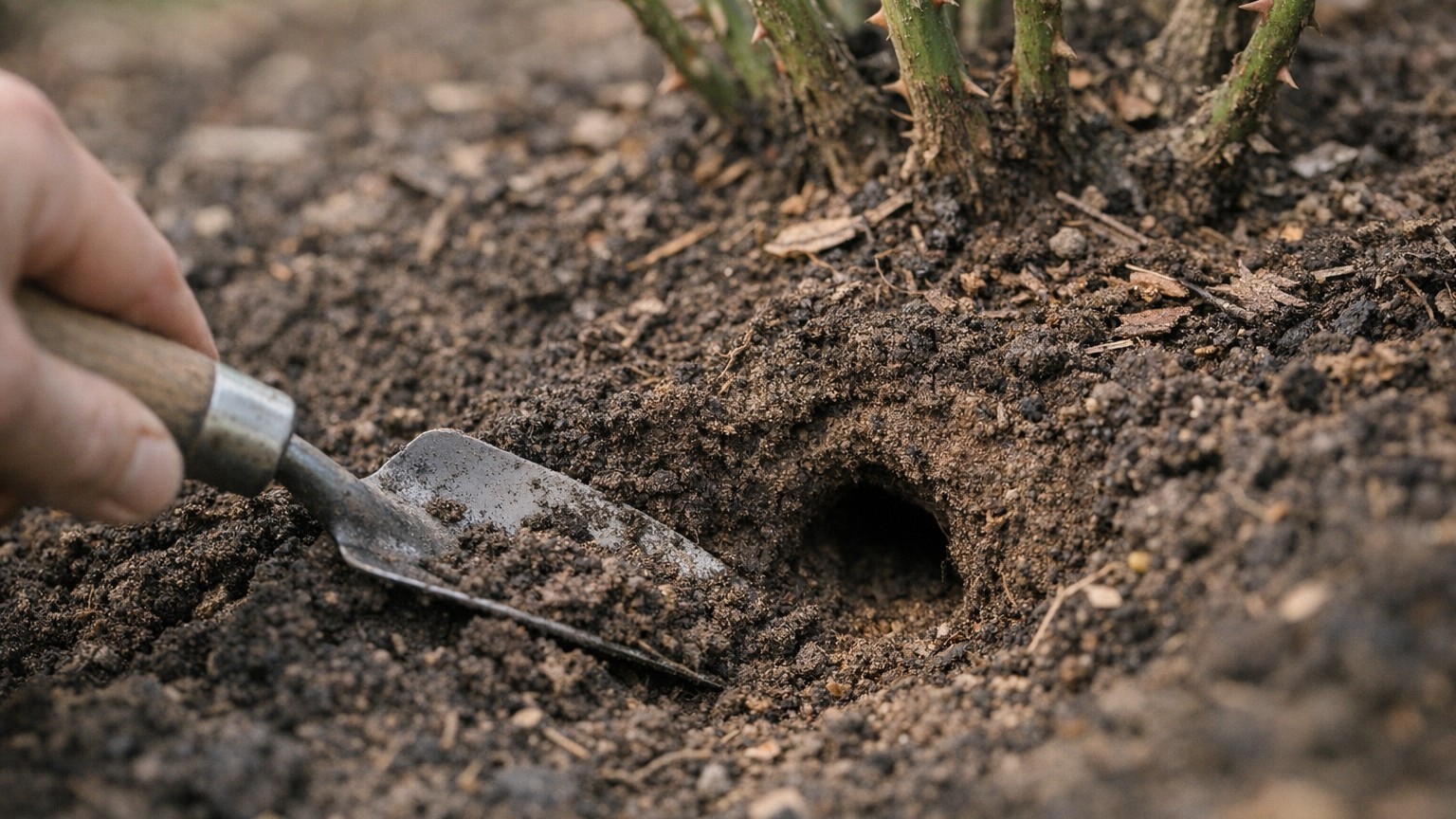
Burying banana peels under rose bushes is one of those gardening tips that spreads like wildfire on social media, simple, zero-cost, feels clever. The logic seems sound: banana peels are rich in potassium, and roses love potassium for strong blooms. So you dig a shallow hole, drop in a whole peel, cover it up, and wait. A few weeks later, you scratch the soil to check on things, and what you find isn’t a thriving root system. It’s a tunnel. Sometimes two. And whatever dug them didn’t leave a forwarding address.
Key takeaways
- A whole buried banana peel releases an underground scent signal detectable by rodents from up to 12 inches away
- Even without wildlife, whole peels are inefficient fertilizers that take weeks to release nutrients your roses can use
- Dried, crushed peels or banana peel ‘tea’ deliver potassium immediately while eliminating the rodent problem entirely
Why Whole Peels Are Basically a Dinner Invitation
The problem isn’t banana peels themselves, it’s the form. A whole peel buried just a few inches underground decomposes slowly, especially in cooler soil. During that window, it releases a powerful cocktail of sugars, starches, and that unmistakable sweet smell that travels much farther underground than most gardeners realize. Voles, mice, and squirrels have olfactory systems that make ours look embarrassingly primitive. A buried banana peel at 3 inches depth is, for a vole, roughly the equivalent of a neon diner sign visible from a highway.
Squirrels in particular are opportunistic diggers, they don’t need much encouragement. A 2019 study from the University of California found that gray squirrels can detect buried food through up to 12 inches of soil and snow. A banana peel at 4 inches? Trivial. They’ll excavate it, ignore it as inedible, and in the process disturb your rose’s feeder roots, which sit frustratingly close to the surface.
What Actually Happens to the Nutrients
Here’s the harder truth: even without the rodent issue, whole buried peels are inefficient fertilizers. Potassium doesn’t leach out of intact organic matter quickly. The peel has to break down first, which requires soil microbes, adequate moisture, and time, often 4 to 8 weeks under good conditions, longer in dry or cold soil. Meanwhile, your rose can’t access anything. You’ve essentially buried a slow-release capsule with no release mechanism yet.
Compare that to dried and crushed banana peels, or better yet, peels that have been blended into a slurry and watered directly into the soil. Potassium becomes available almost immediately in liquid form. The smell dissipates within hours rather than weeks. No tunnel excavations, no displaced mulch, no mysteriously relocated peonies nearby. The nutrient delivery is faster and the wildlife attraction is minimal.
Compost is the other obvious solution, and the one most professional rosarians quietly prefer. When banana peels go into a hot compost pile that reaches 130 to 160°F internally, they break down within days. The finished compost, worked into the soil around your roses in spring and fall, delivers a complex nutritional profile that a single buried peel simply cannot match. Potassium, yes, but also calcium, magnesium, and a cascade of micronutrients that support Everything from cell wall strength to disease resistance.
How to Actually Feed Roses With Kitchen Scraps
Drying is the lowest-effort fix. Lay banana peels flat on a baking sheet at 200°F for about two hours, or simply leave them on a rack in a warm, dry spot for a few days. Once brittle, crumble them by hand or pulse them in an old blender. The resulting powder can be scratched directly into the top inch of soil around your rose’s drip line, that outer ring of soil beneath the furthest-reaching branches, where feeder roots concentrate. No burial, no smell, no rodent signal.
If you want to go further, a banana peel “tea” takes about 48 hours. Submerge two or three peels in a quart of water, let them sit at room temperature, then dilute the brown liquid with an equal part water and pour it at the base of the plant. Roses respond visibly to this treatment during their active growing season, often deepening bloom color within a week or two, the potassium supports the cellular processes that produce pigmentation. It’s not magic; it’s basic plant chemistry working the way it should.
One thing worth knowing: banana peels are high in potassium but relatively low in nitrogen. Roses are heavy feeders that need a balanced diet, and over-relying on peels alone can create a lopsided nutrient profile. Yellowing leaves with green veins, a classic sign of nitrogen deficiency, can actually worsen if you’re flooding the soil with potassium while neglecting nitrogen. Rotating between a banana peel application and a nitrogen-rich amendment like alfalfa meal or fish emulsion keeps the chemistry balanced.
The Rodent Problem Doesn’t Stop at Banana Peels
Several other popular burial-based garden hacks trigger the same issue. Burying eggshells whole attracts fewer animals than peels, the calcium content isn’t particularly appealing to most rodents — but burying fish scraps, coffee grounds mixed with food residue, or vegetable trimmings that haven’t dried first all create similar underground scent trails. The pattern is consistent: anything with residual sugars or proteins, buried whole and fresh, becomes a target within a week or two depending on local wildlife pressure.
Gardeners in areas with high vole populations, and vole territory covers roughly 70% of the continental United States — often don’t connect the dots between their soil amendments and the sudden increase in surface tunneling near their most prized plantings. The fix is rarely about trapping or deterrents. Changing the burial habit is almost always enough.
Banana peels genuinely do benefit roses. The potassium supports strong stems, vibrant blooms, and disease resistance. The delivery method, though, is the variable that separates a useful habit from an expensive lesson in local wildlife behavior.