
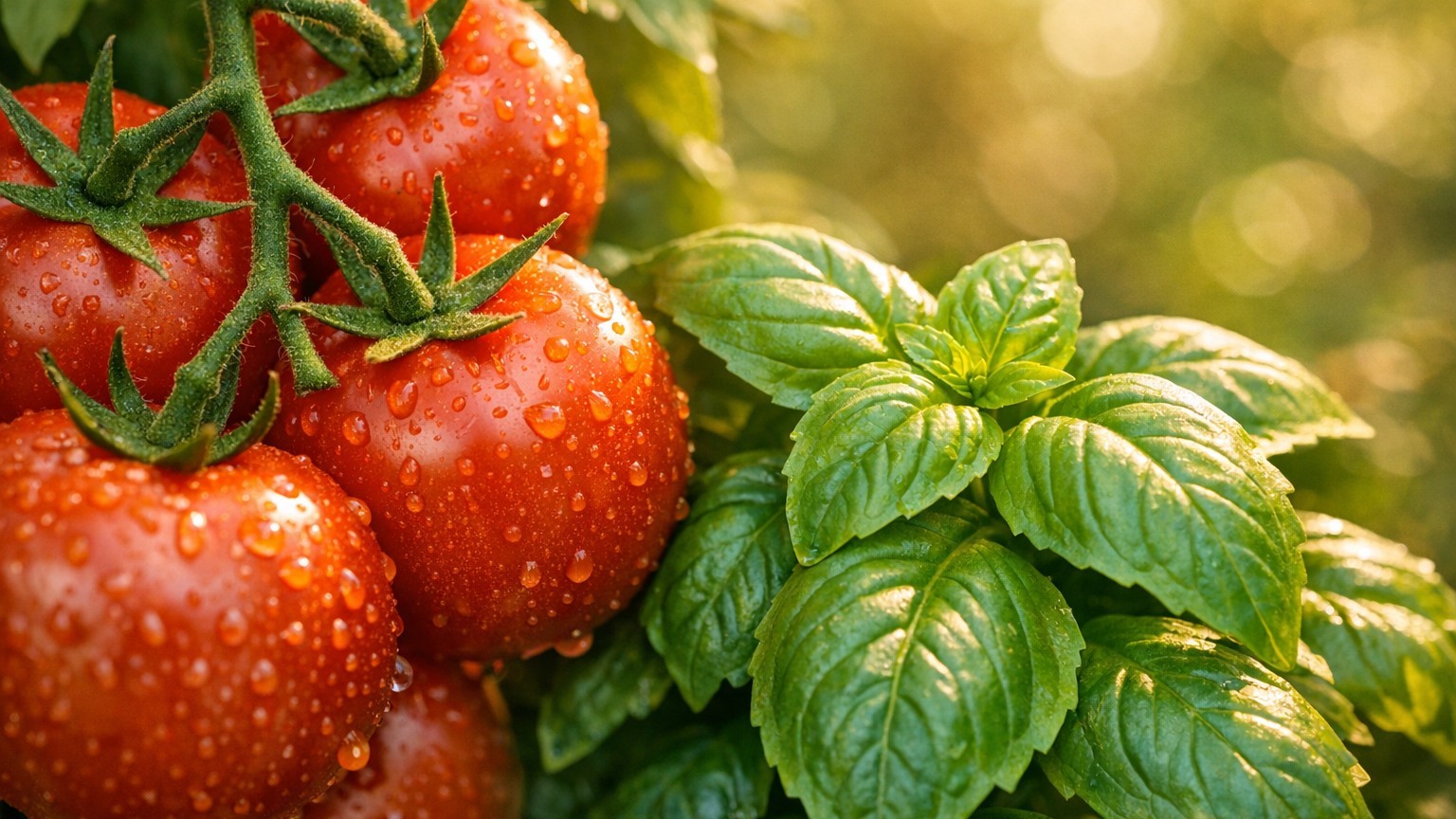
Every summer, my grandparents would tuck a row of bushy basil plants right alongside their tomato beds. As a kid, I thought it was just an Italian thing, a culinary reflex, the same instinct that put olive oil on everything. I never questioned it. And then for years as an adult, I replicated the habit while silently dismissing it as charming folklore. Turns out, it’s one of the most science-backed partnerships in the vegetable garden.
Key takeaways
- Basil releases invisible chemical signals that jam the ‘GPS’ insects use to find tomato plants
- A 2024 peer-reviewed study found basil primes tomato plants’ defense genes before damage even happens
- One study showed basil boosted tomato vigor more effectively than chemical fertilizer
The invisible chemical conversation happening in your garden
Basil is a heavy producer of volatile organic compounds, aromatic molecules that evaporate continuously off the leaves and diffuse into the surrounding air. The main ones are linalool, methyl chavicol (estragole), eugenol, and 1,8-cineole, along with a shifting mix of other terpenes depending on variety, temperature, and time of day. That scent you get when you brush against a basil plant in the heat of July? That’s not just pleasant aromatherapy. It’s an active chemical signal with measurable effects on the insects navigating your yard.
Insects don’t find their host plants by sight, they find them by smell. Pest insects like whiteflies, aphids, and hornworm moths navigate using chemical signals. Tomatoes broadcast their own volatile signature — a blend of hexenyl acetate, limonene, and specific terpenoids that essentially announces its presence. This mechanism, sometimes called olfactory interference or volatile camouflage, is the most likely biological explanation for basil’s companion value. The basil’s aromatic cloud effectively jams the signal, making the tomato harder to locate.
Research on linalool and eucalyptol, the two dominant volatiles in Genovese basil, has confirmed insect-repellent activity in laboratory conditions. Field results are messier, wind, planting density, and temperature all affect whether the signal is strong enough to work consistently — but the underlying biology is sound. So yes, the science holds, even if your specific backyard results will vary.
What a 2024 study discovered, and why it matters
The pest-repelling story is compelling enough. But it’s only half of what’s going on. A peer-reviewed study published in Plant Cell Reports in 2024 revealed something far more striking about the basil-tomato relationship: the expression of a gene called Pin2, which specifically responds to mechanical wounding, was induced more rapidly and more strongly in tomato plants cultivated alongside companion basil plants. This wound response priming effect was replicated through exposure to an essential oil prepared from basil leaves.
Think of it as a training effect. Tomato leaves pre-exposed to basil essential oil showed enhanced expression of genes related to jasmonic acid, MAPK, and reactive oxygen species signaling after wounding stress. Basil essential oil also enhanced ROS accumulation in wounded tomato leaves. The tomato, becomes more ready to fight back against insects and damage, just by being near basil. It’s a biological alarm system that costs you nothing but a few square feet of garden space.
The same research team noted in their preliminary results that mixed planting with basil substantially increases the symbiosis of mycorrhizal fungi in tomato plant roots, and several studies have revealed that mycorrhizal fungi can prime disease resistance in plants. Mycorrhizal fungi are beneficial microorganisms that form a symbiotic relationship with roots and improve their ability to absorb water and nutrients, making for not just stronger, healthier plants, but ones that can tolerate drought and extreme environmental conditions better. For anyone gardening through increasingly unpredictable summers, that last point alone is worth paying attention to.
The yield numbers are hard to ignore
Research shows that interplanting basil with tomatoes can increase tomato plant size, fruit yield, and root growth while simultaneously deterring pests including tomato hornworm. When planted in a 1:1 ratio, one study found basil was even more effective at boosting tomato plant vigor than applying chemical fertilizer. That’s not a marginal improvement, that’s the kind of result that makes a gardener stop and reconsider what’s already in their toolkit.
Tomatoes planted near basil tend to be more productive overall, and the scent of basil can also repel tomato pests, including aphids, tomato hornworms, and whiteflies. These are three of the most destructive and persistent pests in a home vegetable garden. Whiteflies alone, when left unchecked, can stunt growth and transmit plant viruses that ruin an entire season’s crop. The fact that a fragrant herb can meaningfully reduce their presence, with zero chemical input, is the kind of trade-off that gardeners and farmers worldwide are increasingly interested in.
The relationship is also conveniently mutual. As tomato plants grow taller, they provide some afternoon shade for basil, this cover helps protect basil from scorching and extends its productive season. Basil is a low user of nutrients, and a single plant takes very little from a nearby tomato plant, which means there’s no meaningful competition for resources. Both plants share the same preferences for sun, warmth, and regular watering, so managing them together requires no additional effort.
How to actually do it
The practicalities are refreshingly simple. Plant basil and tomatoes about 15 to 20 inches apart in the ground, close enough for the volatiles to do their work, with enough room that neither plant crowds the other as the season progresses. For tomato plants, a few basil plants nearby will be enough to take advantage of their natural companion benefits. You don’t need to restructure your entire garden.
Even if you’re short on garden space, you can still grow basil and tomatoes together in containers and enjoy many of the same benefits. While basil and tomatoes thrive when planted in the same garden bed, they can also complement each other when placed in separate pots. Keeping potted basil near your tomato plants can still help repel pests, even though they won’t share soil and nutrients beneath the surface.
There are as many as 150 types of basil, and the types considered most effective as companion plants for tomatoes are likely each working more efficiently through different mechanisms, so until we know more, planting a few different varieties alongside your tomatoes is probably the best approach. Sweet Genovese, Thai basil, lemon basil — there’s no downside to variety here, and the differences in fragrance mean a broader chemical umbrella over your tomato bed.
My grandparents never read a study from Kagoshima University. They didn’t know what mycorrhizal fungi were, and the phrase “volatile signaling” would have made them laugh. But somewhere between decades of careful observation and inherited knowledge passed down through generations of Italian kitchen gardeners, they had arrived at the exact same conclusion that plant scientists are now confirming with molecular biology. The gap between folk wisdom and peer-reviewed research turns out to be smaller than most of us assume, and in this case, it closes completely over a bed of ripe summer tomatoes.
Sources : link.springer.com | researchsquare.com