
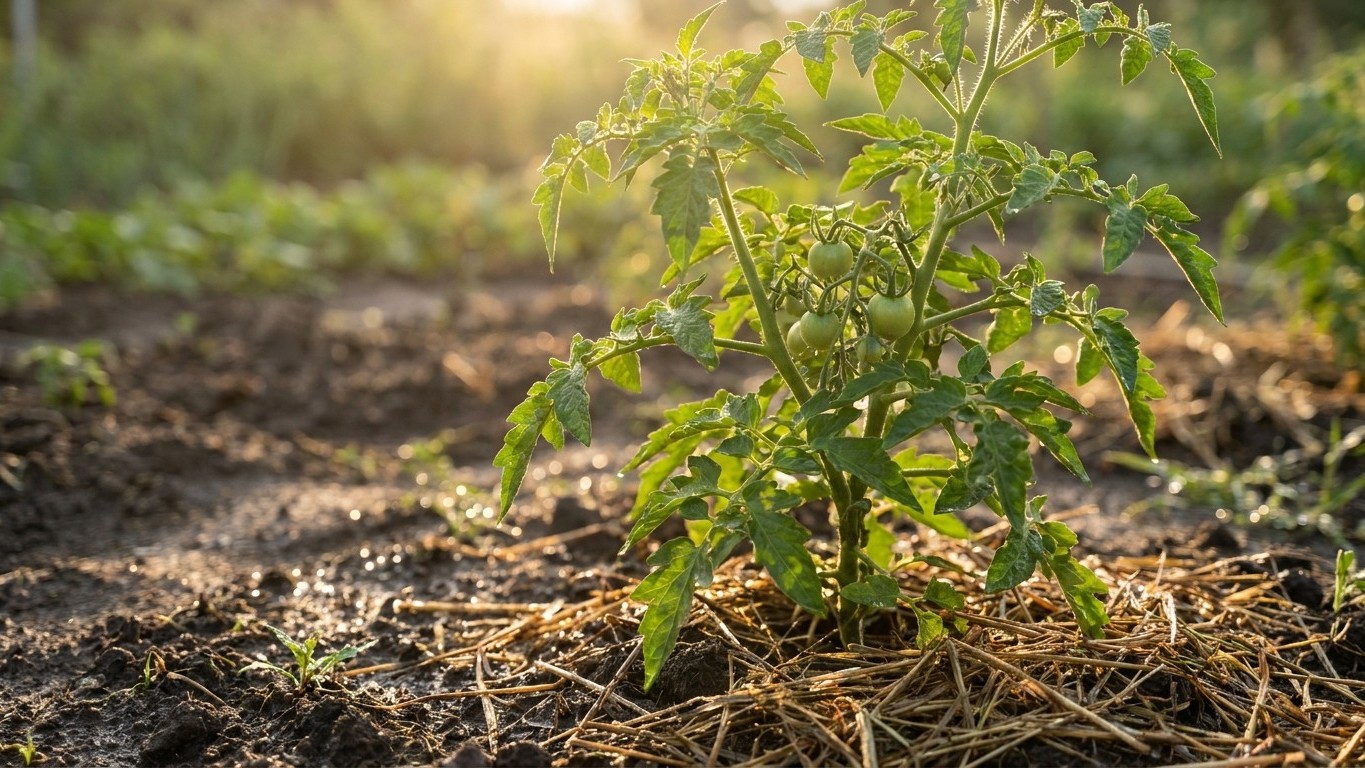
Evening watering felt like the considerate thing to do. The sun was down, the heat had passed, and the plants had the whole night to drink. For years, that logic seemed airtight. Then a market gardener, the kind of person who grows 400 tomato plants every season for local farmers’ markets — watched me water at 7 p.m. and said, very calmly: “You’re feeding the disease, not the plant.”
He was right, and the wilting I’d blamed on drought or poor soil was, at least in part, a direct consequence of when I was watering.
Key takeaways
- Evening watering creates the perfect environment for fungal diseases and pests to thrive overnight
- The specific morning window (6-8 AM) gives tomatoes time to absorb water before heat stress begins
- Morning wilt and afternoon wilt mean completely different things—and most gardeners misread both
Why evening watering quietly destroys your tomatoes
Gardeners agree that the worst time of day to water is evening. Water has a greater chance of remaining on your tomato’s leaves when the air gets cooler at night. That standing moisture isn’t just uncomfortable for the plant, it’s an open invitation. If you water in the evening, you’re more likely to encounter soil-borne fungal and bacterial diseases. These thrive in cool, damp environments, and freshly watered tomato plants after dark become prime real estate.
Splashing water on infected leaves from overhead watering spreads fungal spores and bacteria to nearby plants. Watering late in the day or evening causes plants to stay wet overnight, providing an environment for diseases to flourish. The specific culprits are well documented: wet leaves invite fungal diseases like blight and leaf spot, problems that can ruin a tomato crop in a hurry. Add to that the pest dimension, moisture attracts pests, especially if it sits overnight. Aphids, whiteflies, and fungus gnats love damp tomato leaves. Once they find your plants, they multiply fast, weakening them further and spreading disease.
There’s also a subtler, structural problem. In the evening, when temperatures drop, cold water sitting in the soil chills the roots. Stressed roots absorb nutrients poorly. The plant doesn’t die overnight, but it accumulates damage season after season, weakened immunity, stunted growth, and the kind of chronic wilting that gets blamed on everything except the watering schedule.
Morning is the right hour, here’s the biology behind it
The best time to water your tomato plants is early in the morning. Doing so is most effective because it gives your plant time to move the water into the leaves before the primary heat of the day begins. Think of it as fueling up before a long run. The plant has a full, hot day of photosynthesis, flowering, and fruit production ahead, it needs water in its system before the sun peaks, not after.
Morning watering delivers optimal plant performance by giving tomatoes time to absorb moisture before daily heat stress begins. You’ll notice stronger stems and healthier foliage when you water between 6–8 AM. Plants process water most efficiently during cooler temperatures. Your tomatoes can fully hydrate their cells and prepare for photosynthesis throughout the day, resulting in better fruit development and disease resistance.
The evaporation advantage matters too. Early morning watering fortifies tomatoes for a full day of leaf, flower, and fruit production. Watering tomatoes early in the day also cuts down on evaporation, so plants stay hydrated longer. An evening watering, by contrast, loses little to evaporation, but that’s precisely the problem. The water sits. It lingers on leaves and in topsoil without the sun’s help to dry things out.
What wilting is actually telling you
Here’s where it gets counterintuitive. A little afternoon wilt on a scorching day is actually normal. The plant is conserving moisture and will usually perk back up by evening. But if your tomato is wilting first thing in the morning, before the heat kicks in, that’s a red flag. It means the plant couldn’t recover overnight because there wasn’t enough moisture in the soil to draw from.
If you notice the leaves starting to droop by midday, don’t panic, they’re curling in to slow evaporation. It’s normal tomato behavior. The test is simple: check the plant at sunrise. Persistent morning droop means the roots ran dry overnight. Midday droop alone, especially on days above 85°F, is the plant’s own thermostat doing its job.
There’s another common misread. When the soil stays constantly saturated, tomato roots start to swell and lose their ability to take in nutrients. The plant becomes stressed. One of the first signs is yellowing leaves, unfortunately often mistaken for a sign of too little water, which leads gardeners to respond by giving the plant even more water. More water after dusk accelerates the damage. It’s a loop that’s surprisingly easy to fall into.
Deep, consistent, and at the base, the three rules that actually hold
Timing is only one part of the equation. How you water shapes what the roots do long-term. A thorough soak that reaches the roots is far better than a quick sprinkle on the surface. Shallow watering encourages shallow roots. Shallow roots make for fragile plants. The target depth is concrete: the goal is to saturate the soil down to at least 6 to 8 inches. That’s where you want the roots to grow.
Always water at the base, never overhead. The most important principle when watering tomatoes is to only ever water the soil. Never, under any circumstances, water the plants from above. A soaker hose or drip line handles this automatically, and it pays for itself in disease prevention alone.
Consistency matters more than volume. This is where the connection to blossom end rot, that black, sunken rot on the bottom of tomatoes, becomes clear. Blossom-end rot is a delivery problem, not a supply problem. Calcium moves through tomato plants exclusively via water, and when watering becomes erratic, delivery to the blossom end collapses. The fix is watering consistency, not calcium addition. A cycle of dryness followed by overwatering only promotes calcium deficiency in the plant. Most gardeners who discover this feel a mix of relief and frustration, the soil was never the issue.
One practical anchor: mulch. Mulch creates a protective barrier that reduces water evaporation by up to 70% while maintaining consistent soil moisture levels. Apply 2 to 3 inches of straw or shredded leaves around the base of each plant, keeping it a few inches clear of the stem. It’s the simplest insurance against the dry-then-flood cycle that quietly wrecks a season.
Worth knowing for fruit ripening: as tomatoes move into their final stage, professional growers actually reduce water volume by 20 to 30 percent. Slight, controlled stress, allowing the top few inches to dry, concentrates sugars and intensifies flavor. The tomatoes you buy from a farmers’ market vendor who knows their craft are usually watered less at the end, not more. That’s not neglect. That’s precision.
Sources : bloomingexpert.com | rasnetwork.org