
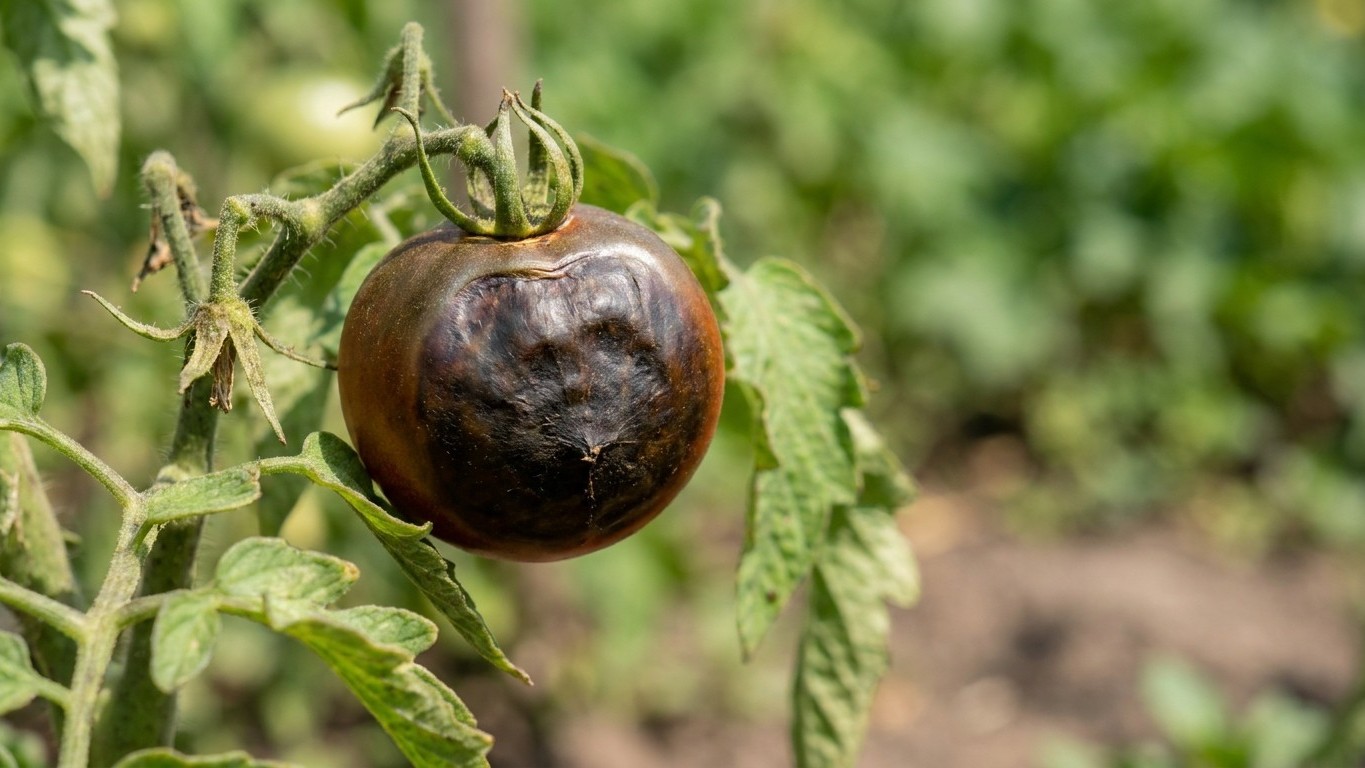
Blossom end rot doesn’t care how much calcium spray you dump on your tomato leaves. That black, leathery patch spreading across the bottom of your fruit isn’t a foliage problem at all. It’s a plumbing problem, one that starts at the roots and has almost nothing to do with what you’re misting onto the plant’s upper half every few days.
A veteran gardener at a community plot in Ohio put it bluntly after watching a neighbor spray calcium solution on tomato leaves for three straight weeks: “You’re treating the wrong end of the plant.” The neighbor’s tomatoes kept blackening at the bottom anyway. Fruit after fruit came off the vine with that same sunken, dark scar. The calcium spray wasn’t failing because the product was bad. It was failing because leaves barely absorb calcium at all, and even when they do, that calcium stays put in the leaf tissue instead of traveling down to the fruit.
Key takeaways
- A common garden treatment is almost completely ineffective at preventing a widespread tomato problem
- What gardeners think they understand about how plants absorb calcium turns out to be backwards
- The real culprit hides underground, and the solution is shockingly simple but requires patience
Why Calcium Sprays Miss the Target
Calcium moves through a plant almost exclusively through the xylem, the tissue that carries water up from the roots. Once calcium reaches a leaf, it’s essentially stuck there. Plants have very limited ability to redistribute calcium internally, unlike nutrients such as nitrogen or potassium, which move freely to wherever they’re needed. This is basic plant physiology confirmed by extension research programs across the country, including work published by Cornell University’s College of Agriculture and Life Sciences on tomato nutrient disorders.
So when a gardener sprays calcium chloride or calcium nitrate onto foliage hoping it will reach developing fruit, they’re fighting biology. The fruit itself has very few stomata, the pores that would let a foliar spray penetrate, so even direct application to young tomatoes accomplishes little. Research from university horticulture departments has repeatedly shown that foliar calcium sprays do not meaningfully reduce blossom end rot rates in field conditions. The disorder almost always traces back to inconsistent water delivery at the root zone, not a lack of calcium in the soil itself.
Most garden soil actually contains plenty of calcium already. The mineral is abundant in soil naturally and in most municipal water supplies. The real issue is transport. Calcium travels through the plant dissolved in water, riding along as moisture moves from roots to stems to leaves to fruit. When soil dries out even briefly during a hot stretch, that calcium delivery system stalls. The fruit, which is drawing water and nutrients last in line behind the leaves, gets shortchanged first. A few days later, the tell-tale black spot appears on the blossom end, right where the flower used to be.
What Actually Causes the Blackening
Inconsistent watering is the single biggest driver of blossom end rot, according to decades of extension service data from land-grant universities. A tomato plant that gets soaked on Sunday, then left dry through a heat wave until the next weekend, experiences the kind of stress that interrupts calcium transport at exactly the wrong moment for developing fruit. Container-grown tomatoes are especially vulnerable since pots dry out faster than garden beds and offer less buffer against fluctuation.
Excess nitrogen fertilizer compounds the problem. Heavy nitrogen pushes rapid leafy growth, and all that new foliage competes with fruit for the limited calcium supply moving through the plant. A tomato plant that looks lush and green but keeps producing blackened fruit is often a plant that’s been fed too much nitrogen and not given steady enough water. Root damage from overzealous cultivation around the base of the plant can also cut off calcium uptake, since damaged roots simply can’t draw water and minerals from soil as efficiently.
Soil salinity plays a role too. High salt concentrations in soil, whether from over-fertilizing or from naturally salty groundwater in some regions, make it harder for roots to absorb calcium even when plenty is present. This is one reason gardeners in coastal areas or arid regions with mineral-heavy well water sometimes struggle with blossom end rot despite doing Everything else right.
The Fix Nobody Sprays For
Consistent soil moisture solves this problem more reliably than any bottle on a garden center shelf. That means watering deeply two or three times a week rather than a light daily sprinkle, aiming to keep soil moisture level rather than swinging between soaked and bone-dry. A three-inch layer of mulch, whether straw, shredded leaves, or wood chips, does more for blossom end rot prevention than a season’s worth of calcium spray, simply by slowing evaporation and buffering the soil against temperature swings.
Drip irrigation or soaker hoses set on a timer remove the guesswork entirely, delivering water directly to the root zone on a predictable schedule. Gardeners who switch from hand-watering to drip systems often report the blackening disappears within a couple of fruit cycles, not because the soil chemistry changed but because the water delivery finally became consistent enough for calcium to reach the fruit in time.
Soil testing remains the only way to know if calcium is genuinely deficient, which is rare but not impossible in very sandy or heavily leached soils. A basic soil test through a county extension office or agricultural lab will show actual calcium levels and pH, since calcium availability drops sharply in acidic soil below pH 6.0. If a test does reveal a true deficiency, working agricultural lime or gypsum into the soil before planting addresses the root cause far more effectively than any spray applied mid-season to a plant that’s already stressed.
The gardener who set the Ohio neighbor straight had one more piece of advice worth repeating: pull a few of the blackened tomatoes, cut away the damaged bottom, and eat the rest. The disorder isn’t a disease, doesn’t spread to other plants, and doesn’t make the unaffected portion of the fruit unsafe. It’s a stress signal from the root zone, showing up in the one place gardeners are least likely to look first.