
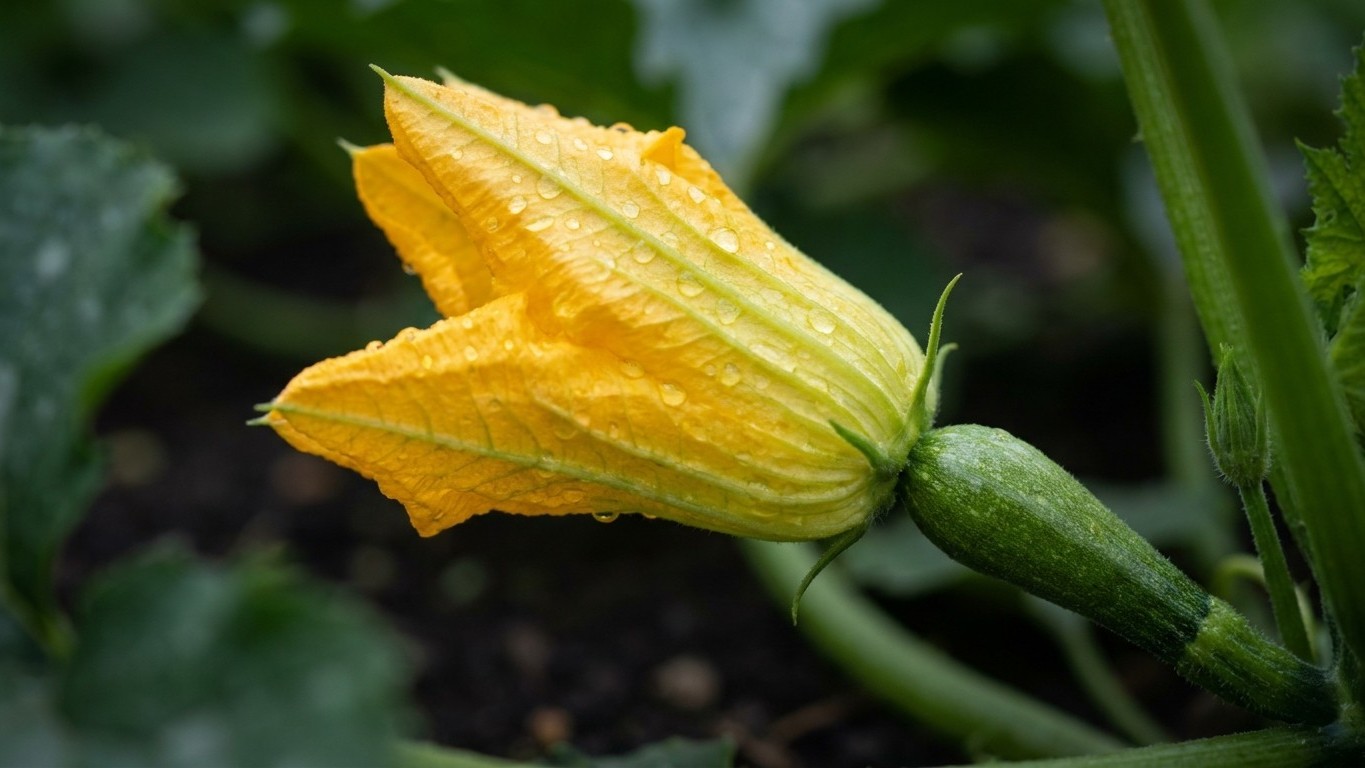
Two dozen blossoms in three weeks. Zero zucchini. That was the count on a raised bed in upstate New York last July, and it’s the same math playing out in backyards across the country right now. The plant looked healthy, the leaves were huge, the flowers kept coming almost daily. But every single one shriveled and dropped within 24 to 48 hours, leaving nothing behind. The fix wasn’t fertilizer or water. It was understanding what those flowers actually were.
Key takeaways
- Most zucchini flowers you’re seeing are male blooms that are supposed to drop within a day
- Female flowers have only 24 hours to be pollinated by bees, or they wither and fall
- Weather, declining bee populations, and pesticides are sabotaging your fruit set more than you realize
Male flowers outnumber female flowers, and that’s normal
Zucchini plants produce two distinct types of blooms on the same vine. Male flowers show up first, sometimes two or three weeks before any female flowers appear, and they grow on long, thin stems with nothing behind the petals. Female flowers are easy to spot once you know the trick: look at the base, right where the flower meets the stem. If there’s a tiny bulge that looks like a miniature zucchini, that’s a female flower. No bulge, no fruit potential, no matter what happens next.
This ratio imbalance is deliberate on the plant’s part. Early in the season, a squash plant channels energy into male flowers to build up pollen supply before investing in the more resource-heavy female blooms. According to Cornell University’s Cooperative Extension, this staggered timing is standard biology for cucurbits, the plant family that includes zucchini, cucumbers, and pumpkins. So if all you’re seeing in June is flower after flower dropping off, there’s a decent chance you were simply looking at males doing exactly what they’re supposed to do: bloom, release pollen, wither, fall.
The real culprit: pollination failure
Here’s where it gets frustrating. Even when female flowers do appear, they still need pollen delivered from a male flower, and that job falls almost entirely to bees. A female zucchini flower stays open and receptive for about a single day. If a bee doesn’t visit during that narrow window, carrying pollen from a male bloom, the flower closes, yellows, and drops, tiny fruit and all. No pollination, no zucchini, regardless of how many flowers bloomed before it.
Weather plays a bigger role here than most gardeners realize. Heavy rain, sustained heat above 90°F, or a string of overcast days can suppress bee activity dramatically. The Michigan State University Extension has noted that squash bees and honeybees are far less active during extended wet spells, which lines up with why so many home gardeners report fruit drop clustering right after a rainy week. Add to that the broader decline in wild pollinator populations, documented by the U.S. Fish and Wildlife Service in areas facing habitat loss, and you’ve got a garden producing plenty of flowers but very little actual fruit.
What actually fixes it
Hand pollination sounds fussy, but it takes about thirty seconds and solves the problem outright. Pick a freshly opened male flower in the morning, strip back the petals to expose the pollen-covered anther, and gently press it against the center of an open female flower, the stigma, so the pollen transfers directly. One male flower can pollinate two or three females this way. Extension services, including Cornell’s, recommend doing this early in the day, ideally before 10 a.m., since that’s when both flower types are most receptive and pollen viability peaks.
Attracting more pollinators naturally works too, and it doesn’t require a complete garden overhaul. Planting borage, calendula, or alyssum nearby draws bees into the area consistently, which increases the odds a female zucchini flower gets visited during its one-day window. Avoiding pesticide sprays during flowering, even organic ones, matters more than gardeners often think, since many products applied midday can knock out bee activity for hours right when pollination needs to happen. Some growers also space out male and female bloom times by planting a second zucchini variety nearby, staggering the flower cycle so pollen is available more consistently across the season.
Temperature stress deserves a mention too, because it’s often mistaken for a pollination issue when it’s actually something else entirely. Zucchini flowers can abort even after successful pollination if daytime temperatures climb past 95°F for several consecutive days, a stress response the plant uses to conserve energy. In that case, the fruit will start forming, then stall and rot at the tip, a different pattern than the flower simply falling off unpollinated. Recognizing which scenario you’re in saves a lot of wasted troubleshooting.
Reading your plant like a calendar
The clearest sign your zucchini problem is pollination, not disease or nutrient deficiency, is timing. Male flowers dropping after a day or two is completely normal; that’s simply their lifecycle. Female flowers dropping with a shriveled, unpollinated ovary attached (the small swollen base turning yellow and soft instead of growing) points squarely to a pollination gap. Fruit that starts growing, then rots from the blossom end while still small, usually signals blossom end rot from inconsistent watering rather than a flower issue at all.
Checking flowers in the early morning, when both male and female blooms are wide open, makes this diagnosis far easier than glancing at a closed-up plant in the afternoon heat. Marking a few female flowers with a twist tie the day they open lets you track whether they’re being visited, and if 48 hours pass with no fruit swelling, that’s the signal to start hand-pollinating the next batch. One gardener in Ohio who switched to this routine reported going from three zucchini all season to more than twenty within a month, simply by pairing morning checks with a small paintbrush for backup pollination on days when bee traffic looked thin.
A single zucchini plant can produce both flower types for twelve weeks or more under the right conditions, which means a slow start in June doesn’t mean the season is a bust. The plants that seem to be “all bloom, no fruit” in early summer often turn into the ones producing more zucchini than a household can use by August, once bee traffic picks up and the ratio of male to female flowers shifts. Patience, paired with a few minutes of hand pollination on the slow mornings, tends to close the gap faster than any fertilizer bag on the shelf.