
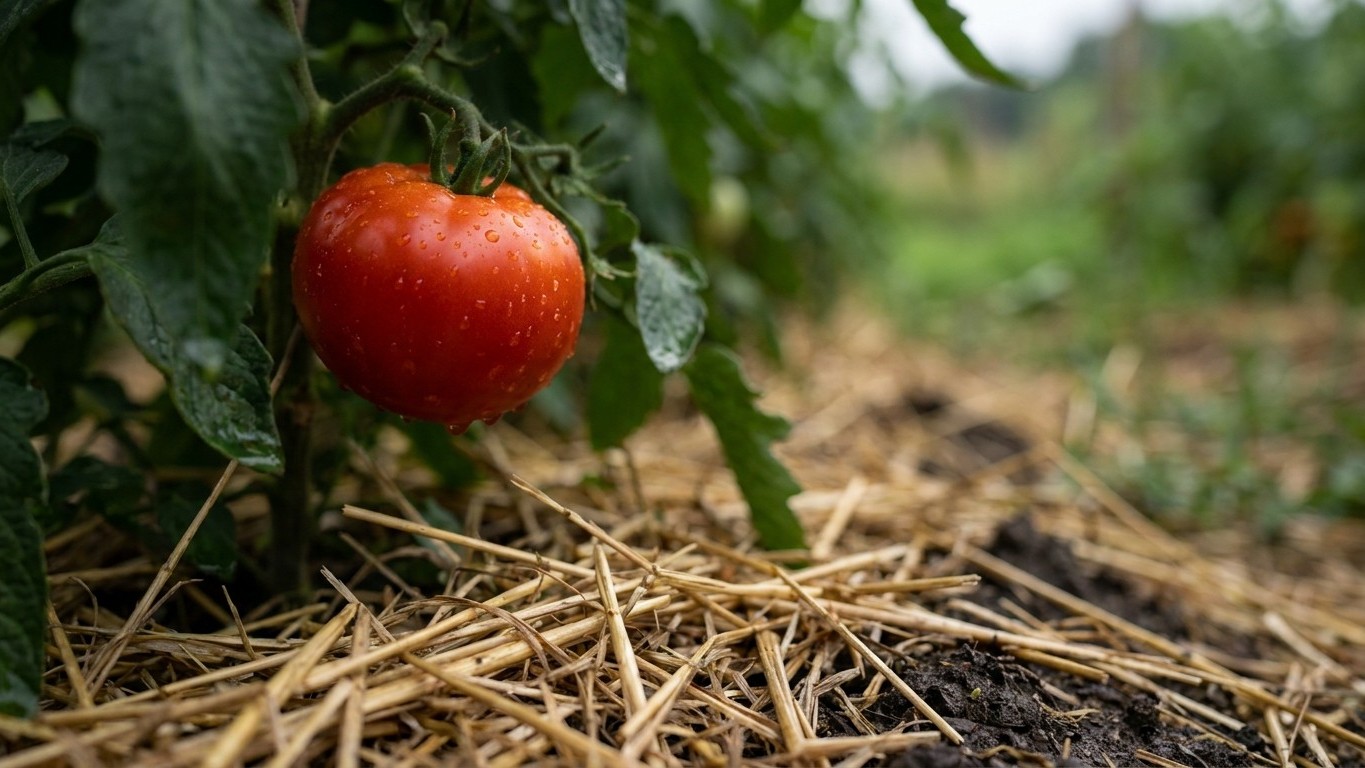
One layer of straw. That’s all it took. A backyard gardener spreads two or three inches of mulch around the base of their tomato plants to choke out crabgrass, and by August they notice something unexpected: the fruit stops splitting after heavy rain. It sounds like a lucky coincidence. It isn’t.
Tomato skin splitting is one of the most common complaints among home growers, and it has nothing to do with disease or pests. The main reason tomatoes split isn’t because they’re getting too much water; it’s because they haven’t been getting water consistently. The skin can’t keep up with the rapid growth of the fruit brought on by a sudden influx of water after a long period without it. Picture a dry spell stretching two, three weeks, then a summer storm dumps an inch of rain overnight. The roots drink it up fast. The flesh inside the tomato swells. The skin, which has spent weeks adapting to drought, simply can’t stretch quickly enough. It tears.
Key takeaways
- Why do ripe tomatoes split wide open after thunderstorms?
- A common garden task accidentally solves the cracking problem entirely
- The one watering mistake that makes splitting worse, and how mulch fixes it
Why a Thunderstorm Is a Tomato’s Worst Enemy
Tomato splitting, also known as fruit cracking, is a common problem that occurs when tomatoes undergo rapid changes in moisture levels, as tomatoes ripen, they naturally accumulate water, causing them to expand, and if this expansion happens too quickly, the tomato skin cannot keep up, resulting in cracks or splits. There are actually two distinct patterns gardeners run into. Concentric cracks are less severe and shallower than radial cracks, usually appearing on the top of fruit as rings that form around the stem. The other kind is scarier: radial cracks radiate down the side of the tomato, causing a vertical split in the fruit, and this is the most common type of cracking you’ll find after heavy rain in tomatoes that are mostly ripe. A radial split isn’t just cosmetic. It opens a direct highway for bacteria, mold, and hungry insects, and once that happens, the countdown to rot starts immediately.
Ripe fruit is far more vulnerable than green fruit, which makes sense once you think about it. Skin hardens and loses elasticity as tomatoes color up, right around the same time they’re pulling in the most water to plump out. The tomato can split on the vine at any stage of its growth, but as the color develops, it becomes more likely to split. That’s why the tomato you’d been eyeing for a week, the one destined for a sandwich, is almost always the one that splits first. It’s not bad luck. It’s biology working against timing.
The Mulch Fix, Explained
Here’s the mechanism nobody tells you about at the garden center: mulch doesn’t stop rain from falling, obviously. What it does is flatten out the swings in soil moisture between storms, which is the actual root cause of splitting. The mulch cuts down the rate of water evaporation from the surface of the soil, which helps to maintain a consistent moisture level between waterings or rainfall. Bare soil bakes hard in the sun, cracks, and dries out within days during a July heat wave. Covered soil stays damp for weeks. That difference is exactly what determines whether a storm shocks the plant or barely registers.
There’s a temperature angle too, one that’s easy to overlook. Mulch also acts as an insulating layer, helping to moderate soil temperature, and in very hot climates, it prevents the sun from baking the ground, which keeps the plant’s roots cooler so the tomatoes don’t overheat, a state that can lead to stress and cracking. Cooler, steadier roots translate to a steadier flow of water into the fruit, rather than the frantic gulping that happens when parched roots suddenly hit a puddle.
As for materials, straw, shredded leaves, and finished compost are the usual go-tos, and for good reason. Good organic materials for tomatoes include clean straw, shredded leaves, or compost, all applied in a layer about 2 to 4 inches thick. Wood chips and bark work fine too, though some growers steer clear of them near tomatoes because they can sometimes alter the soil’s pH as they break down. My own preference leans toward straw. It’s cheap, it breaks down into the soil by fall, and it doesn’t mat down into a soggy layer the way grass clippings can.
Mulch Alone Won’t Fix Everything
Mulch is a powerful lever, but it’s not magic. Extension horticulturists are consistent on this point: watering habits still matter more than any single garden product. Maintaining evenly moist soil throughout the growing season Matters More Than the exact amount, and a 2- to 3-inch layer of organic mulch helps regulate soil moisture, slowing evaporation and reducing dramatic moisture swings after rain. Drainage plays a role too. Dense, waterlogged soil sets tomatoes up for trouble regardless of mulch, since tomatoes need well-drained and high-quality loamy soil to thrive, and when the soil is dense, heavy, calcium deficient, and poorly drained, it can quickly get wet and cause splitting problems because the tomato root zone prefers aeration. That’s part of why raised beds and containers with generous drainage holes tend to produce fewer split fruits than compacted garden soil.
Weather forecasts are worth a glance too. If a storm is rolling in and the vine is loaded with fruit that’s just starting to blush, picking early is a legitimate strategy. Harvesting tomatoes as soon as they begin to change color, known as the breaker stage, can also prevent cracks, especially if rain is in the forecast. A tomato ripening on the windowsill beats a split one rotting on the vine any day.
None of this requires a trip to a specialty store or a complicated schedule. Rake some straw or shredded leaves around the base of each plant, keep it a few inches thick, and top it off as it breaks down over the season. The gardener who started this whole conversation wasn’t chasing crack-free tomatoes at all. They just wanted fewer weeds to pull. Turns out the two problems shared the same solution the entire time, hiding under a few inches of straw.
Sources : housedigest.com | hunker.com