
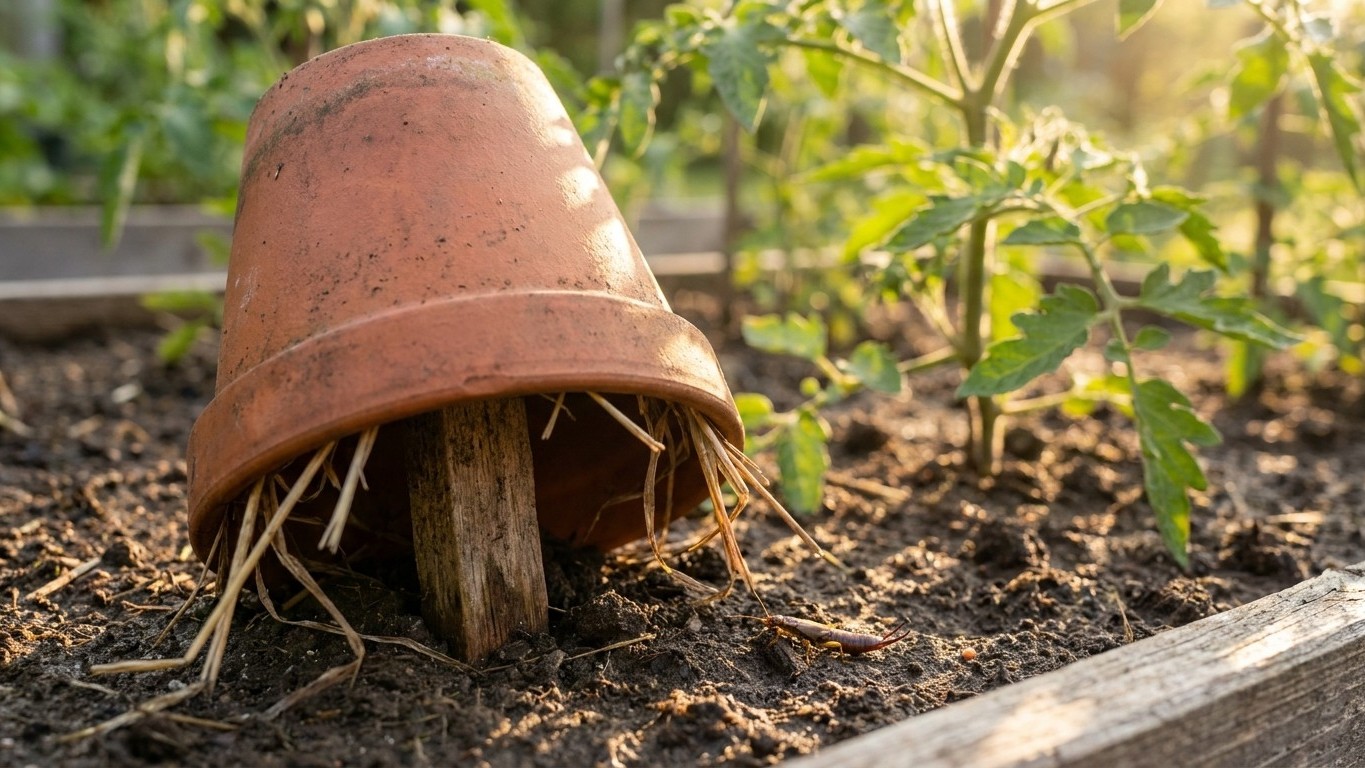
Every summer, the same ritual: my father would jam a small clay pot, stuffed with straw and turned upside down, onto a wooden stake in the middle of his tomato rows. I thought it was some kind of scarecrow for snails, or maybe just an old man’s superstition. It took me years, and a lot of squashed vegetables, to figure out that his terracotta pot was actually running a tiny insect hotel, and that the guests checking in were doing more pest control than anything I ever bought at a garden center.
The trick works because of a bug most people love to hate: the earwig. With its pincers and its habit of scuttling out from under flowerpots, it has a reputation as a villain. But although earwigs can devastate seedling vegetables or annual flowers and often seriously damage maturing soft fruit or corn silks, they also have a beneficial role in the landscape and have been shown to be important predators of aphids. That’s the whole point of my father’s pot. He wasn’t trying to kill anything. He was building a daytime shelter so the aphid hunters would stick around.
Key takeaways
- A simple clay pot and straw setup transforms a misunderstood garden pest into your most effective natural pest controller
- Earwigs spend their days hiding in terracotta and their nights hunting aphids—if you give them a reason to stay
- This ancient garden hack is now backed by entomologists and the Royal Horticultural Society as legitimate biological pest management
Why a clay pot stuffed with straw actually works
Earwigs are creatures of habit, and their habits are almost comically predictable. They are primarily active at night, spending the day hiding in damp, cold areas before emerging to feed after dark. An upside-down clay pot checks every box on their wish list: dark, snug, and cool. An upside down clay pot filled with straw or shredded newspaper creates the perfect hiding spot, and the natural clay material helps regulate temperature and moisture, which makes it even more attractive to them. By the time the sun comes up, the insects that spent the night patrolling the leaves for aphids are already filing back into their little terracotta apartment.
My father never used a fancy setup. Just a plain pot, straw packed loosely inside, flipped over a bamboo cane stuck in the ground. That’s essentially the same method described by gardening extension services today: a simple trap uses a flowerpot with fairly straight sides and a drainage hole, filled with shredded or crumpled newspaper or straw to provide an attractive habitat, then positioned upside down with a stake pushed through the drainage hole to support the whole thing. Nothing exotic about it. No pesticide, no plastic gadget, just clay and dead grass exploiting an insect’s own instincts.
What surprised me most, once I actually researched what my father had been doing on instinct, is how seriously entomologists take this relationship. On fruit trees especially, the payoff is well documented. Earwigs feed on aphids and some other invertebrates and can help reduce populations particularly in fruit trees, where they are beneficial because they eat aphids. The Royal Horticultural Society goes as far as recommending the exact device my father built by hand: providing shelters such as flower pots loosely stuffed with hay in trees can help increase numbers.
The pest that’s also the cure
Here’s where it gets almost paradoxical. Earwigs can chew through a lettuce seedling overnight, and yes, they’ll nibble at dahlia petals given the chance. But go after them with sprays and you often make the underlying problem worse, not better. Broad-spectrum insecticides applied to earwig populations in established beds will also reduce the aphid and mite predation those earwigs were providing, and the net result is often a more pest-prone garden, not a less pest-prone one. My father, who never sprayed a chemical on his vegetables in his life, had essentially arrived at integrated pest management by trial and error, decades before the term existed.
The nuance he understood, without ever putting it into words, is that context decides whether an earwig is friend or foe. Near his tomato and fruit trees, they were allies. Around anything young and tender, they could be a nuisance. Extension specialists frame it almost the same way: their eating habits and behaviors make them both a pest and a beneficial insect, and the best management is a balance of protecting plants from injury while reaping the benefits from the biological control they provide. That’s why he never emptied the pot into soapy water like some gardeners do. He just left it there, a standing invitation, and let the earwigs commute between their terracotta bunker and the aphid colonies on the fruit trees a few feet away.
Building your own version of my father’s trick
If you want to try it, the method has barely changed since whenever gardeners first figured it out. Pick a small terracotta pot, the kind with a single drainage hole, and pack it loosely with straw, hay, or shredded newspaper, since earwigs like a bit of moisture, so stuffing the pot with plenty of dampened straw, and filling it well, stops it all falling out. Slide the pot upside down over a stake or a cane pushed into the soil near the plants you’re trying to protect, ideally close to fruit trees or wherever aphids tend to cluster.
A few practical notes worth knowing before you copy my father’s habit in your own patch:
- Position the pot at roughly the height of the flowers or fruit you want protected, not just anywhere in the bed.
- Secure it against wind. Loose terra cotta pots are prone to falling or shifting off during windy weather, so adding some adhesive to the stake or a small piece of wire helps hold it in place.
- Check it occasionally rather than obsessively. If you’re seeing damage on seedlings, relocate the earwigs; if it’s fruit trees benefiting from fewer aphids, leave the pot alone.
What I didn’t expect, digging into all this decades after mocking my father’s odd little pots, is that the folklore around earwigs crawling into people’s ears while they sleep has zero basis in fact. That particular piece of garden folklore has been following Forficula auricularia around for centuries without any support to back it up. My father wasn’t superstitious after all. He’d just spent enough seasons watching his garden to notice what actually worked, long before anyone handed him a scientific explanation for it.
Sources : stacyling.com | homemaking.com