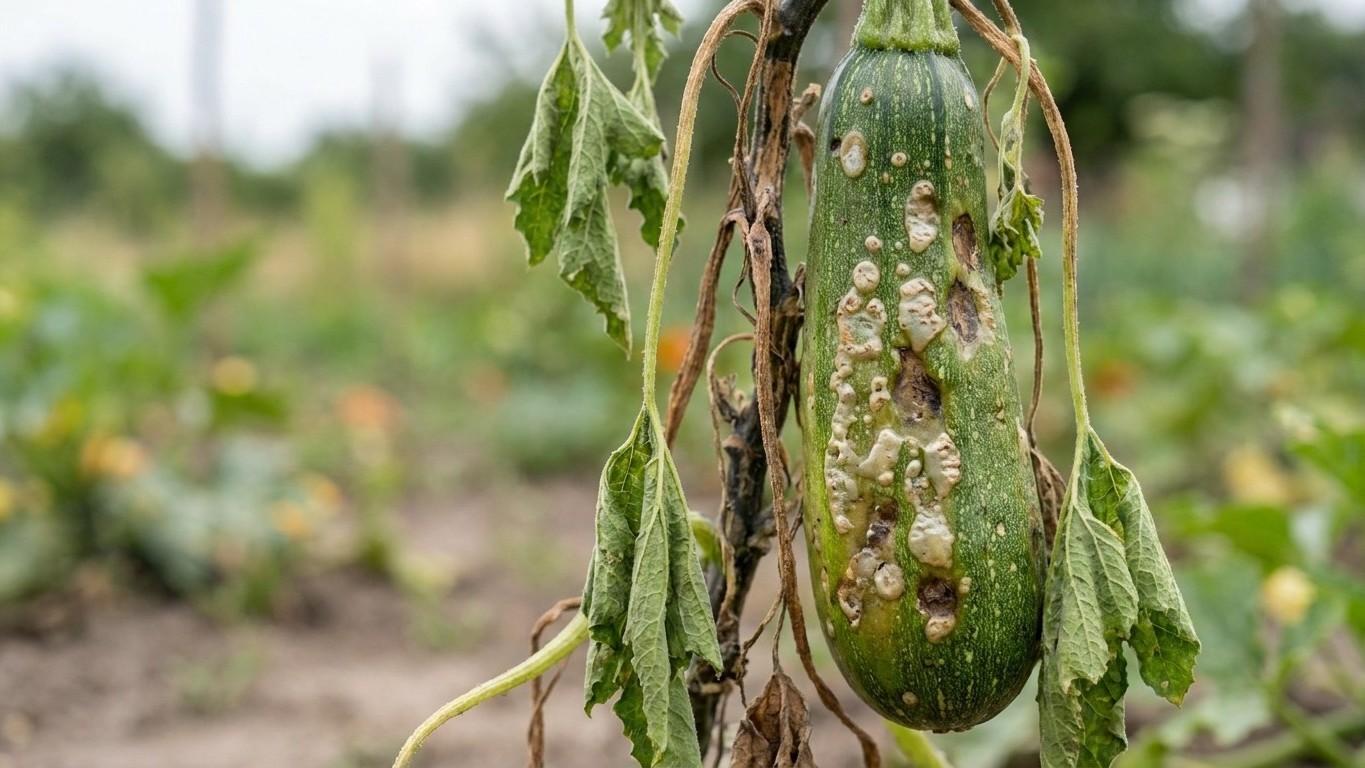
Two weeks after cutting away nearly every leaf shading my zucchini plants, the fruit I was trying to help had turned mushy, pale, and scarred. What I thought was a clever trick for bigger, sun-ripened courgettes turned out to be closer to sunburn than shine. The plants hadn’t thanked me. They’d been wounded, and it showed in exactly the spot I was trying to improve.
Key takeaways
- Zucchini leaves aren’t shading the fruit—they’re its only protection against sunburn
- Removing too many leaves triggers a cascade: sunscald, rot, and stunted plant growth
- There’s a safe pruning method, but timing and weather matter more than you’d think
The leaves weren’t blocking the sun. They were the plant’s sunscreen.
Zucchini leaves grow enormous for a reason. They’re not just solar panels feeding the plant through photosynthesis, they’re also a physical shield over the developing fruit. Sunscald on summer squash and other fruits occurs when green or ripening fruits are exposed to direct prolonged sunlight, especially during sunny, hot weather, producing large, light-colored blistered areas on the sides of fruits facing the sun. Strip that canopy away in the middle of a heat wave, and the fruit has no time to adapt.
A gardener writing for a University of Minnesota Extension piece described the exact scenario I fell into. She noticed especially bad patches of sunscald in her own garden zucchini, later realizing that intense winds and careless harvesting in the first week of August had shifted and damaged the foliage covering her zucchini flowers and fruit, leaving the newly exposed fruit to suffer damage and begin rotting. Sound familiar? It should. It’s basically what happens whenever a gardener decides more light equals more growth and reaches for the pruning shears without a plan.
The comparison to human skin turns out to be more than a metaphor. Sunscald generally occurs when any plant part developing in lower light is suddenly exposed to higher light levels, and the condition for plants is similar to what our skin experiences: if our skin is gradually exposed to increasing sun light, it adjusts, but if it is suddenly exposed to bright sun for even a relatively short period, it will burn. There’s no gradual tanning process for a courgette. It goes from shaded to scorched in days, not weeks.
What happened to the plant in those two weeks
The damage wasn’t limited to the fruit itself. Once those white or brown lesions appeared, the damage could be superficial at first but could worsen in extreme weather, causing damage to spread and fruit to drop prematurely, and fruit with sunscald damage can become host to a secondary disease or infection. a burn today becomes a rot problem next week. That’s roughly the two-week timeline I lived through: first the pale patches, then the soft spots, then fruit I had to toss instead of harvest.
Meanwhile, the plant itself was quietly paying a separate price. Leaves aren’t decoration, they’re the engine room. Plants have most of their photosynthesis cells in their leaves, so defoliated plants are not able to convert sunlight into energy the way they should, and the effects of defoliation can cause stunted or malformed plants and even death to the plant. Removing too much foliage doesn’t just risk a sunburned squash. It throttles the very process that was supposed to be feeding that squash in the first place.
There’s also a water problem nobody warns you about. Big leaves lose a lot of moisture through transpiration, and cutting them off during a heat spell removes the plant’s built-in cooling and hydration balance. Large squash leaves normally shade developing fruit, and when leaves wilt repeatedly or are removed through heavy pruning, fruit becomes exposed to intense sunlight, which is why gardeners are advised to avoid removing healthy leaves during hot weather since they act as the plant’s natural sunscreen. August, with its long stretches above 90 degrees, is precisely the wrong month to test that theory.
The right way to give courgettes more light (without torching them)
None of this means pruning is a bad idea. Done with restraint, it genuinely helps. The trick is targeting the right leaves at the right time, not stripping the plant wholesale. Extension-style guidance on cucurbit pruning tends to agree on a few boundaries:
- Remove leaves that sit below the lowest flower or fruit, since the fruits are primarily fed by the leaves above them, making the lower leaves expendable.
- Avoid removing more than a third of the plant’s foliage, since taking more reduces photosynthetic capacity enough to lower fruit set and overall vigor.
- Stick to removing only leaves that are dead or diseased, because healthy leaves, even when temporarily wilted, protect developing fruit from sunscald.
Timing matters just as much as quantity. One horticulture source put it plainly: pruning too early will impact the development of early fruits and could stress the plant, especially if too many leaves are removed early on, which could affect photosynthesis. The safer window is once the plant already has fruit developing, four to six squash on the vine, and even then the cuts should be gradual, spread over several sessions rather than a single afternoon of enthusiasm.
Weather should shape the decision too. In hot, dry weather, cutting can increase water loss, so it’s worth reducing the number of leaves removed and watering thoroughly afterward. If a heat advisory is in the forecast, that’s the week to leave the shears in the drawer, not the week to go looking for extra sunlight.
My courgette plants eventually recovered. New leaves pushed out within a few weeks and the later fruit set was fine, if smaller than I’d hoped for that stretch of August. The lesson that stuck wasn’t about pruning technique so much as about respecting what a leaf actually does for a squash plant: it’s not competing with the fruit for attention, it’s the reason the fruit gets to grow at all. Next season, my shears stay closer to the base of the plant, and further from anything already producing.
Sources : harvesttotable.com | gardeningknowhow.com