
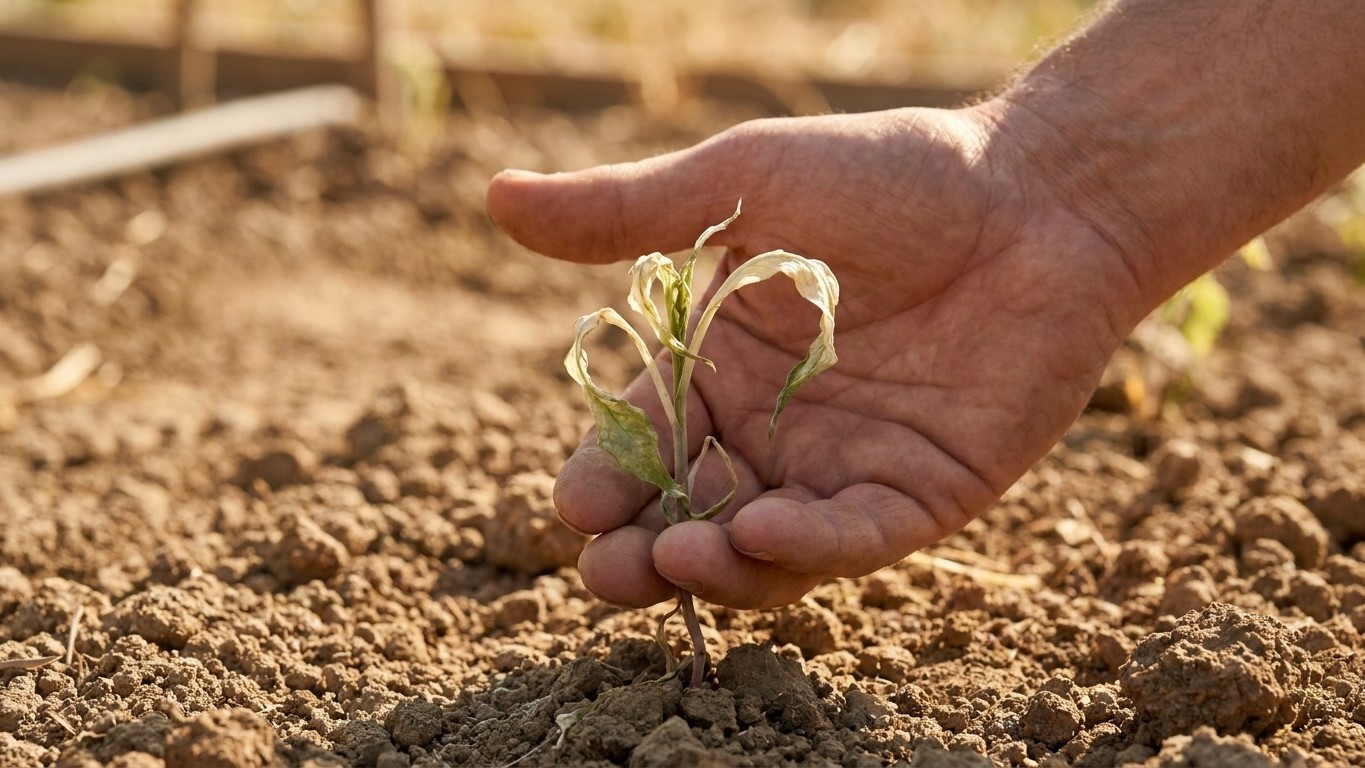
Forty-eight hours. That’s all it took for a scattering of rocket and lamb’s lettuce seeds to reveal the truth about mid-August sowing: patchy, wilted sprouts baking in soil that never had a chance to cool down. The instinct to get a jump on fall greens is understandable, but timing these two crops by the calendar instead of the thermometer is where most home gardeners go wrong every single year.
Key takeaways
- A rocket seed exposed to 90-degree soil can switch into permanent dormancy, refusing to sprout even when temperatures cool
- Mâche and arugula germinate reliably only below specific temperature thresholds—mid-August soil almost never meets them
- The real signal for sowing isn’t the calendar date; it’s when soil temperature drops below the mid-60s, typically late August or early September
Why the Soil Temperature Matters More Than the Date
Rocket and mâche are cool-season crops wearing a summer disguise of resilience. Both germinate reliably only within a narrow band of soil warmth, and mid-August in much of the country sits well outside it. Arugula seeds germinate best at temperatures below 70 degrees Fahrenheit and can go dormant, failing to germinate, above 85 degrees. That’s not a plant being fussy for the sake of it. It’s a built-in survival mechanism: germinating in blistering heat would only doom the seedling to bolt before it ever produced a usable leaf.
Lamb’s lettuce plays by an even stricter rulebook. Sow from late summer through early fall, once the soil has cooled below the mid-60s, for fall and winter harvests, and again in very early spring. Skip warm-weather sowings entirely: above about 70F the seed simply goes dormant. A Pacific Northwest grower who has spent years timing this crop puts it plainly: seeds germinate poorly and bolt quickly in hot weather. Ideally, seeds should be planted after mid-August, when temperatures are beginning to drop, and before the end of September. Notice the phrase “after mid-August” and “beginning to drop.” That’s the whole ballgame. Sowing on August 14th because it feels productive skips past the actual signal the plant is waiting for.
Here’s the part that surprises a lot of first-time growers: heat doesn’t just slow germination down, it can shut it off entirely, and not just temporarily. Research on other garden vegetables shows that upon prolonged exposure to elevated temperatures, thermo-dormancy may be induced and seeds are not able to germinate even at optimal temperatures. a rocket seed that sits in 90-degree soil for two days doesn’t just wait patiently for cooler weather. It can effectively switch itself off, refusing to sprout even once conditions improve later in the month.
What Those First 48 Hours Actually Tell You
Uneven sprouting, seedlings that look stressed straight out of the ground, leaves with a slightly bleached or scorched edge before they’ve even unfurled properly, this is the plant telling you the soil was too warm when the seed woke up. It’s a subtle signal, easy to write off as bad luck or bad seed, when really it’s a straightforward temperature mismatch. Rocket in particular reacts fast: once temperatures consistently rise above around 75°F (24°C) or days get significantly longer, the plant “decides” to send up a tall flower stalk instead of investing in leaf growth. A plant that bolts before it’s even established a proper rosette isn’t a plant, it’s a warning sign for next time.
Mâche is a touch more forgiving in one respect, since it tolerates cold far better than heat, but the germination window is genuinely narrow. Avoid sowing in warm soil: above about 70F the seed goes dormant and germinates poorly, so wait until temperatures drop below the mid-60s. That threshold, mid-60s, is rarely met in mid-August anywhere south of the Canadian border, which explains why the seeds that did sprout in a rushed sowing often look thin and scattered rather than the dense little rosettes this green is known for.
The Fix: Timing, Shade, and a Little Patience
None of this means the season is lost. It means shifting the sowing date and, if impatience wins anyway, working around the heat rather than against it. A few practical adjustments make the difference between a wasted seed packet and a genuinely good fall harvest:
- Wait for the real signal, not the calendar: late August into mid-September is consistently cited as the reliable window for both crops in most climates, once daytime highs start easing off.
- Use shade to buy time if you can’t wait. Keep the soil consistently moist and cool but not waterlogged and choose a spot in your garden that receives partial shade, which will protect the plants from the midday sun.
- Water in the cool hours only. Sow in warm weather in the evening and keep the seedbeds moist until germination, watering in the early morning or late evening to prevent seeds from being washed away.
- Stagger your sowings every two weeks through early fall rather than dumping the whole packet in one go, so a single bad week of heat doesn’t cost you the entire crop.
The math on harvest timing backs this up too. The 60-or-so days from sowing to first harvest tells you everything: a late-August sowing is picking-ready by late October; a mid-September sowing will be there for November. A sowing done two weeks too early in blazing heat doesn’t gain you two weeks of harvest, it often costs you the whole first batch, forcing a re-sow anyway once temperatures finally cooperate.
What’s easy to forget is that mâche actually gets more forgiving the later you push it, within reason. Growers as far north as British Columbia routinely wait until after Labor Day, and the reward is a crop that establishes without stress and then shrugs off frost for months. Rushing rocket and lamb’s lettuce into the ground in mid-August isn’t really about being early. It’s about mistaking urgency for a head start, when the seeds themselves are simply waiting for the air to stop feeling like summer.
Sources : gardener-advice.com | thebrownchair.com