
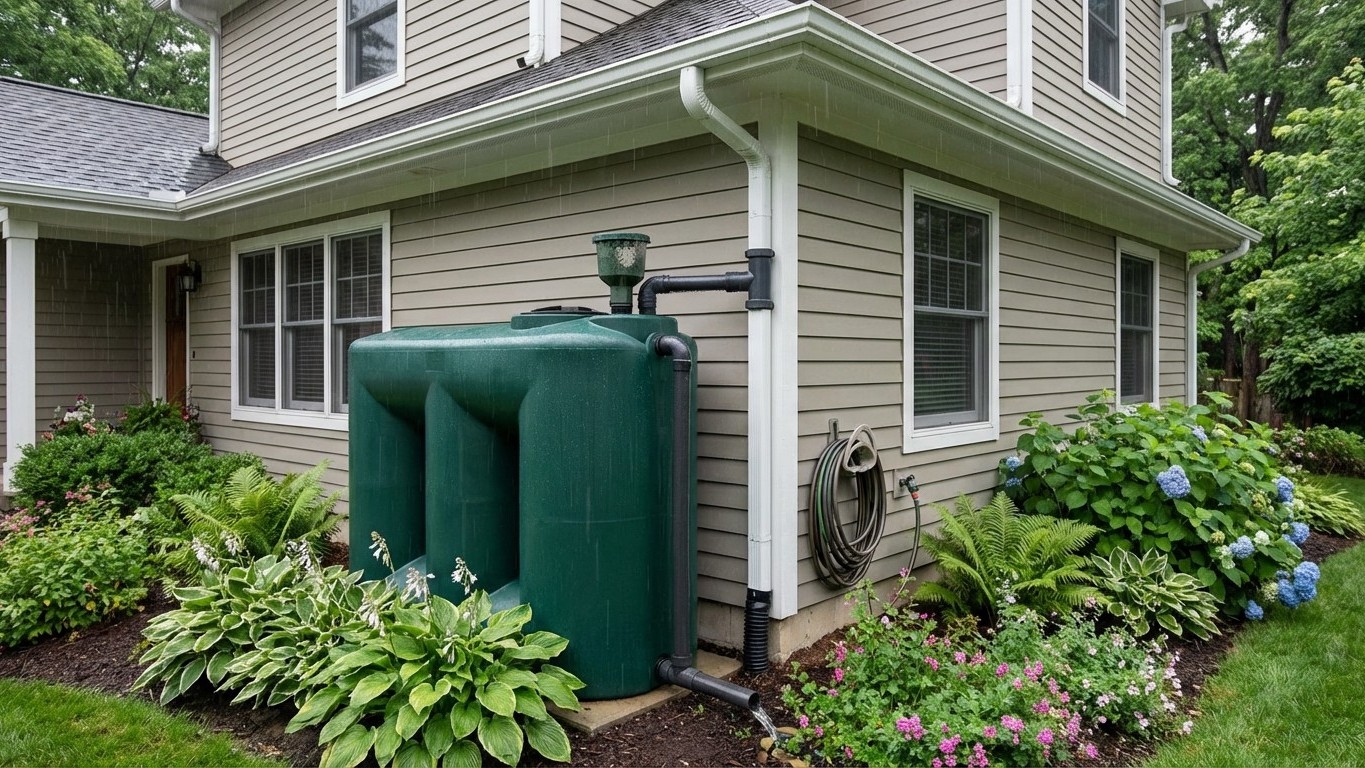
After five years of disappointing rainwater collection results, I finally-explain-this-reflex”>Finally discovered why my 500-gallon tank was barely filling during heavy downpours while my neighbor’s smaller system overflowed. The culprit wasn’t bad luck or poor weather patterns – it was three fundamental installation mistakes that were silently sabotaging my water harvesting efforts and costing me hundreds of gallons every month.
The revelation came during a particularly frustrating dry spell when I realized my supposedly efficient rainwater system was performing at less than half its potential. What followed was a thorough investigation into proper rainwater harvesting techniques that completely Transformed My approach and doubled my collection capacity almost overnight.
The Critical Positioning Error That Kills Collection Efficiency
My first major Mistake was positioning the tank too far from the primary collection point. In my eagerness to hide the tank behind landscaping for aesthetic reasons, I had placed it nearly forty feet from the main downspout, requiring extensive piping with multiple bends and elevation Changes. This seemingly minor decision was creating significant water loss through friction and spillage at connection points.
The physics of water collection are unforgiving. Every foot of distance, every elbow joint, and every slight upward angle in your piping system reduces the amount of water that Actually reaches your tank. During moderate rainfall, I was losing approximately 30% of potential collection simply due to inefficient routing. Heavy downpours were even worse, as the system couldn’t handle the volume fast enough, causing overflow simple-rule”>at the gutters rather than the tank.
The solution required relocating my tank to within ten feet of the primary downspout and implementing a direct, gravity-fed connection with minimal pipe runs. This change alone increased my collection efficiency by 35%, making a noticeable difference even during light rain events that previously contributed almost nothing to my water stores.
Why Bigger Isn’t Always Better: The Sizing Misconception
My second critical error was assuming that a larger tank automatically meant better water collection. I had invested in the biggest tank my budget allowed, thinking this would maximize my rainwater harvesting potential. However, I had completely ignored the relationship between roof catchment area, local rainfall patterns, and optimal tank sizing for my specific situation.
A 500-gallon tank sounds impressive, but it’s meaningless if your roof can only generate 200 gallons during typical storm events, or if your local climate produces frequent light rains rather than heavy downpours. I discovered that my roof’s catchment area and regional precipitation patterns were perfectly suited for a 300-gallon system with proper overflow management, rather than the oversized tank I had chosen.
The oversized tank created a false economy. It took longer to fill, leading to stagnant water issues during dry periods, and its weight when full had actually caused settling that disrupted my carefully planned drainage gradients. By understanding the mathematical relationship between catchment area and storage needs, I realized that strategic tank sizing coupled with efficient collection methods would serve me far better than simply maximizing storage capacity.
The Maintenance Oversights That Compound Over Time
Leaf debris in gutters reduces flow rates dramatically, but I had only been clearing obvious blockages rather than performing thorough seasonal cleanings. More critically, I had ignored the gradual buildup of sediment in my first-flush diverter and the slow deterioration of rubber seals at pipe connections. These seemingly minor issues were collectively reducing my system’s effectiveness by 25% or more.
The first-flush diverter, designed to discard the initial contaminated runoff from each rain event, had become partially clogged over time. Instead of diverting the first 10-15 gallons as intended, it was allowing dirty water into my tank while simultaneously restricting overall flow. Regular maintenance of this component alone improved both water quality and collection volume significantly.
Additionally, I discovered that seasonal adjustment of collection surfaces makes a substantial difference. Installing simple leaf guards and ensuring proper gutter alignment twice yearly prevented the gradual efficiency loss that had been plaguing my system. These maintenance protocols, while requiring modest time investment, proved essential for maintaining optimal performance.
Transforming Your Water Collection Results
Implementing these corrections transformed my rainwater harvesting from a disappointing experiment into a reliable water source that consistently meets my gardening and outdoor cleaning needs. The key insight was understanding that effective rainwater collection depends more on system optimization than on expensive equipment or complex installations.
Modern rainwater harvesting succeeds through attention to fundamental principles: positioning tanks for gravity-fed efficiency, sizing systems based on actual catchment and usage patterns, and maintaining components to preserve peak performance. These lessons, learned through years of trial and error, can help other homeowners avoid the costly mistakes that limited my system’s potential for far too long. The result is a more sustainable approach to water management that delivers both environmental benefits and practical value for everyday use.