
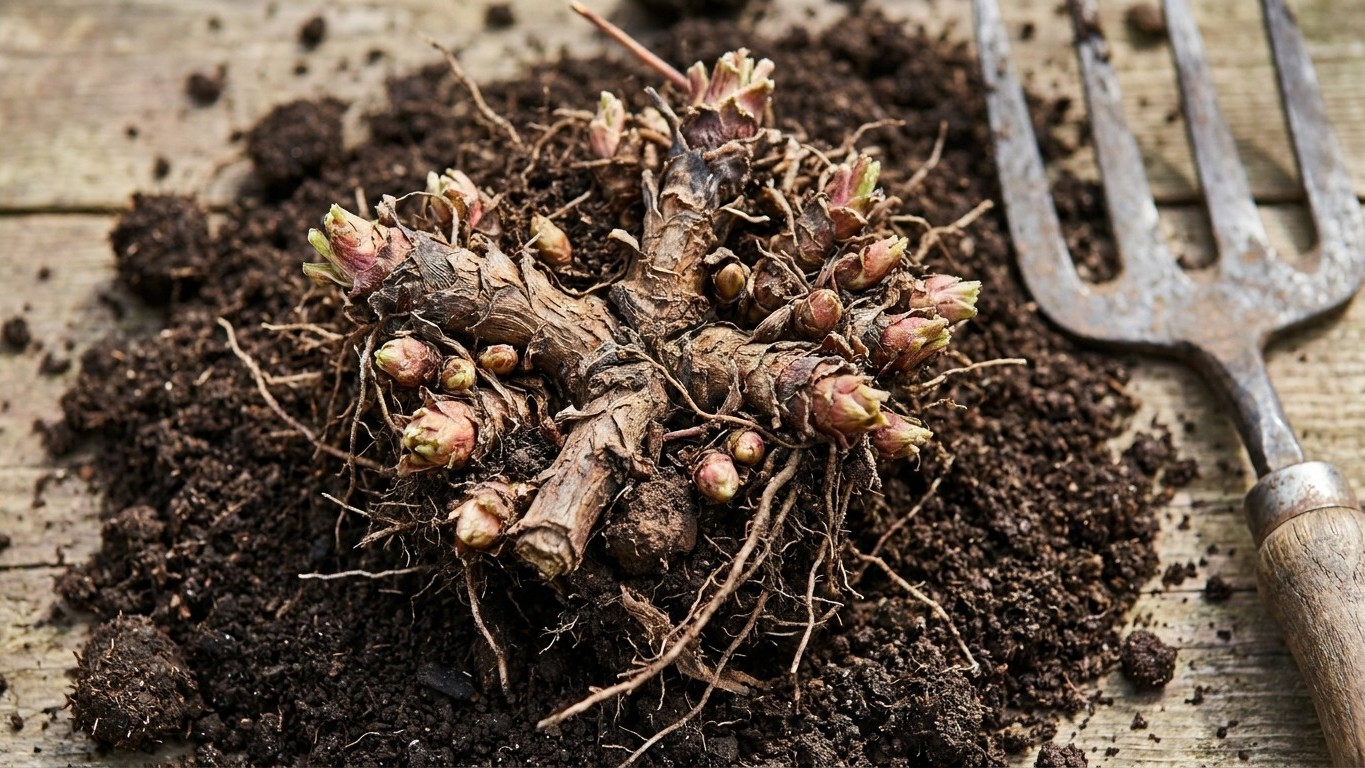
A strawberry crown that’s been left in the ground for six years doesn’t look anything like the tidy little transplant you buried back on day one. Pull it up in August and you’ll find something closer to a knuckle of dark, woody tissue, ringed with dozens of tiny branch crowns crammed against each other, most of them starving for room. That’s exactly what greeted me this summer when I finally lifted one of my oldest plants to see what was going on underneath. The answer to why my berries had been getting smaller every June wasn’t a mystery of bad luck or bad weather. It was sitting right there in the soil, and I’d been ignoring it for years.
Key takeaways
- What happens when you leave strawberry plants in the ground for six years instead of replanting every 3-4 years
- Why smaller berries aren’t a mystery—they’re a warning sign hiding right below the soil surface
- The one August task that determines next year’s harvest, and why doing it after mid-August guarantees another year of disappointment
What six years does to a strawberry plant
Strawberries aren’t built for the long haul, at least not without help. If a strawberry patch has been in the ground for several years and the berries seem to get smaller each season, that’s normal, since plants hit peak production in their first and second fruiting years, and by the third and fourth year, yield declines and individual berries shrink. Six years is well past that window, and it shows in the crown structure itself. The plants put more energy into producing runners and new daughter plants, and the crowns become crowded and less vigorous. Ohio State’s extension office puts a number on it too: Ohio State University Extension recommends establishing a new planting after three to four years of harvest to maintain good fruit size and production. I’d more than doubled that timeline out of sheer thriftiness, and the plant had been quietly telling me for at least two seasons that it was running on fumes.
The mechanism behind this isn’t complicated once you see it. The gradual reduction in output is natural, as over time, root systems become crowded, organic matter breaks down, and the soil’s nutrient balance shifts, and older crowns may become more susceptible to stress from heat, drought, and pathogens. A young plant sends its energy into one strong central crown and a healthy root mass. An old, neglected plant like mine had split into a cluster of secondary crowns all competing for the same patch of dirt, the same drop of water, the same pinch of nitrogen. Nobody wins that fight, the berries just get smaller as the referee.
The overcrowded crown is only part of the story
Digging further, I realized the shrinking fruit had at least two separate causes stacked on top of each other, not just one. The first is soil fatigue, plain and simple: soil exhaustion is a common culprit, since after two or three seasons in the same bed, soil nutrients deplete and microbial life diminishes, leading to sluggish growth and fewer berries, and even with compost or fertilizer, long-term soil fatigue requires renewal or rotation. I’d been sprinkling the same handful of fertilizer on that bed every spring like a ritual, never once considering that the ground itself had been quietly running on empty for years.
The second cause is more specific to older crowns, and it’s the part that actually surprised me. Extension researchers in Delaware have documented how mature strawberry plants develop excess branch crowns that overload themselves with flowers. In plasticulture strawberries, one critical factor is the number of branch crowns that develop in the fall, since early planting or extended warm weather in the fall may cause plants to produce excess crowns leading to too many buds, flowers, and fruits per plant in the spring and, consequently, small berries. Translate that from farm-speak into backyard terms: my six-year-old crown wasn’t producing one strong fruiting stem anymore. It was producing a dozen weak ones, each trying to ripen a handful of berries with a fraction of the resources a young plant would devote to a single, generous cluster.
Water stress piled onto the same wound. Water needed to plump up the berry will go out of the berry and into the leaves and crown to keep the plant alive under hot and dry conditions, and the fruits shrivel and probably will never regain their full potential size. An overcrowded crown with a compromised root system simply can’t pull enough moisture through a dry spell, so every hot week in July was quietly siphoning size off my August harvest before the berries even had a chance to swell.
Why August is the month that fixes (or ruins) next year
Here’s the part that changed how I’ll manage this bed going forward. This wasn’t just cleanup timing, it’s the single window that determines next year’s crop size. The strawberry harvest may be over, but that doesn’t mean it’s time to forget the strawberry patch, since post-harvest care is an important part of keeping your patch healthy and productive, and with yearly renovation, strawberry plants can remain productive for 10 years or longer. Ten years — not six years of neglect followed by a crisis dig-up. The difference is entirely in the maintenance I’d skipped.
The fix, as it turns out, is almost embarrassingly simple. Mowing or trimming off the leaves near the base of the plant, being careful not to injure the crown, removes this foliage and helps keep diseases under control. Then comes the step I’d never once done in six years: thin matted rows to 8 to 18 inches wide by tilling or hoeing out the plants you want to remove, and within the row, thin plants to one every 6 to 8 inches, removing the older plants and leaving the younger, more vigorous ones. There’s a hard deadline attached to all this, too. Flower buds for next year’s crop begin developing in mid- to late August, so this is a critical time to keep the plants healthy. Renovate after that window closes and you’ve locked in another year of disappointing berries no matter what you do next spring.
The fertilizing step matters as much as the thinning. Renovation time is a good time to fertilize the patch, applying a balanced garden fertilizer such as 12-12-12 at a rate of 3 to 4 pounds per 100 feet of row, placed in bands alongside the crowns, scratched into the soil with a rake, and watered in. I’d been feeding my strawberries once a year at planting time and calling it done. Turns out that’s roughly the gardening equivalent of eating one big meal in January and expecting to run a marathon in June.
What I dug up in August wasn’t a dead plant, just an exhausted one that had been asked to do six years of work with one year of care. I split the healthy outer crowns, tossed the woody, unproductive center onto the compost pile, and replanted the vigorous divisions with actual spacing between them for the first time since I started this patch. The real lesson wasn’t about strawberries at all. It was a reminder that “free” plants left completely alone aren’t actually free. They’re borrowing against a harvest you won’t collect until the bill finally comes due, one shrinking berry at a time.
Sources : purdue.edu | berrygrowersinsider.com