
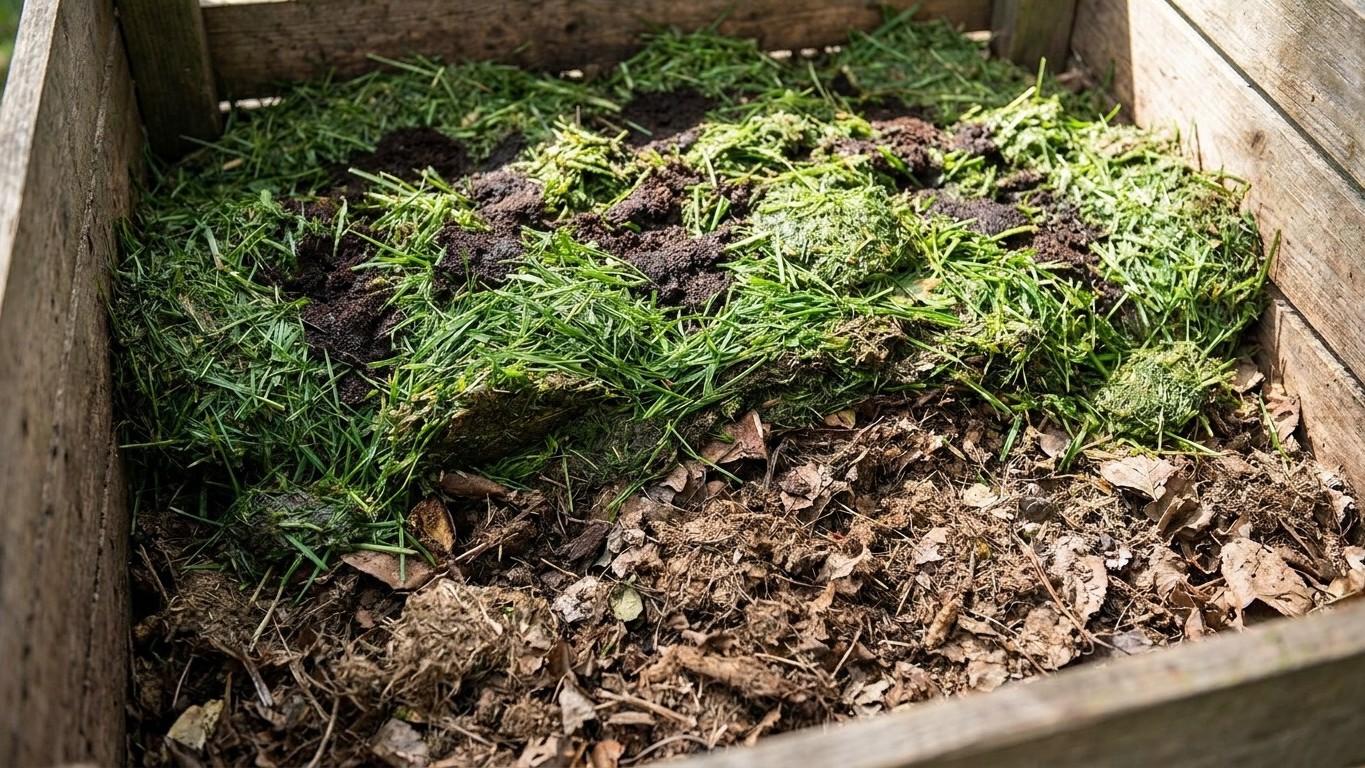
August compost that’s gone bone-dry and stopped smelling like anything isn’t dead. It’s just thirsty. The fix professional composters reach for first isn’t a soaking with the hose, it’s a single damp, nitrogen-rich layer spread across the top, usually fresh grass clippings, wet coffee grounds, or a mix of kitchen scraps, and within three to five days the pile is heating up again.
Here’s what’s actually happening inside a stalled bin. Moisture is necessary to activate compost, and a pile that is too dry will fail to decompose because there is no bacterial activity, and no heat. Summer heat doesn’t just fail to help, it actively works against the pile: direct sun exposure means a pile can lose significant surface moisture within hours on a hot day, and even a covered pile in a sunny spot absorbs radiant heat that drives moisture out. Add to that the seasonal glut of dried-out yard waste, and you get a heap that’s all carbon and no water. As one composting expert put it, “We want our compost to heat up, but very hot conditions can also dry out your compost.”
Key takeaways
- Why summer’s direct heat actively works against your compost pile, drying it faster than you’d expect
- The reason watering your stalled pile directly onto the surface almost never works (and where the water actually goes)
- What happens inside a compost bin when it stops heating up, and how microbes signal they’re starving for one specific thing
Why a wet green layer works faster than watering
Pouring water straight onto a crusted-over pile feels productive, but it mostly fails. Reviving a compost pile when it’s bone dry isn’t just pointing the hose at it and walking off, because water hits that dried-out surface and mostly runs down the sides without sinking in, so the core stays as parched as it started. That’s the trap most backyard composters fall into every August, and it’s why the same piles keep stalling year after year.
A damp green layer solves two problems in one move. It rehydrates without runoff, and it delivers the nitrogen the microbes have been starving for. Summer often produces more dry yard waste like dried grass clippings, straw, and spent garden plants, and these high-carbon materials absorb moisture rather than contributing it, which accelerates the drying problem until the microbial community slows down, the pile stops heating, and decomposition stalls. Fresh grass clippings, still green and juicy, flip that script. Coffee grounds, vegetable scraps from summer harvests, and freshly cut grass all contribute significant moisture, and if a pile is dry, a layer of fresh green kitchen scraps can add needed water along with nitrogen.
I’d argue this is the single most underused trick in home composting, because it costs nothing. Grass clippings come free with every mow, coffee grounds pile up in every kitchen. The pile doesn’t need a bag of store-bought activator. It needs what’s already sitting in the yard.
Getting the layer right without drowning the pile
One damp layer isn’t a license to bury the bin in clippings, though. Grass clippings should be built up gradually, since greater thickness can inhibit the penetration of moisture and oxygen into the soil, and excessive heat and foul odors may develop. Thin is the operative word. A layer an inch or two deep across the top, not a solid green cap that seals the pile like plastic wrap.
Texture is the real test, not a stopwatch. Making sure your pile has adequate moisture is best checked by reaching a hand into the pile and squeezing, and it should feel like a slightly damp sponge. Too dry, it crumbles to dust. Too wet, water streams out between your fingers and you’ve traded one problem for another. The compost should be consistently moist to keep microbes happy, though soggy conditions can also slow down decomposition, so resist the urge to overcorrect once the pile starts responding.
Don’t just drop the layer and walk away, either. Pull the pile apart, wet each section as you go, then rebuild, so the moisture works through the middle instead of pooling on top. That extra ten minutes of forking through the pile is what separates a quick revival from another week of waiting.
Signs the pile is actually back to work
Heat is the tell. Within a few days of the damp layer going in and the pile getting turned, the core should start climbing again. A pile climbing back toward 120 to 140F (49 to 60C) is telling you the microbes are awake and fed, and a cheap compost thermometer takes the guesswork out of checking. No thermometer on hand? Plunge a hand deep into the center after a couple of days. Warmth radiating out means the bacteria have gone back to feasting.
Keep the momentum going by checking in often rather than fixing it once and forgetting it. During hot spells, check moisture every 3–4 days and add water as needed, and turning matters just as much as watering. Through the summer, once a week keeps a pile aerobic and moving without much fuss, and if you’ve just fixed a stalled one, turning it every three or four days for the first couple of weeks gets it caught up faster.
The ratio underneath all of this still matters. Hot weather runs a pile through greens fast, so a mid-summer heap heavy on browns breaks down sluggishly for lack of nitrogen, while one buried in greens goes wet and sour, so a rough two-to-one, browns to greens by volume, keeps it cooking through the heat. One damp green layer jumpstarts a stalled pile. Keeping that balance through the rest of August is what keeps it running without another rescue mission.
Shade helps more than most gardeners assume. Moving the bin, or even just draping it under a tree’s afternoon shadow, cuts evaporation dramatically compared to a spot baking in full sun all day. It’s a small relocation that saves a lot of watering later in the season.
Sources : homesandgardens.com | gardeningknowhow.com