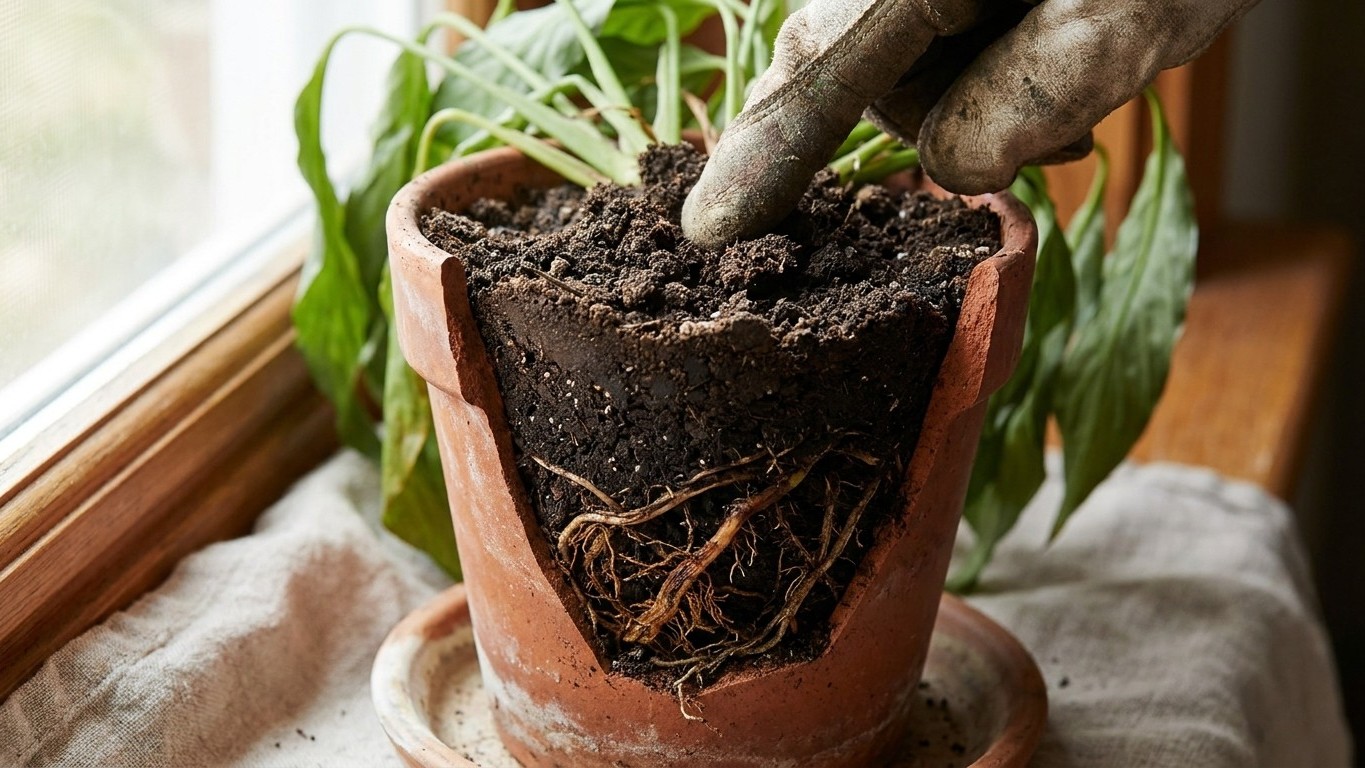
The surface looked bone-dry. Every time, same ritual: a quick glance at the top of the pot, a light tap of the watering can, job done. A month later, curiosity (and a wilting fern) pushed me to scrape away that top centimeter of soil. Underneath, the mix was dark, heavy, almost swampy. That’s when it clicked: I hadn’t been reading my plants’ thirst. I’d been reading the weather.
Potting soil dries unevenly, and the surface is the least reliable part of the story. Pot soil dries from the top down, but even this isn’t a foolproof indicator a plant needs water. Air exposure, room heat, and airflow all dry that thin top layer fast, sometimes within hours of watering, while the root zone a few inches down stays soaked for days. The soil may look dry on top, but still be very sodden below the surface and adding more moisture can easily lead to overwatering. I was essentially watering a swamp because its edges looked like a desert.
Key takeaways
- The soil surface dries much faster than the root zone below—a visual check alone can be dangerously misleading
- Roots need oxygen to survive; waterlogged soil starves them and creates perfect conditions for rot to spread silently
- By the time you notice wilting leaves, the damage underground is already catastrophic—and watering more makes it worse
Why the roots actually gave up
Roots don’t just drink water, they breathe. Because the roots need to exchange oxygen and CO2 with the air, wet soil closes off the soil’s air pockets. Every time I “topped up” a pot that was already saturated underneath, I was drowning the root system a little more, squeezing out the oxygen it needed to function. Overwatering occurs when plants receive more water than they can effectively use or drain, leading to waterlogged soil and oxygen-deprived roots. That constant saturation doesn’t just stress the plant, it turns the pot into a breeding ground. Root rot usually develops when soil stays wet for too long, giving fungi and water molds ideal conditions.
What surprised me most was how quietly it all happened. There was no dramatic wilting at first, no obvious distress signal. Once the root system is compromised, the plant cannot transport water or nutrients efficiently, leading to a cascade of decline that may not be obvious until later stages. By the time the leaves started yellowing and drooping, the damage below the surface was already well underway. And here’s the cruel irony: a plant with rotting roots often looks thirsty. Once root rot sets in, your plant’s leaves may wilt, yellow, or drop even though the soil is still wet. So I did what felt logical. I watered more. Which made everything worse.
What was actually happening in the pot
When I finally pulled the plant out to check, the picture matched almost exactly what horticulturists describe as classic overwatering damage. If you lift the plant and can see that the roots are brown or black and soft, they most likely have rotted. Healthy roots should be white in most cases. Mine were mushy, dark, and had lost that crisp, fibrous texture healthy roots have. The soil itself told its own story too, compacted, sour-smelling, almost airless. The potting mix may also smell sour or stay wet for several days. That smell, I’ve since learned, is basically the scent of anaerobic decay, a soil environment starved of oxygen for so long that it started rotting instead of nourishing.
None of this was really about how much water I used. It was about timing, and about trusting a visual shortcut that soil simply doesn’t support. Terracotta pots dry faster on the surface than plastic ones. Larger containers hold moisture longer in the core than small ones. And container size changes everything about how deep “dry” actually goes. The feel of the soil is the best guide: a potted plant in a container measuring 6 inches in diameter needs water when the top 2 inches feels dry to the touch, while a larger container measuring 8 to 10 inches is ready for water when just the top ½ to 1 inch feels dry. A one-size-fits-all glance at the surface was never going to work across my mismatched collection of pots.
The fix that actually works
The most immediate correction is embarrassingly low-tech: use your finger, not your eyes. The finger test is a time-tested gardening technique where you insert your finger 1–2 inches into the soil to gauge moisture by touch. For bigger containers, go a little deeper, since surface readings become even less trustworthy as pot size increases. For larger pots (over 10 inches in diameter), go 2–3 inches deep, since the surface often dries out quickly due to air exposure, so shallow tests can mislead you into overwatering. A cool sensation on your fingertip is actually informative. A cool sensation is a reliable indicator of moisture, since water conducts temperature more efficiently than dry soil, so even slightly moist soil feels noticeably cooler than dry soil at the same room temperature.
For anyone who’d rather not get dirt under their nails, a wooden skewer works almost as well as a finger, and gives you a visual instead of a tactile answer. Insert a trowel into the soil to check the moisture, or insert a wooden dowel into the soil to determine the depth of soil moisture. If the dowel comes out clean, the soil is dry, while damp soil will cling to the dowel. I now keep a chopstick by my watering can. It sounds almost too simple to matter, but it’s the single habit that ended a cycle of drowning plants I thought I was saving.
My fern, for the record, didn’t fully recover, root damage rarely reverses on its own. Recovery time depends on the severity of the damage and the type of plant; mild cases may improve within a week or two, while plants with root damage can take several weeks to fully recover. I repotted it into fresh, well-draining mix and trimmed away the blackened roots, and it’s slowly pushing new growth six weeks later. What stuck with me wasn’t the loss, though, it was realizing how confidently wrong a quick glance can be, and how much a single centimeter of soil can hide.
Sources : evergreenseeds.com | flourishingplants.com