
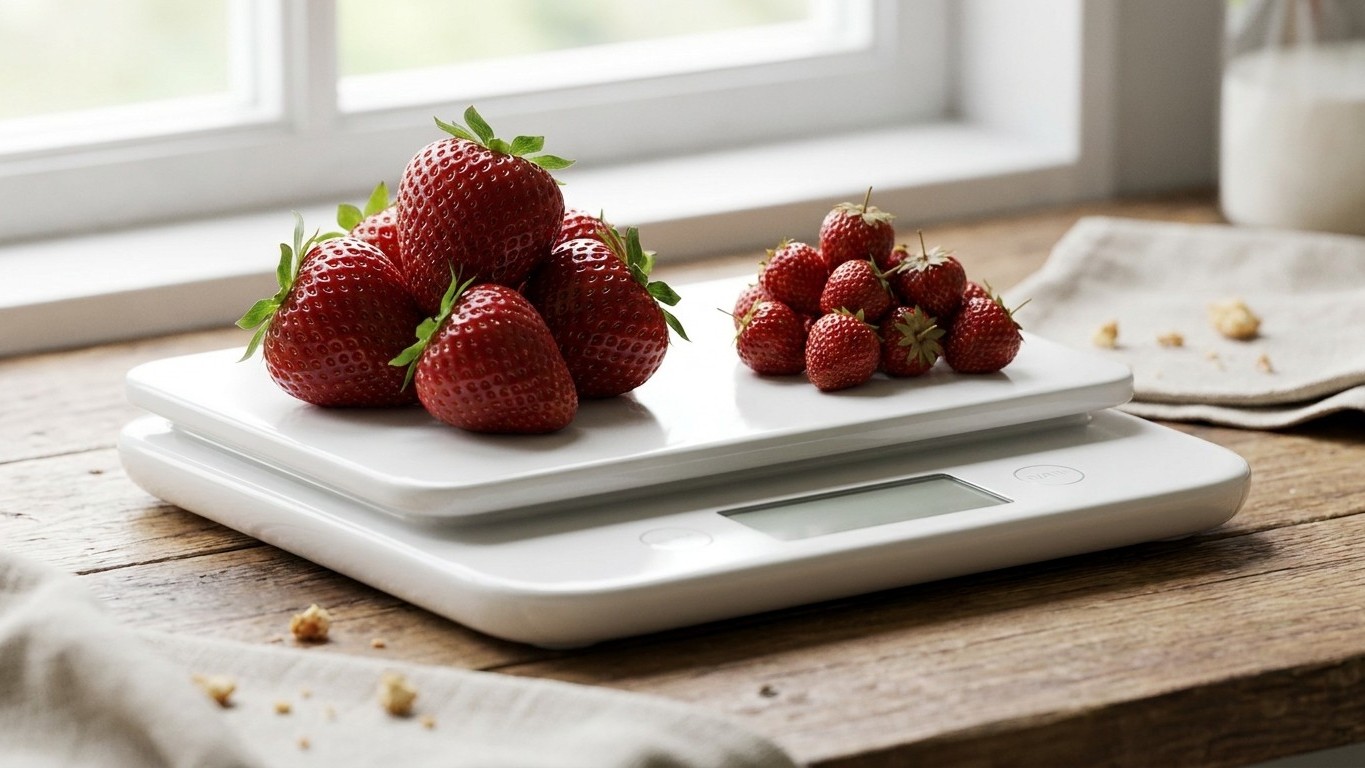
Strawberry runners are seductive. Those long, arching stems that shoot out from the mother plant, each one tipping into a perfect miniature clone, leaving them felt generous, almost ecological. Why cut something that’s growing so enthusiastically? For three seasons, that logic guided my garden. Then my neighbor Karen showed up at my kitchen door with a basket of berries from her identically sized raised bed, and the scale didn’t lie.
Her strawberries averaged 28 grams each. Mine clustered around 11. Same variety, Albion, same compost, same sun exposure, same watering schedule. The difference? She’d been ruthlessly pinching every runner since day one. I’d let mine run wild.
Key takeaways
- One neighbor’s pruned bed produced berries 2.5 times heavier than the other’s identical setup
- Unpruned strawberry beds can lose up to 50% of fruit size within two seasons—here’s exactly why
- The psychology of ‘free plants’ is trapping home gardeners into accidentally choosing propagation over production
What runners actually cost your plant
A strawberry plant operates on a fixed energy budget. Every runner it sends out, those stolons can travel 12 to 18 inches from the crown, represents a direct withdrawal from that account. The plant is simultaneously trying to fruit, maintain its root system, and colonize new ground. When you let it do all three, something has to give. The fruit loses the bid almost every time.
Research from the University of California Cooperative Extension found that unpruned Strawberry beds can see fruit size reduced by up to 50% within two seasons as plant density increases. The math isn’t complicated: more plants competing for the same soil nutrients, the same water, the same light. Each new daughter plant that roots into your bed becomes a competitor, not a contributor. By my third season, I had roughly 40 plants jammed into the space designed for 12. No wonder the berries looked like red gravel.
There’s also a disease dimension that I conveniently ignored. Dense plantings trap humidity at crown level, creating the exact microclimate that botrytis (gray mold) needs to thrive. I’d been losing 20-30% of my crop to rot each June and blaming the weather. Partially fair, but the crowding was amplifying every damp spell I got.
The propagation trap
Here’s where it gets psychologically interesting. Runners feel like free plants. And they are, technically. But “free” framing obscures the actual transaction. You’re trading current-season fruit quality for future planting stock, which only makes sense if you actually need more plants or plan to rotate your bed.
Strawberry plants have a productive lifespan of about three years before yields decline sharply. The standard advice is to renovate your bed every three years by starting fresh with young daughter plants. So keeping some runners, at the right time, does serve a purpose. The error isn’t running a Propagation strategy, it’s running one accidentally, without realizing you’re doing it, while expecting peak fruit production simultaneously.
Karen’s system was deliberate. She allowed exactly two runners per mother plant in late summer, once fruiting had ended, selecting the first daughter (closest to the crown, typically the most vigorous) and pinning it into a small pot of compost. Everything else got cut. By September, she had 24 new plants rooting in containers, ready to refresh her bed the following spring. She got her propagation and her fruit, just not from the same plants at the same time.
How to actually manage runners without obsessing
The practical reality is simpler than most gardening content makes it sound. During the fruiting season, from flower set through harvest, remove every runner as soon as you spot it. Don’t wait until they’re established, a small snip at the base costs you 10 seconds; digging out a rooted daughter plant costs you five minutes and disturbs neighboring crowns. Weekly checks during June and July are enough if you’re consistent.
The timing of your cut also matters. Removing runners early in the season, before the plant has invested significant energy in them, returns more resources to fruit development than cutting late-stage runners that have already drawn down reserves. Think of it like pruning tomato suckers, the earlier, the less disruptive.
One adjustment that made a real difference in my bed: adding a slow-release balanced fertilizer in early spring rather than a high-nitrogen formula. Excess nitrogen encourages vegetative growth, including runners, at the expense of fruit. A fertilizer with a roughly equal NPK ratio, or one slightly higher in phosphorus to support root and fruit development, shifts the plant’s priorities in the direction you want.
Spacing deserves a mention too. The standard recommendation of 18 inches between plants in a row, with 30 inches between rows, exists for a reason beyond convenience, it ensures each crown gets adequate airflow and light penetration. I’d planted at 10 inches “to maximize use of the space,” which is essentially the horticultural equivalent of stuffing too many people into a conference room and wondering why no one’s doing their best work.
What a pruned bed actually produces
My fourth season, the one after the scale incident, I cut every runner from mid-April through late July. No exceptions. The bed looked sparse by comparison to previous years, almost embarrassingly so. But by the second week of June, the difference in fruit size was visible from standing height. I wasn’t measuring against Karen this time; I didn’t need to.
Average berry weight came in at 24 grams. Not quite her 28, but she had two more years of practice and had already renovated her bed once with superior daughter stock. The rot losses dropped to under 10%. Total harvest weight from my 12 plants exceeded anything I’d pulled from the chaotic 40-plant tangle of the previous summer.
One detail worth sitting with: the flavor also improved. Smaller yields per plant, concentrated into fewer, larger fruits, produces higher sugar density. The berries were noticeably sweeter, a result confirmed by UC ANR research showing that reduced crop load correlates with increased Brix levels in strawberry fruit. The scale told the first part of the story. The taste told the rest.